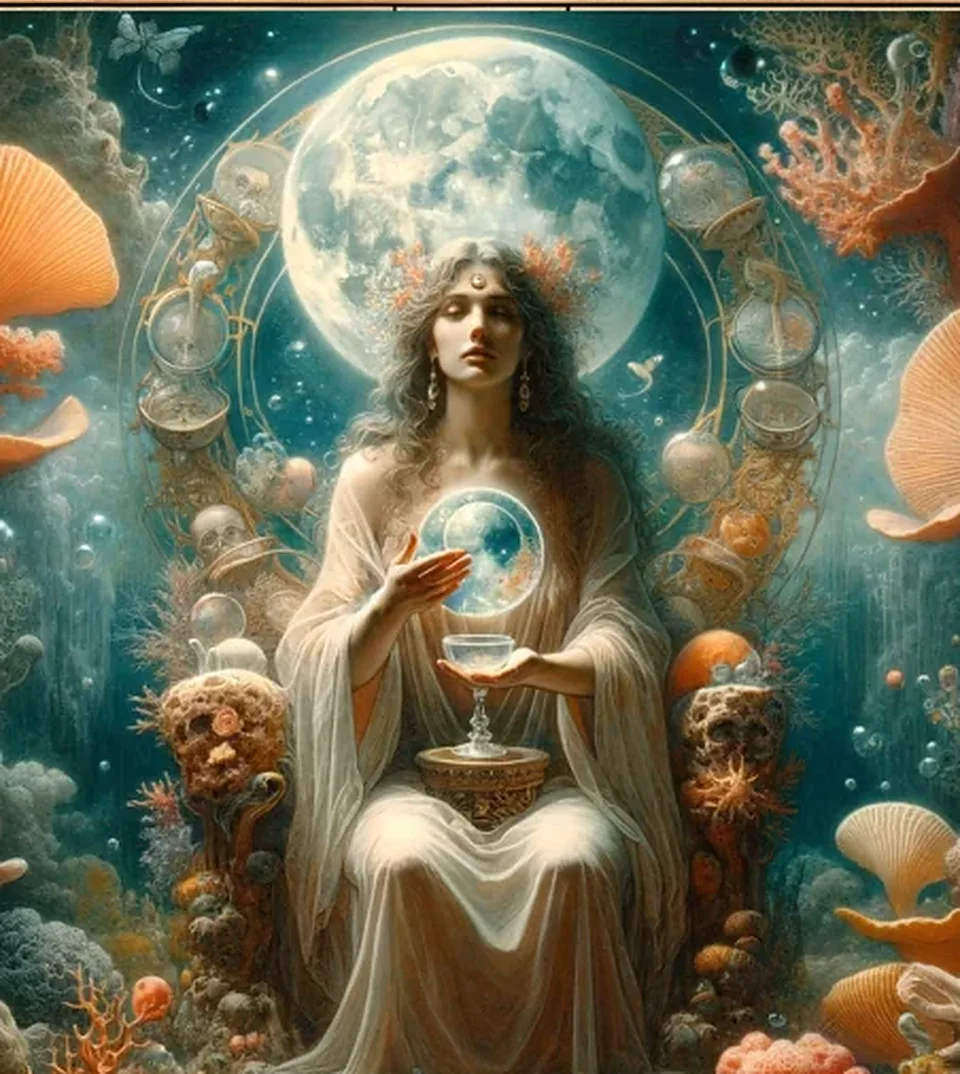
„ოდისეაში“ ამფიტრიტე ჯერ კიდევ არ არის პოსეიდონის მეუღლე. მისი სახელი თავად ზღვის აღმნიშვნელია: „ამფიტრიტეს ტალღები“, „ხმამაღლა მოგმინავი ამფიტრიტე“, რომელიც სიღრმეში ზღვის ურჩხულებს ზრდის. ზღვის დედოფლად ის მოგვიანებით იქცა.[1]
ნერეიდა თუ ოკეანიდა
ჰესიოდესთან ამფიტრიტე ზღვის მოხუცის, ნერევსის, ორმოცდაათ ასულს — ნერეიდებს — შორისაა. იმავე პოემაში ის პოსეიდონის ცოლია და მათ ტრიტონი, ზღვის ღრმა ოქროს სასახლეში მცხოვრები ღვთაება, შეეძინათ. აპოლოდოროსი კი მას ოკეანოსის ასულებს, ოკეანიდებს, შორის ასახელებს. ორი გენეალოგია ერთმანეთს არ ემთხვევა.[2][3]
დელფინი და თანავარსკვლავედი
ერატოსთენეს „ვარსკვლავთა გადაქცევების“ მიხედვით, როცა პოსეიდონმა ამფიტრიტეს ცოლად შერთვა მოისურვა, ის ატლასთან დაიმალა. პოსეიდონმა მის საძებნელად ბევრი გაგზავნა, და დელფინმა იპოვა ის და დაარწმუნა. სამადლობლოდ პოსეიდონმა დელფინი ცაზე, თანავარსკვლავედად დასვა.[4]
ბაკქილიდეს მეჩვიდმეტე ოდაში ახალგაზრდა თესევსი ზღვაში ხტება, რათა დაამტკიცოს, რომ პოსეიდონის ვაჟია. ფსკერზე, მამის სასახლეში, მას ამფიტრიტე ხვდება, ძოწეულ მოსასხამში ახვევს და გვირგვინს ადგამს — და თესევსი მშრალი ამოდის ზღვიდან.[5]
კულტი
სტრაბონი წერს, რომ კუნძულ ტენოსზე, ქალაქის გარეთ, პოსეიდონის დიდი სიწმინდე იყო, და არქეოლოგებმა იქ პოსეიდონისა და ამფიტრიტეს საერთო სიწმინდის ნაშთები აღმოაჩინეს. რომაელებმა ამფიტრიტე ზღვის ქალღმერთ სალაკიას გაუთანაბრეს.[6]
ბევრი მკვლევარი ფიქრობს, რომ ამფიტრიტე თავდაპირველად თავად ზღვის — განსაკუთრებით მისი ღრმა, ველური ნაწილის — განსახიერება იყო, და მხოლოდ მოგვიანებით ჩაიწერა ოლიმპიურ ოჯახში, პოსეიდონის ცოლად. ჰომეროსის ენა ამ ვარაუდს უჭერს მხარს. ეს ინტერპრეტაციაა.[1]
რა არ ვიცით
ამფიტრიტეს სახელის მნიშვნელობა სადავოა: მისი პირველი ნაწილი „ამფი-“ „ირგვლივ“ ნიშნავს, მეორე ნაწილის ახსნა კი მკვლევრებს შორის განსხვავდება. უცნობია ისიც, რამდენად ფართოდ ეთაყვანებოდნენ მას ცალკე, პოსეიდონის გარეშე.
ILLUMINISMO-ში: ამფიტრიტე ბერძნული ტაროს „თასების დედოფალია“ — დასტის ნახვა → · კარტების სტატიები: თასების დედოფალი
In the Odyssey Amphitrite is not yet Poseidon’s wife. Her name stands for the sea itself: “the waves of Amphitrite”, “loud-moaning Amphitrite”, who breeds sea monsters in the deep. She became queen of the sea later.[1]
Nereid or Oceanid
In Hesiod, Amphitrite is among the fifty daughters of Nereus, the old man of the sea — the Nereids. In the same poem she is Poseidon’s wife, and they have a son, Triton, a god who lives in a golden palace deep in the sea. Apollodorus, though, names her among the daughters of Oceanus, the Oceanids. The two genealogies do not match.[2][3]
The dolphin and the constellation
According to Eratosthenes’ Catasterisms, when Poseidon wished to marry Amphitrite, she hid with Atlas. Poseidon sent many to look for her, and a dolphin found her and persuaded her. In thanks Poseidon set the dolphin in the sky as a constellation.[4]
In Bacchylides’ seventeenth ode the young Theseus leaps into the sea to prove that he is Poseidon’s son. On the sea floor, in his father’s palace, Amphitrite meets him, wraps him in a purple cloak and sets a wreath on his head — and Theseus rises from the sea dry.[5]
Cult
Strabo writes that on the island of Tenos, outside the city, there was a great sanctuary of Poseidon, and archaeologists have found there the remains of a sanctuary shared by Poseidon and Amphitrite. The Romans equated Amphitrite with the sea goddess Salacia.[6]
Many scholars think Amphitrite was originally a personification of the sea itself — especially its deep, wild part — and was only later written into the Olympian family as Poseidon’s wife. Homer’s language supports this. This is an interpretation.[1]
What we don’t know
The meaning of Amphitrite’s name is disputed: its first part, amphi-, means “around”, but scholars explain the second part differently. It is also unknown how widely she was worshipped on her own, apart from Poseidon.
In ILLUMINISMO: Amphitrite is the Queen of Cups of the Greek Tarot — see the deck → · Card articles: Queen of Cups
წყაროებიSources
- Homer, Odyssey 3.91; 5.422; 12.60, 12.97.
- Hesiod, Theogony 240–264, 930–933.
- Apollodorus, Library 1.2.2.
- [Eratosthenes], Catasterisms 31.
- Bacchylides, Ode 17.97–116.
- Strabo, Geography 10.5.11.
თემა, წყაროების შერჩევა და დასკვნები — ნიკა ხუცურაული. კვლევასა და თარგმანში დახმარებისთვის გამოყენებულია AI; ყოველი ფაქტი წყაროსთან შემოწმდა.Topic, choice of sources and conclusions — Nika Khutsurauli. AI was used to help with research and translation; every fact was checked against its source.