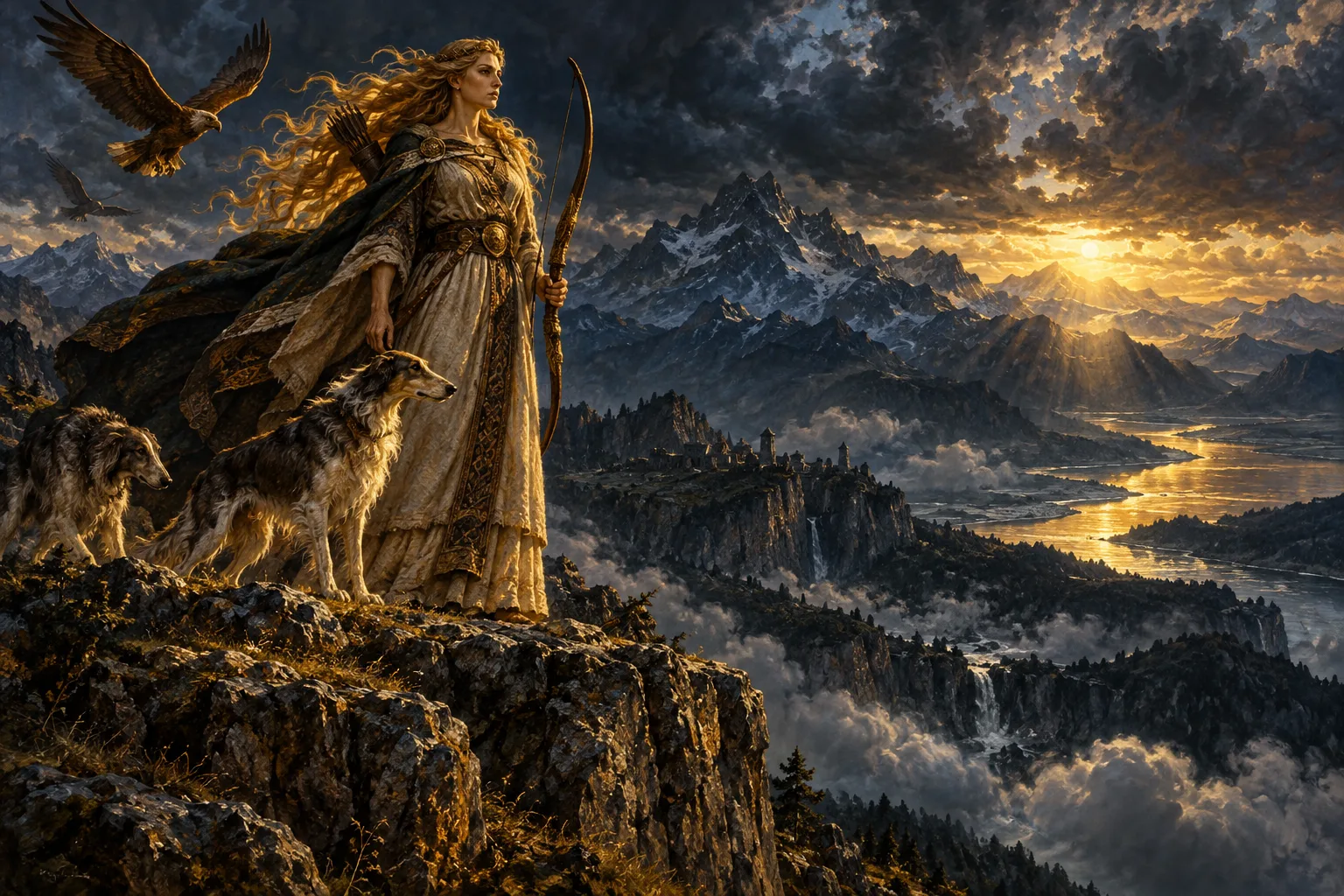
დალი სვანური ნადირობის ქალღმერთია — მთის ჩლიქოსანი ცხოველების, ჯიხვისა და ირმის მფარველი. მის ამბავში მთავარი ნადირობა კი არა, შეთანხმებაა: მონადირე იღებს მხოლოდ იმდენს, რამდენსაც ქალღმერთი აძლევს.
ვინ არის დალი
დალი (სვანურად დæლ) ძირითადად სვანურ ფოლკლორში გვხვდება: მითებში, ბალადებსა და ფერხულის სიმღერებში. ის მაღლა, კლდეებში, ადამიანთა დასახლებისგან შორს ცხოვრობს. ზოგი გადმოცემით მისი სახლი ორთავიანი უშბაა, რომლის ყინულიან სამხრეთ კედელს „დალის ფანჯარას“ უწოდებდნენ.
გარეგნულადაც კლდესა და სინათლეს ეკუთვნის: ოქროსფერი თმა, ნათელი კანი. შეუძლია ჯიხვად ან თეთრ ირმად იქცეს. სამეგრელოში მსგავსი ფიგურა ტყაში-მაფაა.
კევინ ტუიტის შეფასებით, დალის შესახებ შემორჩენილი ტექსტები „უმცირესი ნაწილია“ იმისა, რაც რამდენიმე საუკუნის წინ სვანეთში ცოცხლად ცირკულირებდა. ამიტომ ყოველი დასკვნა ფრაგმენტებზე დგას.[1][3]
შეთანხმება კლდეზე
დალი მონადირეს ნადირს აძლევს, მაგრამ პირობით. არ მოკლა იმაზე მეტი, რისი წაღებაც შეგიძლია. არ ესროლო ცხოველს, რომელიც ქალღმერთის სახეა — მაგალითად, ოქროსრქიან ჯიხვს. ზოგ ამბავში მონადირე დალის საყვარელი ხდება და წარმატება მანამდე ჰყავს, სანამ ერთგულია და აკრძალვებს იცავს.
პირობის დარღვევა სასიკვდილოა. ბალადებში მონადირე, რომელმაც შეთანხმება გატეხა, კლდეზე რჩება — ვერც ზემოთ ადის, ვერც ქვემოთ ბრუნდება. ტუიტი ასეთ მონადირეს „ნახევრად შამანს“ უწოდებს: შუამავალს სოფელსა და მთის წმინდა სამყაროს შორის.[1][3]
ტუიტის ჩანაწერებში კიდევ ერთი მოტივია: ნადირს ჯერ ქალღმერთი „ჭამს“, მერე ძვლებიდან აცოცხლებს, რომ მონადირემ მოკლას. ნადირი ერთხელ კი არ კვდება — ის ბრუნდება.[1][3]
სახელი და ფენები
სახელის წარმომავლობა უცნობია. კავშირი ქართულ „დილასთან“ და ოსურ „დæლიმონთან“ („დემონი“) სადავოა. ტუიტი სახელს ნახურ ენებში ღმერთის აღმნიშვნელ სიტყვებს უკავშირებს — ჩეჩნური დēლა, ინგუშური დǣლə. მისი ჰიპოთეზით, დალის თავდაპირველი სვანური სახელი თანდათან ჩაანაცვლა ზოგად სიტყვამ „ღმერთი“ — წმინდა სახელის ხმამაღლა თქმის აკრძალვის გამო.[1][3]
დალის ამბავი ზომაზეა. მთა არ არის საწყობი, რომელიც ბოლომდე იცლება; ის პარტნიორია, რომელთანაც პირობა უნდა დაიცვა. ეს ძველი ეკოლოგიური ეთიკაა — ზღვრის ცოდნა, რომელიც სიტყვით კი არა, ამბით გადადიოდა.
რა არ ვიცით
არ ვიცით, რამდენად ძველია დალის კულტი და რა ფორმა ჰქონდა მას ქრისტიანობამდე. ჩანაწერები ძირითადად XIX–XX საუკუნისაა. ასევე ღიაა, ერთი ქალღმერთია თუ რეგიონული ფიგურების ოჯახი — დალი, ტყაში-მაფა და სხვები. ბრინჯაოს ხანის „მხეცთა ქალბატონის“ გამოსახულებებთან კავშირი ჰიპოთეზაა და არა დადასტურებული ფაქტი.
Dali is the Svan goddess of the hunt — guardian of the hoofed animals of the mountains, the ibex and the deer. Her story is less about hunting than about an agreement: the hunter takes only what the goddess gives.
Who Dali is
Dali (Svan Dæl) survives mainly in Svan folklore: myths, ballads and round-dance songs. She lives high in the cliffs, far from human settlement. Some traditions place her home on twin-peaked Ushba, whose icy southern face was called “Dali’s window”.
Her appearance belongs to rock and light: golden hair, luminous skin. She can take the form of an ibex or a white deer. In Mingrelia a similar figure is Tkashi-Mapa.
Kevin Tuite judges the surviving texts to be a tiny fraction of what was in circulation in Svaneti a few centuries ago. Every conclusion about Dali rests on fragments.[1][3]
An agreement on the cliff
Dali gives game to the hunter — on conditions. Do not kill more than you can carry home. Do not shoot an animal that is the goddess herself, such as an ibex with golden horns. In some stories the hunter becomes her lover, and his luck lasts as long as he stays faithful and keeps her taboos.
Breaking the pact is fatal. In the ballads a hunter who betrays it is left stranded on the cliff, unable to climb up or down. Tuite describes such a hunter as a quasi-shaman: a go-between for the village and the pure world of the mountaintop.[1][3]
Tuite also records the motif of game that the goddess first “eats” and then revives from its bones, so that hunters can kill it. The animal does not die once; it returns.[1][3]
The name and its layers
The origin of the name is disputed. Links to Georgian dila (“morning”) and Ossetian dælimon (“demon”) are disputed. Tuite connects it to Nakh words for “god” — Chechen dēla, Ingush dǣlə — and suggests that her original Svan name was replaced over time, because sacred names were avoided in speech.[1][3]
Dali’s story is about measure. The mountain is not a store to be emptied but a partner whose terms must be kept. It is an old ecological ethic — knowledge of limits, passed on through a story rather than a rule.
What we don’t know
We don’t know how old Dali’s cult is or what form it took before Christianity; most records date from the 19th and 20th centuries. It is also open whether she is one goddess or a family of regional figures — Dali, Tkashi-Mapa and others. A link to Bronze Age images of a “mistress of animals” is a hypothesis, not an established fact.
წყაროებიSources
- K. Tuite, “The Meaning of Dæl. Symbolic and Spatial Associations of the South Caucasian Goddess of Game Animals”, in Language, Culture and the Individual: A Tribute to Paul Friedrich (2006), pp. 165–188.
- K. Tuite (ed.), Violet on the Mountain: An Anthology of Georgian Folk Poetry (rev. ed. 2004).
- K. Tuite, “Hunter, Shaman, Oracle, Priest”, Sixth Harvard Round Table on Comparative Mythology (2004), handout.
- E. Virsaladze, Georgian Hunting Myth and Poetry (Moscow, 1976; in Russian).
თემა, წყაროების შერჩევა და დასკვნები — ნიკა ხუცურაული. კვლევასა და თარგმანში დახმარებისთვის გამოყენებულია AI; ყოველი ფაქტი წყაროსთან შემოწმდა.Topic, choice of sources and conclusions — Nika Khutsurauli. AI was used to help with research and translation; every fact was checked against its source.