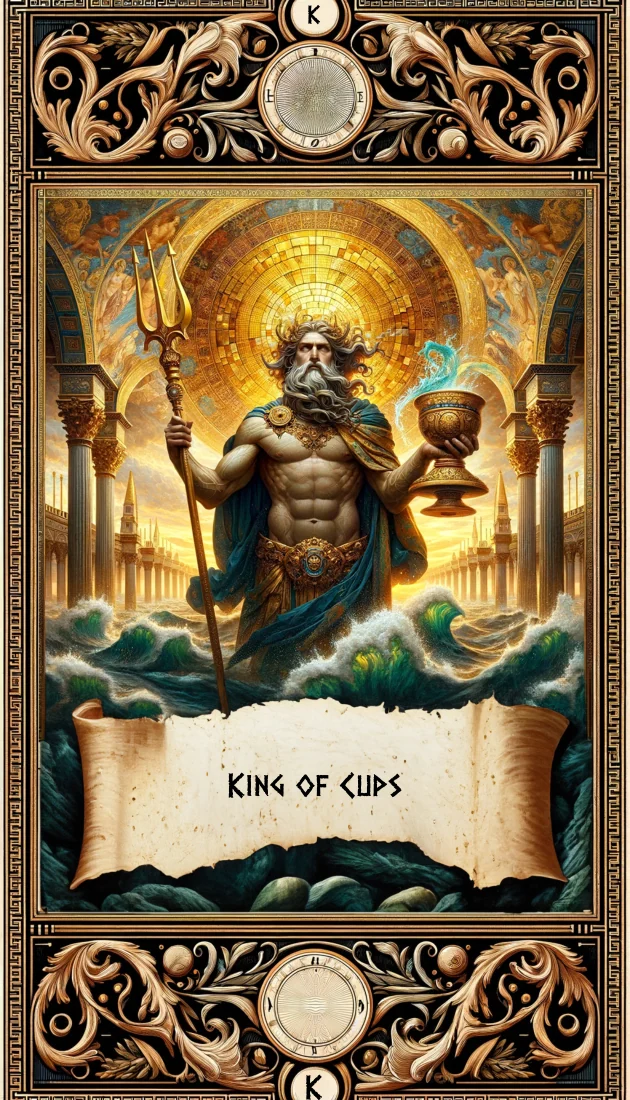
წვეროსანი ღმერთი ტალღებს შორის დგას, ერთ ხელში სამკაპი უჭირავს, მეორეში დიდი თასი. ეს პოსეიდონია — და ამ ორ ნიშანს ერთ ბერძნულ ამბავში ერთი მნიშვნელობა აქვს: ღმერთი, რომელმაც წყალი წაართვა ქვეყანას, სამკაპით მას წყაროებს უბრუნებს.
რა ჩანს ნახატზე
ძლიერი, წვეროსანი ფიგურა ტალღებში დგას. ერთ ხელში სამკაპი უჭირავს, მეორეში დიდი თასი, საიდანაც კვამლი ამოდის; მის უკან ბიზანტიური ოქროს მოზაიკის მსგავსი აფსიდაა, გვერდებზე თაღოვანი სვეტნარი და შორეული კოშკები. მოძრავი წყალი ფიგურის მყარ პოზას უპირისპირდება.
ეპიზოდი: ამიმონე და ლერნის წყაროები
არგოსის მიწისთვის პოსეიდონი და ჰერა ედავებოდნენ ერთმანეთს, და მდინარე-მსაჯულმა, ინაქოსმა, ქვეყანა ჰერას მიაკუთვნა. განრისხებულმა პოსეიდონმა წყაროები დააშრო. აპოლოდოროსის მიხედვით, როცა დანაოსი თავისი ასულებით არგოსში მოვიდა, ქვეყანა უწყლო დახვდა, და ასულები წყლის საძებნელად გაგზავნა. ერთ-ერთი მათგანი, ამიმონე, ირემს ესროდა ისარს და შემთხვევით მძინარე სატირი დაჭრა; სატირი წამოხტა და მას თავს დაესხა. მაშინ პოსეიდონი გამოჩნდა, და სატირი გაიქცა. ამიმონე პოსეიდონის სატრფო გახდა, ღმერთმა კი მას ლერნის წყაროები უჩვენა. ჰიგინუსის ვერსიით, მან სამკაპი კლდეს დაჰკრა და იქიდან წყალი ამოხეთქა. ამიმონესა და პოსეიდონის ვაჟი, ნავპლიოსი, ნავპლიონის — დღევანდელი ნაფპლიოს — ეპონიმად ითვლებოდა.[1][2]
სიმბოლოები
სამკაპი პოსეიდონის იარაღია, რომლითაც ის ზღვას აღელვებს, კლდეს აპობს — და ამ ამბავში წყაროს ხსნის. დიდი თასი წყლის სიუხვედ შეიძლება წავიკითხოთ, რომელსაც მეფე აძლევს ან აკავებს — ეს ინტერპრეტაციაა. სვეტებიანი არქიტექტურა პოსეიდონის სასახლეს შეიძლება იხსენებდეს, რომელიც „ილიადის“ მიხედვით აიგაიში, ზღვის სიღრმეში იდგა. ოქროს მოზაიკა ბიზანტიურ ეკლესიებს უფრო იხსენებს, ვიდრე ბერძნულ ტაძარს — ეს ილუსტრაციის არჩევანია.
ლერნაში, ამიმონეს წყაროს მახლობლად, იყო ალკიონის ტბა, რომელშიც, არგოსელების თქმით, დიონისე ჰადესში ჩავიდა დედის, სემელეს, ამოსაყვანად. პავსანიასი წერს, რომ ტბას ფსკერი არ აქვს: იმპერატორმა ნერონმა რამდენიმე სტადიონის სიგრძის თოკები გააბმევინა, ტყვია მიაბმევინა — და ფსკერამდე მაინც ვერ ჩააღწია. ტბა მშვიდი ჩანს, მაგრამ მოცურავეს სიღრმეში ითრევს.[3]
კარტი ტაროს ისტორიაში
მარსელის ტაროში თასების მეფე ტახტზე ზის და თასი უჭირავს. რაიდერ–უეიტ–სმითის დასტაში (1909) მეფის ტახტი აბობოქრებულ ზღვაზე ცურავს; მას ერთ ხელში თასი უჭირავს, მეორეში კვერთხი, უკან კი ხომალდი მიცურავს და თევზი ამოხტება. ILLUMINISMO ამ მშვიდ მმართველს პოსეიდონს აძლევს, რომლის სიმშვიდეც ძალას ფარავს.
A bearded god stands among the waves, a trident in one hand and a great cup in the other. This is Poseidon — and in one Greek story these two signs share one meaning: the god who took the water from a land gives its springs back with his trident.
What the image shows
A powerful, bearded figure stands among the waves. In one hand he holds a trident, in the other a great cup from which smoke rises; behind him is an apse like a Byzantine gold mosaic, with arcades and distant towers at the sides. The moving water contrasts with the figure’s firm stance.
The episode: Amymone and the springs of Lerna
Poseidon and Hera disputed the land of Argos, and the river-judge Inachus awarded the country to Hera. In anger Poseidon dried up its springs. According to Apollodorus, when Danaus came to Argos with his daughters he found the land waterless and sent his daughters to look for water. One of them, Amymone, shot an arrow at a deer and by chance wounded a sleeping satyr; the satyr leapt up and attacked her. Then Poseidon appeared, and the satyr fled. Amymone became Poseidon’s beloved, and the god showed her the springs of Lerna. In Hyginus’ version he struck the rock with his trident and water gushed from it. Nauplius, the son of Amymone and Poseidon, was held to be the eponym of Nauplion — today’s Nafplio.[1][2]
Symbols
The trident is Poseidon’s weapon, with which he stirs the sea, splits rock — and, in this story, opens a spring. The great cup can be read as the abundance of water that the king gives or withholds — this is an interpretation. The columned architecture may recall Poseidon’s palace, which according to the Iliad stood at Aegae in the depths of the sea. The gold mosaic recalls Byzantine churches more than a Greek temple — a choice of the illustration.
At Lerna, near the spring of Amymone, lay the Alcyonian Lake, through which, the Argives said, Dionysus went down to Hades to bring up his mother, Semele. Pausanias writes that the lake has no bottom: the emperor Nero had ropes several stadia long tied together and weighted with lead — and still could not reach the bottom. The lake looks calm, but drags swimmers down into its depths.[3]
The card in tarot history
In the Tarot de Marseille the King of Cups sits on a throne holding a cup. In the Rider–Waite–Smith deck (1909) the King’s throne floats on a rough sea; he holds a cup in one hand and a sceptre in the other, while a ship sails behind and a fish leaps. ILLUMINISMO gives this calm ruler to Poseidon, whose calm conceals power.
წყაროებიSources
- Apollodorus, Library 2.1.4.
- Hyginus, Fabulae 169; Pausanias, Description of Greece 2.15.5.
- Pausanias, Description of Greece 2.37.1–6.
- Homer, Iliad 13.21–22; A. E. Waite, The Pictorial Key to the Tarot (1910).
თემა, წყაროების შერჩევა და დასკვნები — ნიკა ხუცურაული. კვლევასა და თარგმანში დახმარებისთვის გამოყენებულია AI; ყოველი ფაქტი წყაროსთან შემოწმდა.Topic, choice of sources and conclusions — Nika Khutsurauli. AI was used to help with research and translation; every fact was checked against its source.