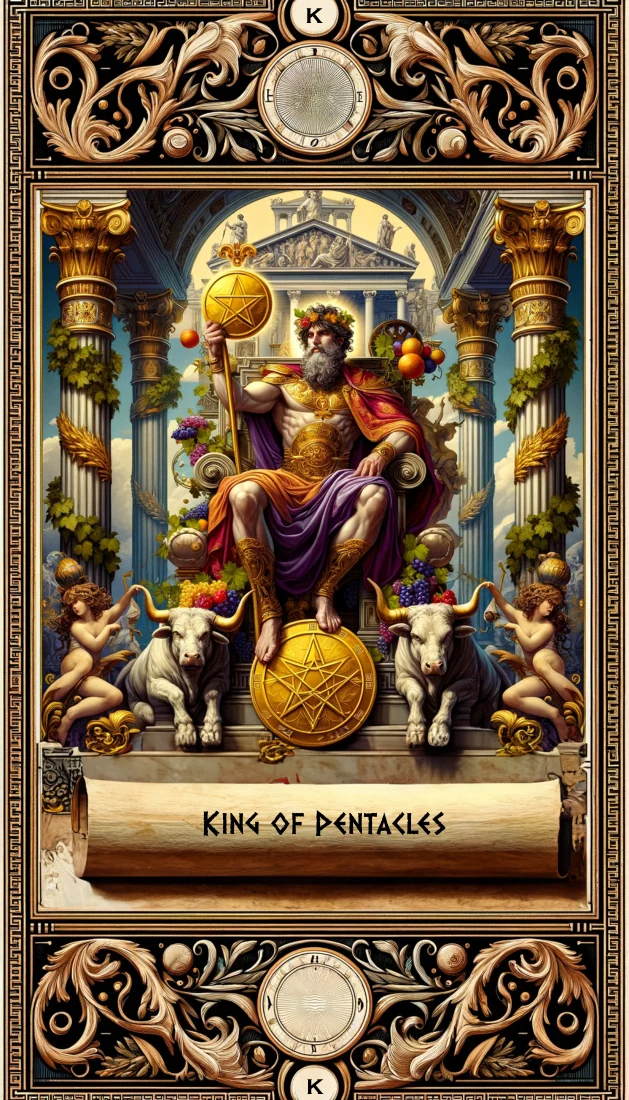
ვაზისა და ხილის გვირგვინით შემკული მეფე ტახტზე ზის, დიდი პენტაკლით, ტახტის ორივე მხარეს კი თეთრი ხარები წვანან. ეს პლუტონია — ჰადესი, „სიმდიდრის ღმერთის“ სახელით. მის სიმდიდრეს ნახირიც ეკუთვნოდა: მითებში ჰადესის ძროხები მწყემსს ჰყავდა, და ერთხელ ამ მწყემსმა ჰერაკლესთან ჭიდაობაც გაბედა.
რა ჩანს ნახატზე
ვაზისა და ხილის გვირგვინიანი, წვეროსანი მეფე მორთულ ტახტზე ზის. ხელში კვერთხი უჭირავს, რომელსაც პენტაკლი აგვირგვინებს, ფეხებთან კიდევ ერთი დიდი პენტაკლი დგას; ტახტის ორივე მხარეს თეთრი ხარები წვანან, გვერდებზე ფრთიანი ბავშვები ხილს აწვდიან. უკან ვაზშემოხვეული სვეტები და ტაძარია, რომლის ფრონტონზე ქანდაკებებია.
ეპიზოდი: ჰადესის ნახირი
აპოლოდორეს „ბიბლიოთეკაში“ ჰადესის ძროხები ორჯერ ჩნდება. პირველად — დასავლეთის კიდეზე, ერითეიას კუნძულზე: როცა ჰერაკლემ გერიონის წითელი ძროხები გარეკა, მენოიტესმა, რომელიც იქვე ჰადესის ნახირს მწყემსავდა, ეს გერიონს შეატყობინა. მეორედ — ქვესკნელში, როცა ჰერაკლე კერბეროსის წასაყვანად ჩავიდა: სულების დასაპურებლად მან ჰადესის ერთ-ერთი ძროხა დაკლა, რადგან აჩრდილებს სისხლი სჭირდებოდათ. მენოიტესმა, კევთონიმოსის ძემ, ჰერაკლე ჭიდაობაში გამოიწვია. ჰერაკლემ წელზე მოხვია ხელები და ნეკნები ჩაუმტვრია — და მხოლოდ პერსეფონეს თხოვნით გაუშვა. მკვდრების მეფესაც, ასე, ჰქონდა ქონება, მწყემსი და წესრიგი — და ქალი, რომელიც მოწყალებას ითხოვდა.[1]
სიმბოლოები
ხარები რაიდერ–უეიტ–სმითის მეფის ტახტიდან მოდის, სადაც ხარის თავებია ამოკვეთილი და მათ ხშირად კუროს, დედამიწის სტიქიის ზოდიაქოს ნიშანს, უკავშირებენ; ILLUMINISMO-ში ისინი ჰადესის ნახირსაც იხსენებს. დიდი პენტაკლი პლუტონის სიმდიდრეა, ნაყოფი — მიწიდან ამოსული მოსავალი. ვაზის გვირგვინი უფრო დიონისეს ნიშანია, ვიდრე ჰადესისა — თუმცა ფილოსოფოსი ჰერაკლიტე წერდა, რომ „ჰადესი და დიონისე ერთი და იგივეა“. ტაძრის არქიტექტურა ილუსტრაციისაა. სიმდიდრე აქ დაცვასაც ნიშნავს და პასუხისმგებლობასაც — ეს ინტერპრეტაციაა.[4]
ქვესკნელის ღმერთებს ბერძნები სხვაგვარად სწირავდნენ. „ოდისეაში“ კირკე ოდისევსს ასწავლის: ვერძი და შავი ცხვარი დაკალი, თავები ერებოსისკენ — სიბნელისკენ — მიაბრუნე, და სისხლი ორმოში ჩაუშვი, რომ აჩრდილებმა დალიონ. ზეციურ ღმერთებს ცხოველის თავს ზემოთ, ცისკენ სწევდნენ; ქვესკნელისას — დაბლა, მიწისკენ. ჰერაკლეს დაკლული ძროხა ამ წესის მითიური ვერსიაა.[2]
კარტი ტაროს ისტორიაში
მარსელის ტაროში პენტაკლების მეფე (Roi de Deniers) ზის და ხელში მონეტა უჭირავს. რაიდერ–უეიტ–სმითის დასტაში (1909) მეფე ვაზის ფოთლებით მოქარგული სამოსით ზის ტახტზე, რომელზეც ხარის თავებია ამოკვეთილი, ერთ ხელში კვერთხი უჭირავს, მეორეში პენტაკლი, უკან ციხე-დარბაზია. ILLUMINISMO ამ მეფეს პლუტონს აძლევს — და ამოკვეთილ ხარის თავებს ცოცხალ ხარებად, ჰადესის ნახირად აქცევს. ამ კარტით ბერძნული ტაროს 78 კარტი სრულდება.[4]
A king wreathed with vine and fruit sits on a throne with a large pentacle, and white bulls lie on both sides of the throne. This is Plouton — Hades under the name of the “god of wealth”. His wealth included herds: in myth Hades’ cattle had a herdsman, and once that herdsman even dared to wrestle Heracles.
What the image shows
A bearded king wreathed with vine and fruit sits on an ornate throne. He holds a sceptre topped with a pentacle, and another large pentacle stands at his feet; white bulls lie on both sides of the throne, and winged children offer fruit at the sides. Behind are vine-wound columns and a temple with sculptures in its pediment.
The episode: the herds of Hades
In Apollodorus’ Library the cattle of Hades appear twice. First at the western edge of the world, on the island of Erytheia: when Heracles drove off the red cattle of Geryon, Menoetes, who was herding Hades’ cattle nearby, reported it to Geryon. Second in the underworld, when Heracles went down to fetch Cerberus: to feed the souls he slaughtered one of Hades’ cattle, since the shades needed blood. Menoetes, son of Ceuthonymus, challenged Heracles to wrestle. Heracles caught him round the middle and broke his ribs — and let him go only at Persephone’s request. So even the king of the dead had property, a herdsman and order — and a woman who asked for mercy.[1]
Symbols
The bulls come from the throne of the Rider–Waite–Smith King, which is carved with bull heads often linked to Taurus, an earth sign of the zodiac; in ILLUMINISMO they also recall the herds of Hades. The large pentacle is Plouton’s wealth, the fruit the harvest risen from the earth. The vine wreath is a sign of Dionysus rather than of Hades — though the philosopher Heraclitus wrote that “Hades and Dionysus are the same”. The temple architecture belongs to the illustration. Wealth here means both protection and responsibility — this is an interpretation.[4]
The Greeks sacrificed to the gods below in a different way. In the Odyssey Circe instructs Odysseus: slaughter a ram and a black ewe, turn their heads towards Erebus — towards the darkness — and let the blood run into a pit for the shades to drink. For the gods of the sky the victim’s head was lifted up, towards heaven; for those below, it was turned down, towards the earth. Heracles’ slaughtered cow is the mythical version of this rule.[2]
The card in tarot history
In the Tarot de Marseille the King of Pentacles (Roi de Deniers) sits holding a coin. In the Rider–Waite–Smith deck (1909) the King sits in a robe embroidered with vine leaves on a throne carved with bull heads, a sceptre in one hand and a pentacle in the other, with a castle behind him. ILLUMINISMO gives this King to Plouton — and turns the carved bull heads into living bulls, the herds of Hades. With this card the 78 cards of the Greek Tarot are complete.[4]
წყაროებიSources
- Apollodorus, Library 2.5.10; 2.5.12.
- Homer, Odyssey 10.516–529; 11.23–36.
- W. Burkert, Greek Religion (1985), on sacrifice to the gods below; Heraclitus, fr. B15 DK.
- A. E. Waite, The Pictorial Key to the Tarot (1910).
თემა, წყაროების შერჩევა და დასკვნები — ნიკა ხუცურაული. კვლევასა და თარგმანში დახმარებისთვის გამოყენებულია AI; ყოველი ფაქტი წყაროსთან შემოწმდა.Topic, choice of sources and conclusions — Nika Khutsurauli. AI was used to help with research and translation; every fact was checked against its source.