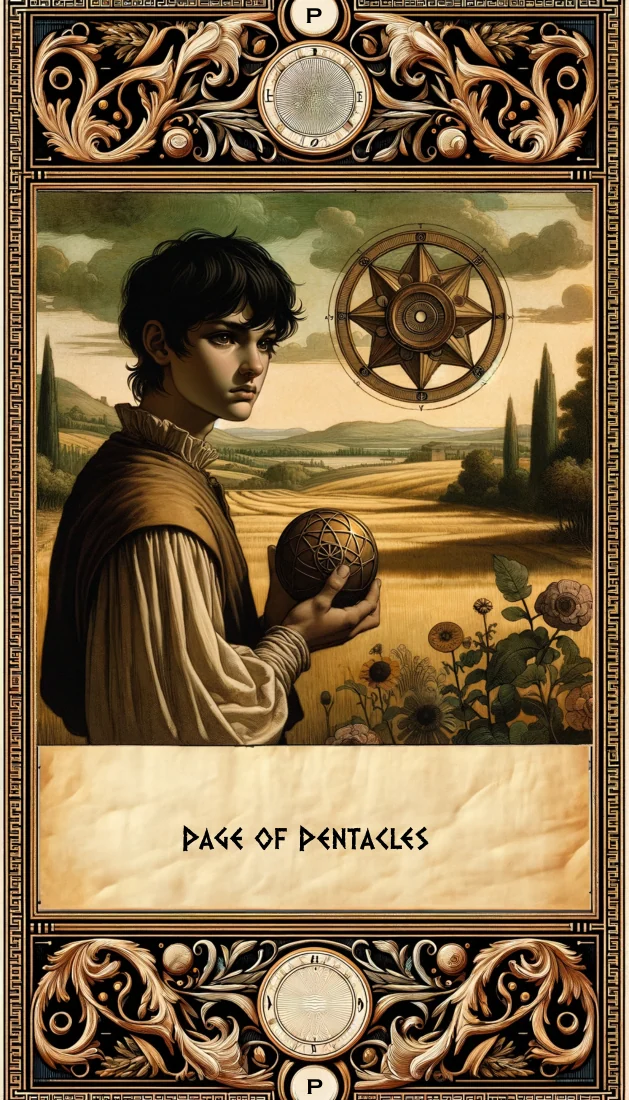
ახალგაზრდა ხელში მრგვალ საგანს ატარებს და მას დაკვირვებით უყურებს. ჰერმესი აქ ჯერ ვაჭარიც არ არის და მაცნეც — ის სოფლის ღმერთია, ცხვრისა და ნახირის მფარველი. ბეოტიის ქალაქ ტანაგრაში ყოველწლიურად ერთ ჭაბუკს ირჩევდნენ, რომ ჰერმესის გზა გაემეორებინა: კრავი მხრებზე შეედგა და ქალაქის კედლებს შემოევლო.
რა ჩანს ნახატზე
აღორძინების ხანის სამოსში — ნაოჭიანი საყელოთი — ჩაცმული ჭაბუკი ორნამენტიან სფეროს ხელში ატარებს და მისკენ იყურება. უკან ყანები, კვიპაროსები და ცაში დიდი ვარსკვლავისებრი პენტაკლის მოტივია; წინ მცენარეები და ყვავილებია. ყურადღება მთლიანად ხელში აღებულ შესაძლებლობაზეა მიმართული.
ეპიზოდი: ვერძის მზიდავი ჰერმესი
პავსანიასის მიხედვით, ტანაგრაში ჰერმესის ორი სიწმინდე იყო: ჰერმეს კრიოფოროსისა — „ვერძის მზიდავისა“ — და ჰერმეს პრომაქოსისა, „წინამბრძოლისა“. პირველ სახელს ასე ხსნიდნენ: ჰერმესმა ქალაქს სენი ააცილა, როცა ვერძი მხრებზე შეიდგა და კედლებს შემოუარა. ამის სახსოვრად მოქანდაკე კალამისმა ჰერმესი ვერძით მხრებზე გამოძერწა. ჰერმესის დღესასწაულზე კი ის ჭაბუკი, რომელსაც ყველაზე ლამაზად სცნობდნენ, კრავით მხრებზე ქალაქის კედლებს შემოუვლიდა. მეორე სახელი სხვა ამბავს უკავშირდება: როცა ერეტრიელების ფლოტი ტანაგრასთან გადმოსხდა, ჰერმესმა, ამბობენ, ჭაბუკები ბრძოლაში გაიყვანა — თავად ჭაბუკივით, ხელში მხოლოდ საფხეკი ეჭირა. ტანაგრელები იმ ველური მარწყვის ხის ნარჩენებსაც ინახავდნენ, რომლის ქვეშაც, მათი თქმით, ჰერმესი გაიზარდა.[1]
სიმბოლოები
ახალგაზრდა სახე ტანაგრის არჩეულ ჭაბუკს შეესაბამება, სასოფლო ლანდშაფტი კი ჰერმესის, მწყემსების ღმერთის, სამყაროს. მრგვალი საგანი დასტის პენტაკლია: ტანაგრის რიტუალში ჭაბუკს კრავი ეჭირა, ილუსტრაციამ ის მონეტით შეცვალა. დაკვირვებული მზერა სწავლის დასაწყისის ყურადღებას ნიშნავს — ეს ინტერპრეტაციაა. აღორძინების ხანის სამოსი ილუსტრაციისაა.
მხრებზე შედგმული ცხოველის პოზა ძალიან ძველია: ათენის აკროპოლისზე ნაპოვნი „ხბოს მზიდავი“ (მოსქოფოროსი) დაახლოებით ძვ. წ. 560 წლით თარიღდება. ადრეულმა ქრისტიანულმა ხელოვნებამ ეს პოზა „კეთილი მწყემსის“ გამოსახულებებში გამოიყენა — ყრმა მხრებზე შედგმული კრავით. ხელოვნების ისტორიკოსები ამას ხშირად ერთი ჟესტის გაგრძელებად განიხილავენ: მნიშვნელობა შეიცვალა, ჟესტი დარჩა.
კარტი ტაროს ისტორიაში
მარსელის ტაროში პენტაკლების პაჟი (Valet de Deniers) დგას და ხელში მონეტა უჭირავს, მეორე მის ფეხებთან, მიწაზეა. რაიდერ–უეიტ–სმითის დასტაში (1909) ახალგაზრდა ყვავილიან მინდორში დგას და ორივე ხელით აწეულ პენტაკლს უყურებს, უკან მოხნული ყანა, ხეები და მთაა. ILLUMINISMO ამ ახალგაზრდას ტანაგრის ჭაბუკად აქცევს — არჩეულად, რომ ღმერთის გზა გაიაროს.[4]
A young figure holds a round object and studies it closely. Here Hermes is neither merchant nor messenger yet — he is a country god, protector of flocks. In the Boeotian town of Tanagra one youth was chosen each year to repeat Hermes’ path: to carry a lamb on his shoulders around the city walls.
What the image shows
A youth in Renaissance dress — with a ruffled collar — holds a patterned sphere and looks at it. Behind are fields, cypresses and, in the sky, a large star-shaped pentacle; in front are plants and flowers. All attention is on the opportunity held in the hand.
The episode: Hermes the Ram-Bearer
According to Pausanias, Tanagra had two sanctuaries of Hermes: of Hermes Kriophoros, the “Ram-Bearer”, and of Hermes Promachos, the “Champion”. The first name was explained like this: Hermes averted a plague from the city by carrying a ram on his shoulders around the walls. To commemorate this the sculptor Calamis made a Hermes with a ram on his shoulders. At the festival of Hermes the youth judged the most handsome walked around the city walls with a lamb on his shoulders. The second name belongs to another story: when an Eretrian fleet landed at Tanagra, Hermes is said to have led the youths into battle — himself like a youth, holding only a strigil. The people of Tanagra also kept what was left of the wild strawberry tree under which, they said, Hermes was raised.[1]
Symbols
The young face matches the chosen youth of Tanagra, and the rural landscape the world of Hermes, god of flocks. The round object is the deck’s pentacle: in the Tanagra rite the youth carried a lamb, and the illustration has replaced it with a coin. The attentive gaze stands for the focus of a beginning in learning — this is an interpretation. The Renaissance dress belongs to the illustration.
The pose of an animal carried on the shoulders is very old: the “Calf-Bearer” (Moschophoros) found on the Athenian Acropolis dates to about 560 BC. Early Christian art used the pose in images of the “Good Shepherd” — a youth with a lamb on his shoulders. Art historians often treat this as the continuation of one gesture: the meaning changed, the gesture stayed.
The card in tarot history
In the Tarot de Marseille the Page of Pentacles (Valet de Deniers) stands holding a coin, with another on the ground at his feet. In the Rider–Waite–Smith deck (1909) a young man stands in a flowering field gazing at a pentacle raised in both hands, with a ploughed field, trees and a mountain behind. ILLUMINISMO makes this young man the youth of Tanagra — chosen to walk the path of a god.[4]
წყაროებიSources
- Pausanias, Description of Greece 9.22.1–2.
- Acropolis Museum, Acr. 624 (the Moschophoros, c. 560 BC).
- W. Burkert, Greek Religion (1985), on Hermes as god of herdsmen.
- A. E. Waite, The Pictorial Key to the Tarot (1910).
თემა, წყაროების შერჩევა და დასკვნები — ნიკა ხუცურაული. კვლევასა და თარგმანში დახმარებისთვის გამოყენებულია AI; ყოველი ფაქტი წყაროსთან შემოწმდა.Topic, choice of sources and conclusions — Nika Khutsurauli. AI was used to help with research and translation; every fact was checked against its source.