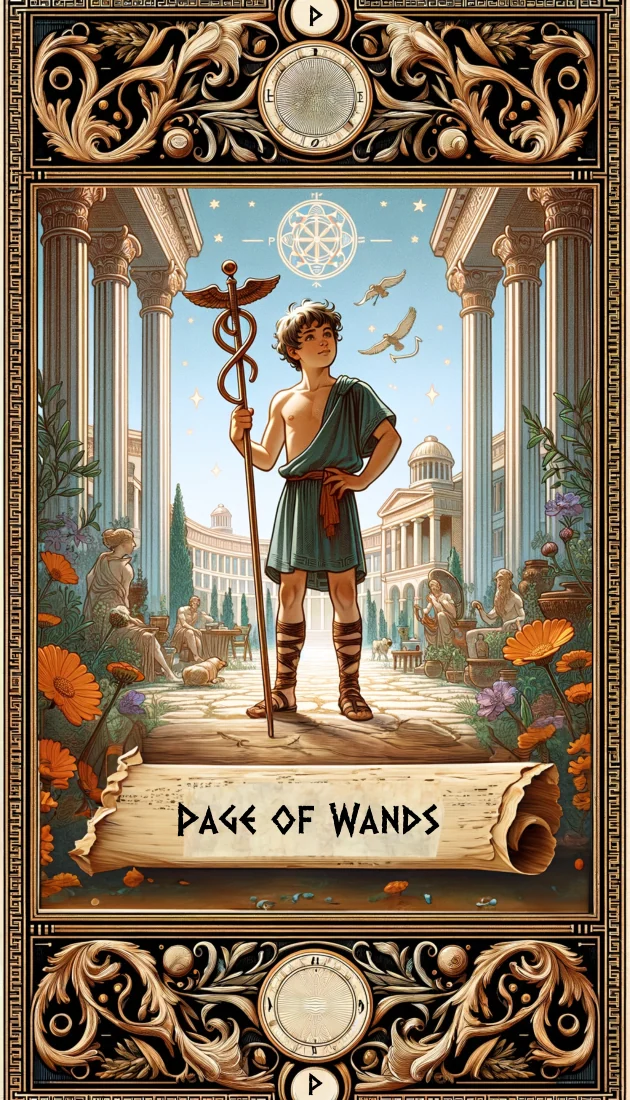
სვეტებიან ბილიკზე ბიჭი დგას, ხელში კადუცეუსი უჭირავს. ბერძნულ ხელოვნებაში ჰერმესი დიდხანს წვეროსანი ღმერთია, მაგრამ „ოდისეაში“ ის ერთხელ ჭაბუკის სახით ჩნდება — როცა ოდისევსს ჯადოქარ კირკესთან მიმავალ გზაზე ხვდება და მცენარეს აძლევს, რომელიც ჯადოს ძალას აქარწყლებს.[1]
რა ჩანს ნახატზე
სვეტებიან ბილიკზე ბიჭი დგას — ერთი ხელი წელზე აქვს, მეორით კადუცეუსს იჭერს. მის უკან ფრინველები და ნათელი გეომეტრიული ნიშანია, გვერდებზე ყვავილები, ქანდაკებები და ქალაქის არქიტექტურა ჩანს. ფიგურა გზის დასაწყისს ღია მზერით ხვდება.
ეპიზოდი: მოლი
„ოდისეის“ X სიმღერაში კირკე ოდისევსის თანამგზავრებს ღორებად აქცევს. ოდისევსი მარტო მიდის მათ გადასარჩენად, და გზაზე ოქროკვერთხიანი ჰერმესი ხვდება — ჭაბუკის სახით, რომელსაც ტუჩზე პირველი ღინღლი ამოსდის, „ყველაზე მომხიბვლელ ასაკში“. ჰერმესი მას აფრთხილებს: კირკე სასმელში წამალს შეგირევს და კვერთხით დაგკრავს; შენ კი ხმალი იშიშვლე და ისე ეცი, თითქოს მოკვლა გინდა. მერე მიწიდან მცენარეს ამოთხრის და მის ბუნებას აჩვენებს: ფესვი შავი აქვს, ყვავილი რძესავით თეთრი; ღმერთები მას მოლის უწოდებენ; მოკვდავ კაცებს მისი ამოთხრა უჭირთ, ღმერთებს კი ყველაფერი შეუძლიათ. ოდისევსი ასე იქცევა — და კირკის წამალი მასზე არ მოქმედებს.[1]
სიმბოლოები
კადუცეუსი ჰომეროსის „ოქროს კვერთხია“; მისი ისტორია — როგორ შემოეხვია გველები — „სულელის“ სტატიაშია. ყვავილები შეიძლება მოლის მინიშნებად წავიკითხოთ — ეს ინტერპრეტაციაა. ახალგაზრდა სახე სწორედ ამ ეპიზოდს შეესაბამება: ჰერმესი აქ მოზარდია, არა წვეროსანი კაცი. ფრინველები, გეომეტრიული ნიშანი და ქალაქის არქიტექტურა ილუსტრაციის დამატებაა.[1]
რა მცენარეა მოლი, ძველთაგანვე კამათობდნენ. თეოფრასტე წერს, რომ ის ფენეოსთან და კილენეზე — ჰერმესის დაბადების მთაზე — იზრდება, ხახვისებრი ფესვი აქვს და ჯადოს წინააღმდეგ იყენებენ, თუმცა ამოთხრა, ჰომეროსისგან განსხვავებით, არ უჭირთ. 1983 წელს ორმა ნევროლოგმა, პლაიტაკისმა და დუვუაზენმა, ივარაუდა, რომ მოლი თოვლის ყვავილია (Galanthus nivalis): მასში არის გალანტამინი, რომელიც ზოგი მომწამვლელი მცენარის ზემოქმედებას აქარწყლებს. ჰიპოთეზა სადავოა — თოვლის ყვავილი ეგეოსის დაბლობებში თითქმის არ იზრდება.[1][2][3]
კარტი ტაროს ისტორიაში
იტალიურ დასტებში ყველაზე დაბალი სასახლის კარტი „ფანტეა“ (fante) — ფეხით მოსამსახურე; ფრანგულად valet, ინგლისურ ტრადიციაში — პაჟი. მარსელის ტაროში ჭაბუკი დიდ ხელკეტს ეყრდნობა. რაიდერ–უეიტ–სმითის დასტაში (1909) ახალგაზრდა უდაბნოში დგას და კვერთხის წვერს უყურებს, ტანსაცმელზე სალამანდრები ახატია. ILLUMINISMO პაჟს მაცნედ აქცევს — ჭაბუკად, რომელსაც ცოდნა მოაქვს.[4]
A boy stands on a columned path holding a caduceus. In Greek art Hermes was long a bearded god, but in the Odyssey he once appears as a youth — when he meets Odysseus on the way to the sorceress Circe and gives him a plant that cancels her magic.[1]
What the image shows
A boy stands on a columned path, one hand on his hip, the other holding a caduceus. Behind him are birds and a bright geometric sign; flowers, statues and city architecture appear at the sides. The figure meets the start of the road with an open gaze.
The episode: the moly
In book 10 of the Odyssey Circe turns Odysseus’ companions into pigs. Odysseus goes alone to rescue them, and on the way he meets Hermes of the golden wand — in the likeness of a young man with the first down on his lip, “at the most charming age”. Hermes warns him: Circe will mix a drug into your drink and strike you with her wand; draw your sword and rush at her as if you meant to kill her. Then he pulls a plant from the ground and shows its nature: black at the root, its flower white as milk; the gods call it moly; it is hard for mortal men to dig up, but the gods can do all things. Odysseus does as he is told — and Circe’s drug has no power over him.[1]
Symbols
The caduceus is Homer’s “golden wand”; its history — how the snakes came to coil around it — is in the article on The Fool. The flowers can be read as a hint of the moly — this is an interpretation. The young face matches exactly this episode: here Hermes is a youth, not a bearded man. The birds, the geometric sign and the city architecture are additions of the illustration.[1]
What plant moly is has been argued since antiquity. Theophrastus writes that it grows near Pheneus and on Cyllene — the mountain where Hermes was born — has an onion-like root and is used against spells, though, unlike in Homer, it is not hard to dig up. In 1983 two neurologists, Plaitakis and Duvoisin, proposed that moly was the snowdrop (Galanthus nivalis): it contains galantamine, which counteracts the effects of some poisonous plants. The hypothesis is disputed — the snowdrop hardly grows in the Aegean lowlands.[1][2][3]
The card in tarot history
In Italian decks the lowest court card is the fante — a foot servant; in French the valet, in the English tradition the Page. In the Tarot de Marseille a youth leans on a great baton. In the Rider–Waite–Smith deck (1909) a young man stands in a desert gazing at the top of his staff, salamanders on his tunic. ILLUMINISMO makes the Page a messenger — a youth who brings knowledge.[4]
წყაროებიSources
- Homer, Odyssey 10.274–308.
- Theophrastus, Enquiry into Plants 9.15.7.
- A. Plaitakis and R. C. Duvoisin, “Homer’s moly identified as Galanthus nivalis L.: physiologic antidote to stramonium poisoning”, Clinical Neuropharmacology 6 (1983) 1–5.
- A. E. Waite, The Pictorial Key to the Tarot (1910).
თემა, წყაროების შერჩევა და დასკვნები — ნიკა ხუცურაული. კვლევასა და თარგმანში დახმარებისთვის გამოყენებულია AI; ყოველი ფაქტი წყაროსთან შემოწმდა.Topic, choice of sources and conclusions — Nika Khutsurauli. AI was used to help with research and translation; every fact was checked against its source.