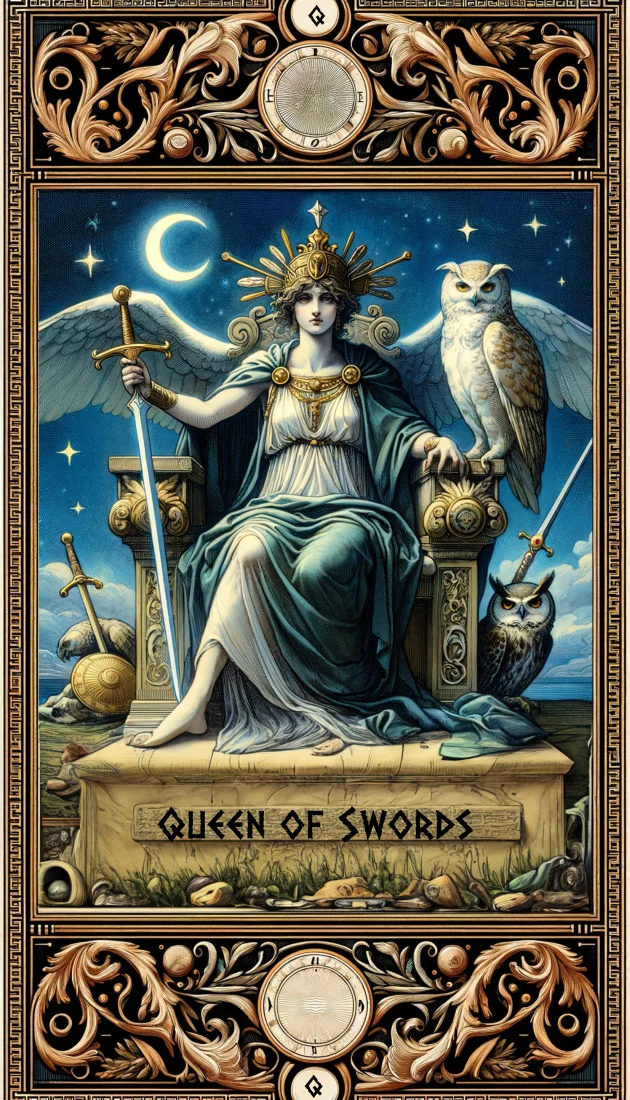
გვირგვინოსანი ქალი ტახტზე ზის, ხელში გრძელი ხმალი უჭირავს, გვერდით ბუ უზის. ეს ათენაა — მაგრამ ამ კარტზე ის არა მეომარი, არამედ მოსამართლეა. ესქილეს „ევმენიდებში“ ის ათენში პირველ სასამართლოს აარსებს და ხმას აძლევს, რომელიც დღემდე სამართლის ერთ-ერთ წესადაა დარჩენილი.[1]
რა ჩანს ნახატზე
გვირგვინოსანი, ფრთოსანი ქალი ტახტზე ზის და გრძელ ხმალს ატარებს. ტახტზე დიდი თეთრი ბუ უზის, ქვემოთ მეორე, პატარა ბუა; უკან ნახევარმთვარე და ვარსკვლავები ჩანს, მიწაზე მრგვალი ფარი და სხვა ხმლები დევს. ფიგურა ღამის ნათელ სივრცეში მყარ ცენტრს ქმნის.
ეპიზოდი: ათენას ხმა
ესქილეს ტრილოგიის, „ორესტეიას“, ბოლო ნაწილში (ძვ. წ. 458) ორესტე, რომელმაც მამის მკვლელობისთვის შურისძიებით დედა მოკლა, ათენში გარბის, ერინიები — შურისძიების ქალღმერთები — კი მისდევენ. ათენა ამბობს, რომ ეს საქმე ერთი ღმერთისთვისაც კი მძიმეა გადასაწყვეტად, და არეოპაგზე მოქალაქეებისგან მოსამართლეებს ირჩევს — ფიცით შეკრულ, მუდმივ სასამართლოს, რომელიც ქალაქს მომავალშიც დაიცავს. მოსამართლეები კენჭებს ურნებში ყრიან. ჯერ კიდევ კენჭისყრამდე ათენა აცხადებს: ჩემს კენჭს ორესტეს მივცემ; და თუ ხმები თანაბრად გაიყოფა, ორესტე გამართლებულია. ხმები მართლაც თანაბრად იყოფა, და ორესტე თავისუფალია. ერინიებს ათენა დამარცხების ნაცვლად ქალაქში პატივსაცემ ადგილს სთავაზობს — და ისინი „ევმენიდებად“, „კეთილმოსურნეებად“ იქცევიან.[1]
სიმბოლოები
ხმალი აქ განსჯის ნიშანია, ბუ — ათენას და ღამის დაკვირვების ფრინველი. ნახევარმთვარე და ვარსკვლავები ღამეს აჩვენებს, როცა ბუ ხედავს, სხვები კი — არა; ეს ინტერპრეტაციაა. გვირგვინი და ფრთები ილუსტრაციისაა: ბერძნული ათენა ჩვეულებრივ ჩაფხუტს ატარებს, ფრთები კი უფრო ნიკეს, გამარჯვების ქალღმერთს, ეკუთვნის (იხ. „ხმლების ტუზი“). ტახტი კი მოსამართლის ადგილია, საიდანაც ათენა კრებას უძღვება.
ლათინურ სამართლებრივ ტრადიციაში ათენას ეს ხმა calculus Minervae-ს — „მინერვას კენჭს“ — უწოდეს: პრინციპი, რომ თანაბრად გაყოფილი ხმები ბრალდებულის სასარგებლოდ წყდება. ათენურ სასამართლოებში ეს ნამდვილი წესი იყო, და მისი გამოძახილი დღესაც ჩანს: ბევრ თანამედროვე სამართლებრივ სისტემაში ეჭვი ბრალდებულის სასარგებლოდ წყდება.
კარტი ტაროს ისტორიაში
მარსელის ტაროში ხმლების დედოფალს ხმალი უჭირავს და ტახტზე ზის. რაიდერ–უეიტ–სმითის დასტაში (1909) დედოფალი ღრუბლების თავზე, ტახტზე ზის, მარჯვენა ხელში აწეული ხმალი აქვს, მარცხენა კი წინ, თითქოს ვინმეს ეძახის ან ხვდება; ტახტზე პეპლები და ფრთიანი თავია გამოსახული. ILLUMINISMO დედოფალს ათენას აძლევს — მოსამართლეს, რომლის ხმალიც შურისძიებას აჩერებს.[4]
A crowned woman sits on a throne holding a long sword, an owl beside her. This is Athena — but on this card she is not a warrior but a judge. In Aeschylus’ Eumenides she founds the first court in Athens and casts a vote that survives to this day as one of the rules of justice.[1]
What the image shows
A crowned, winged woman sits on a throne holding a long sword. A large white owl perches on the throne and a second, smaller owl sits below; behind are a crescent moon and stars, and a round shield and other swords lie on the ground. The figure forms a firm centre in a bright night space.
The episode: Athena’s vote
In the last part of Aeschylus’ trilogy, the Oresteia (458 BC), Orestes, who has killed his mother in revenge for his father’s murder, flees to Athens, pursued by the Erinyes — the goddesses of vengeance. Athena says the case is too heavy even for a single god to decide, and on the Areopagus she chooses judges from among the citizens — a permanent court bound by oath that will protect the city in the future too. The judges drop their pebbles into urns. Even before the vote Athena declares: I will give my pebble to Orestes; and if the votes are equal, Orestes is acquitted. The votes are indeed equal, and Orestes is free. Instead of defeat, Athena offers the Erinyes a place of honour in the city — and they become the “Eumenides”, the “Kindly Ones”.[1]
Symbols
The sword here is a sign of judgement, the owl the bird of Athena and of watching by night. The crescent moon and stars show the night, when the owl sees and others do not; this is an interpretation. The crown and the wings belong to the illustration: the Greek Athena usually wears a helmet, and wings belong rather to Nike, goddess of victory (see Ace of Swords). The throne is the judge’s seat from which Athena presides over the assembly.
In the Latin legal tradition Athena’s vote came to be called the calculus Minervae — “Minerva’s pebble”: the principle that an equal division of votes is decided in the defendant’s favour. In Athenian courts this was a real rule, and its echo is still visible: in many modern legal systems doubt is resolved in favour of the accused.
The card in tarot history
In the Tarot de Marseille the Queen of Swords sits on a throne holding a sword. In the Rider–Waite–Smith deck (1909) the Queen sits on a throne above the clouds, her sword raised in her right hand and her left held out, as if calling or receiving someone; butterflies and a winged head decorate the throne. ILLUMINISMO gives the Queen to Athena — a judge whose sword halts revenge.[4]
წყაროებიSources
- Aeschylus, Eumenides 470–489, 681–753, 778–1047.
- Aristotle, Constitution of the Athenians 69.1 (equal votes acquit).
- A. H. Sommerstein (ed.), Aeschylus: Eumenides (1989).
- A. E. Waite, The Pictorial Key to the Tarot (1910).
თემა, წყაროების შერჩევა და დასკვნები — ნიკა ხუცურაული. კვლევასა და თარგმანში დახმარებისთვის გამოყენებულია AI; ყოველი ფაქტი წყაროსთან შემოწმდა.Topic, choice of sources and conclusions — Nika Khutsurauli. AI was used to help with research and translation; every fact was checked against its source.