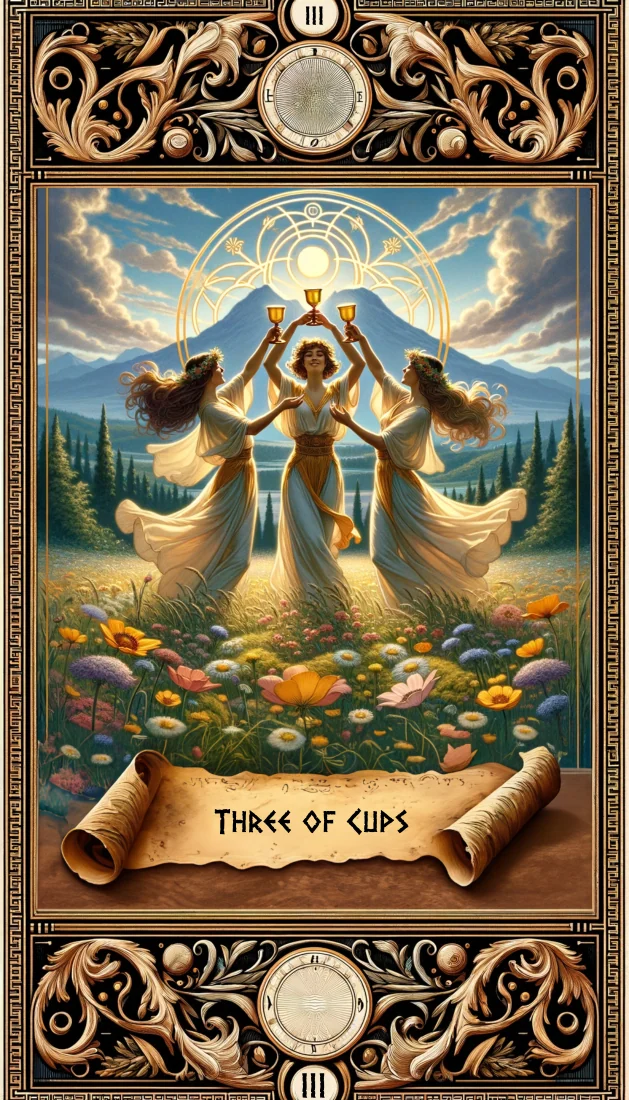
სამი ქალი ყვავილებიან მინდორში თასებს მაღლა სწევს. ეს ქარიტებია, სამი მადლი. ბერძნულ კულტში ისინი დიონისესთან, ღვინის ღმერთთან, ერთად იხსენიებოდნენ — და ელიდაში ამბობდნენ, რომ მის დღესასწაულზე ცარიელი ქვაბები ღამით თავისით ივსებოდა ღვინით.
რა ჩანს ნახატზე
სამი ქალი ყვავილებიან მინდორში თასებს მაღლა სწევს. მათი სხეულების მოძრაობა საერთო წრედ იკითხება; უკან ნათელი გეომეტრიული რკალი და შორეული მთებია. სიხარული საერთო ჟესტში ჩანს.
ეპიზოდი: „მოდი ქარიტებთან ერთად“
პლუტარქე „ბერძნულ საკითხებში“ სვამს კითხვას: რატომ უხმობენ ელიდელი ქალები ჰიმნში დიონისეს, რომ მათთან „ხარის ფეხით“ მოვიდეს? და ჰიმნსაც იმოწმებს — ერთადერთი ავტორი, ვინც ის შემოგვინახა: მოდი, გმირო დიონისე, ელიდელთა წმინდა ტაძარში, ქარიტებთან ერთად, ტაძარში, ხარის ფეხით მოიჩქარე; და ორჯერ იმეორებენ: ღირსეულო ხარო! ქარიტები დიონისესთან ოლიმპიაშიც იყვნენ: პავსანიასის მიხედვით, იქ დიონისესა და ქარიტებს საერთო საკურთხეველი ჰქონდათ. ღვინის ღმერთი და მადლის სამი ქალღმერთი ერთად იხსენიებოდნენ, რადგან ნადიმი, ცეკვა და სიხარული ერთ სფეროს ეკუთვნოდა.[1][2]
სიმბოლოები
სამი ქალი ქარიტებია, რომელთა სახელებიც მითის სრულ ისტორიაშია. აწეული თასები მათ დიონისესთან, ნადიმთან და საერთო სასმელთან აკავშირებს. წრიული კომპოზიცია ქარიტების ცეკვას იხსენებს, რომელშიც ისინი ერთმანეთს ხელს უჭერენ. ყვავილები ერთ-ერთი ქარიტის, თალიას, სახელს — „ყვავილობას“ — შეესაბამება. მთები და გეომეტრიული რკალი ილუსტრაციისაა.
პავსანიასი ელიდაში დიონისეს დღესასწაულს, თიიას, აღწერს: ქურუმები შენობაში სამ ცარიელ ქვაბს დგამენ, კარს ბეჭდავენ, მეორე დღეს კი ქვაბებს ღვინით სავსეს პოულობენ. პავსანიასი პატიოსნად წერს, რომ თავად იქ არ ყოფილა, მაგრამ სანდო ელიდელები და უცხოელები ფიცით ადასტურებდნენ. სამი ცარიელი ჭურჭელი, რომელიც ივსება — ძველი ბერძნული „სამი თასი“.[2]
კარტი ტაროს ისტორიაში
მარსელის ტაროში სამ თასზე სამი თასია ყვავილოვან ორნამენტში. რაიდერ–უეიტ–სმითის დასტაში (1909) სამი ქალი ბაღში, მოსავლის ნაყოფს შორის, თასებს მაღლა სწევს; „ოქროს განთიადის“ სისტემაში კარტს „სიუხვის მბრძანებელი“ ჰქვია. სმითის სამი ქალი ხშირად ქარიტებად იკითხება; ILLUMINISMO ამ კავშირს ღიად ასახელებს.[4]
Three women raise their cups in a flowering meadow. These are the Charites, the three Graces. In Greek cult they were invoked together with Dionysus, the god of wine — and in Elis it was said that at his festival empty cauldrons filled with wine on their own overnight.
What the image shows
Three women raise their cups in a flowering meadow. The movement of their bodies reads as a shared circle; behind them are a bright geometric arc and distant mountains. Joy shows in a shared gesture.
The episode: “come with the Graces”
In his Greek Questions Plutarch asks: why do the women of Elis, in their hymn, call on Dionysus to come to them “with the bull’s foot”? And he quotes the hymn — the only author to preserve it: come, hero Dionysus, to the holy temple of the Eleans, with the Graces, to the temple, rushing with the bull’s foot; and twice they repeat: worthy bull! The Graces were with Dionysus at Olympia too: according to Pausanias, Dionysus and the Charites shared an altar there. The god of wine and the three goddesses of grace were named together because feasting, dance and joy belonged to one sphere.[1][2]
Symbols
The three women are the Charites, whose names are in the full myth. The raised cups tie them to Dionysus, to the feast and to shared drinking. The circular composition recalls the dance of the Graces, in which they hold one another’s hands. The flowers match the name of one Grace, Thalia — “Blooming”. The mountains and the geometric arc belong to the illustration.
Pausanias describes the festival of Dionysus in Elis, the Thyia: the priests set three empty cauldrons in a building and seal the door, and the next day they find the cauldrons full of wine. Pausanias honestly says he was not there himself, but trustworthy Eleans and foreigners swore to it. Three empty vessels that fill — an ancient Greek “three cups”.[2]
The card in tarot history
In the Tarot de Marseille the Three of Cups shows three cups in a flowering ornament. In the Rider–Waite–Smith deck (1909) three women raise their cups in a garden among harvest fruits; in the Golden Dawn system the card is the “Lord of Abundance”. Smith’s three women are often read as the Graces; ILLUMINISMO names the link openly.[4]
წყაროებიSources
- Plutarch, Greek Questions 36 (Moralia 299a–b).
- Pausanias, Description of Greece 5.14.10; 6.26.1–2.
- C. Brown, “Dionysus and the Women of Elis: PMG 871”, Greek, Roman and Byzantine Studies 23 (1982).
- A. E. Waite, The Pictorial Key to the Tarot (1910).
თემა, წყაროების შერჩევა და დასკვნები — ნიკა ხუცურაული. კვლევასა და თარგმანში დახმარებისთვის გამოყენებულია AI; ყოველი ფაქტი წყაროსთან შემოწმდა.Topic, choice of sources and conclusions — Nika Khutsurauli. AI was used to help with research and translation; every fact was checked against its source.