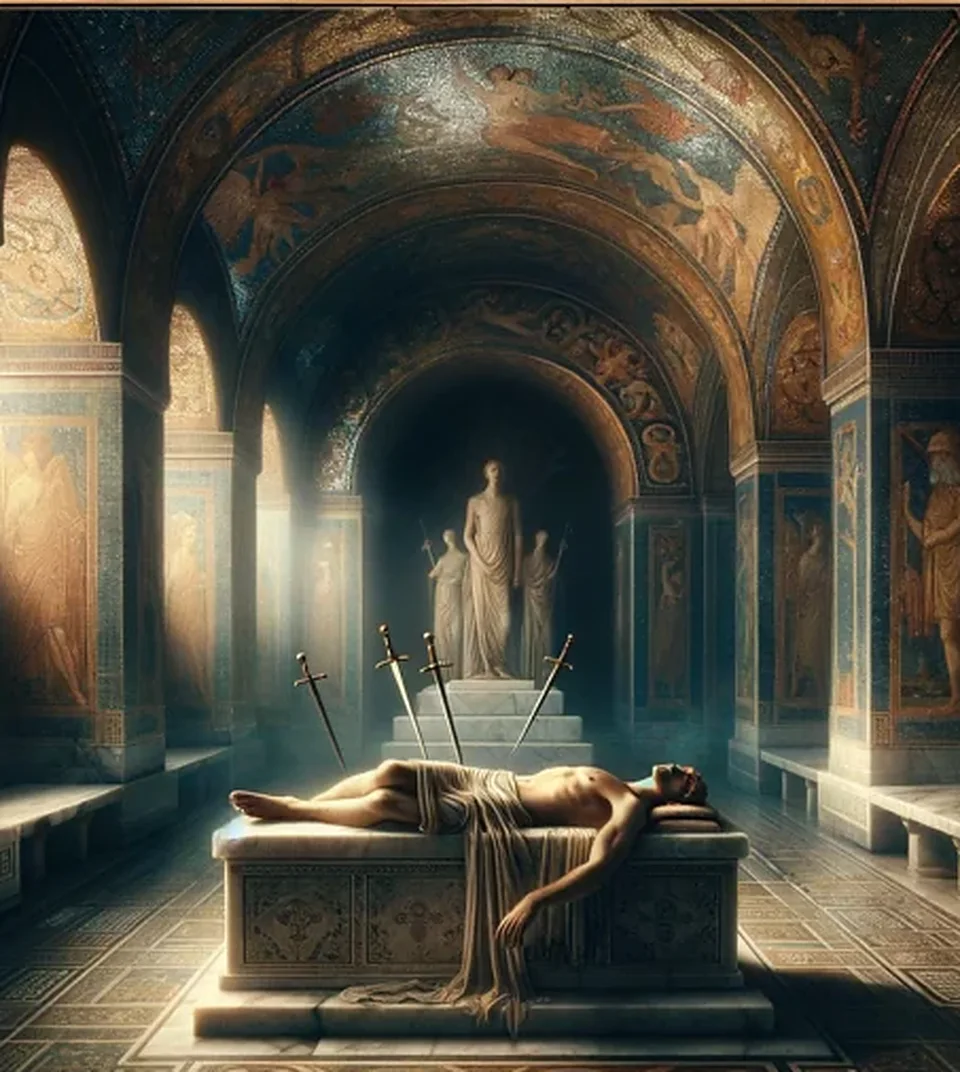
ბერძნულ მითში ძილი და სიკვდილი ტყუპები არიან. ორივეს ღამე, ნიქსი, შობს; ორივე ქვესკნელის კიდეზე ცხოვრობს, სადაც მზე არასოდეს იხედება. მაგრამ ჰესიოდე მათ ერთმანეთისგან გამოარჩევს: ჰიპნოსი ადამიანებს რბილად ეკარება, თანატოსს კი რკინის გული აქვს.[1]
ღამის შვილები
„თეოგონიაში“ ღამე შობს ბედისწერას, სიკვდილს, ძილს და სიზმრების მოდგმას — მამის გარეშე. ჰიპნოსი და თანატოსი ტართაროსის კიდეზე, ღამის სახლთან ცხოვრობენ. პავსანიასი აღწერს ოლიმპიის კიფსელოსის კიდობანს, რომელზეც ქალი — ღამე — ორ ბავშვს ატარებს: თეთრს, რომელსაც სძინავს, და შავს. წარწერები ამბობდა, რომ ესენი ძილი და სიკვდილი არიან.[1][3]
ზევსის დაძინება
„ილიადის“ მეთოთხმეტე სიმღერაში ჰერა ჰიპნოსს ლემნოსზე პოულობს და სთხოვს, ზევსს დააძინოს, რომ ბერძნებს ბრძოლაში დაეხმაროს. ჰიპნოსს ეშინია: ერთხელ ის ზევსს უკვე დააძინა, და გაღვიძებულმა ზევსმა კინაღამ ზღვაში გადააგდო — ღამემ, დედამ, გადაარჩინა. ჰერა ქარიტა პასითეას ცოლად ჰპირდება, და ჰიპნოსი თანხმდება. ის ფრინველად იქცევა, იდის მთაზე ნაძვზე ჯდება — და ზევსს სძინავს.[2]
„ილიადის“ მეთექვსმეტე სიმღერაში ზევსი აპოლონს ავალებს, დაცემული ლიკიელი გმირის, სარპედონის, სხეული განბანოს და ძილსა და სიკვდილს გადასცეს, რომლებიც მას სამშობლოში, ლიკიაში, დასამარხად წაიღებენ. ეს სცენა ევფრონიოსის ცნობილ კრატერზე (დაახლ. ძვ. წ. 515) არის დახატული.[2]
ძილის მღვიმე
ოვიდიუსის „მეტამორფოზებში“ ძილი კიმერიელების ქვეყანაში, მზისგან დაფარულ მღვიმეში ცხოვრობს, სადაც მხოლოდ დავიწყების მდინარე, ლეთე, ჩუხჩუხებს. მის ირგვლივ ათასობით სიზმარია. მისი ერთ-ერთი ვაჟი, მორფევსი, ადამიანის სახეებს იღებს. ამ სახელიდან მოდის, XIX საუკუნეში, ტკივილგამაყუჩებელი ნივთიერების სახელი — მორფინი.[4]
არისტოტელემ ძილს ცალკე ტრაქტატი, „ძილისა და ღვიძილის შესახებ“, მიუძღვნა და მისი ახსნა სხეულში, საკვებისა და სითბოს მოძრაობაში ეძება. 1843 წელს შოტლანდიელმა ექიმმა ჯეიმზ ბრეიდმა ახალ ცნებას „ჰიპნოზი“ უწოდა. მითის ძილის ღმერთი ამ ცნებებში ბუნების შესწავლის საგნად იქცა.[5]
რა არ ვიცით
ჰიპნოსს თითქმის არ ჰქონდა კულტი. პავსანიასი ტროიძენში მის საკურთხეველს ახსენებს, რომელზეც მუზებთან ერთად სწირავდნენ მსხვერპლს, რადგან, ამბობდნენ, ძილი მუზებისთვის ყველაზე საყვარელი ღმერთია. სხვა ცნობები ძალიან ცოტაა.[3]
ILLUMINISMO-ში: ჰიპნოსი ბერძნული ტაროს „ხმლების ოთხია“ — დასტის ნახვა → · კარტების სტატიები: ხმლების ოთხი
In Greek myth Sleep and Death are twins. Both are born of Night, Nyx; both live at the edge of the underworld, where the sun never looks. But Hesiod sets them apart: Hypnos comes gently to humans, while Thanatos has a heart of iron.[1]
Children of Night
In the Theogony, Night bears Doom, Death, Sleep and the tribe of Dreams — without a father. Hypnos and Thanatos live at the edge of Tartarus, beside the house of Night. Pausanias describes the Chest of Cypselus at Olympia, on which a woman — Night — carries two children: a white one, asleep, and a black one. The inscriptions said that they were Sleep and Death.[1][3]
Putting Zeus to sleep
In book 14 of the Iliad Hera finds Hypnos on Lemnos and asks him to put Zeus to sleep so that she can help the Greeks in battle. Hypnos is afraid: once before he put Zeus to sleep, and Zeus, on waking, almost threw him into the sea — his mother, Night, saved him. Hera promises him the Grace Pasithea as his wife, and Hypnos agrees. He turns into a bird, perches on a fir tree on Mount Ida — and Zeus sleeps.[2]
In book 16 of the Iliad Zeus tells Apollo to wash the body of the fallen Lycian hero Sarpedon and give it to Sleep and Death, who will carry it to his homeland, Lycia, for burial. This scene is painted on the famous krater of Euphronios (c. 515 BC).[2]
The cave of Sleep
In Ovid’s Metamorphoses, Sleep lives in the land of the Cimmerians, in a cave hidden from the sun, where only the river of forgetfulness, Lethe, murmurs. Thousands of dreams lie around him. One of his sons, Morpheus, takes on human forms. From this name, in the 19th century, came the name of a painkilling substance — morphine.[4]
Aristotle devoted a treatise, On Sleep and Waking, to sleep and looked for its explanation in the body, in the movement of food and heat. In 1843 the Scottish physician James Braid named a new concept “hypnosis”. In these ideas the god of sleep of the myth became a subject for the study of nature.[5]
What we don’t know
Hypnos had almost no cult. Pausanias mentions an altar to him at Troezen, where sacrifices were offered to him together with the Muses, because, they said, Sleep is the god dearest to the Muses. Other reports are very few.[3]
In ILLUMINISMO: Hypnos is the 4 of Swords of the Greek Tarot — see the deck → · Card articles: Four of Swords
წყაროებიSources
- Hesiod, Theogony 211–212, 756–766.
- Homer, Iliad 14.231–291, 14.352–360; 16.666–683.
- Pausanias, Description of Greece 2.31.3; 5.18.1.
- Ovid, Metamorphoses 11.592–649.
- Aristotle, On Sleep and Waking; J. Braid, Neurypnology (1843).
თემა, წყაროების შერჩევა და დასკვნები — ნიკა ხუცურაული. კვლევასა და თარგმანში დახმარებისთვის გამოყენებულია AI; ყოველი ფაქტი წყაროსთან შემოწმდა.Topic, choice of sources and conclusions — Nika Khutsurauli. AI was used to help with research and translation; every fact was checked against its source.