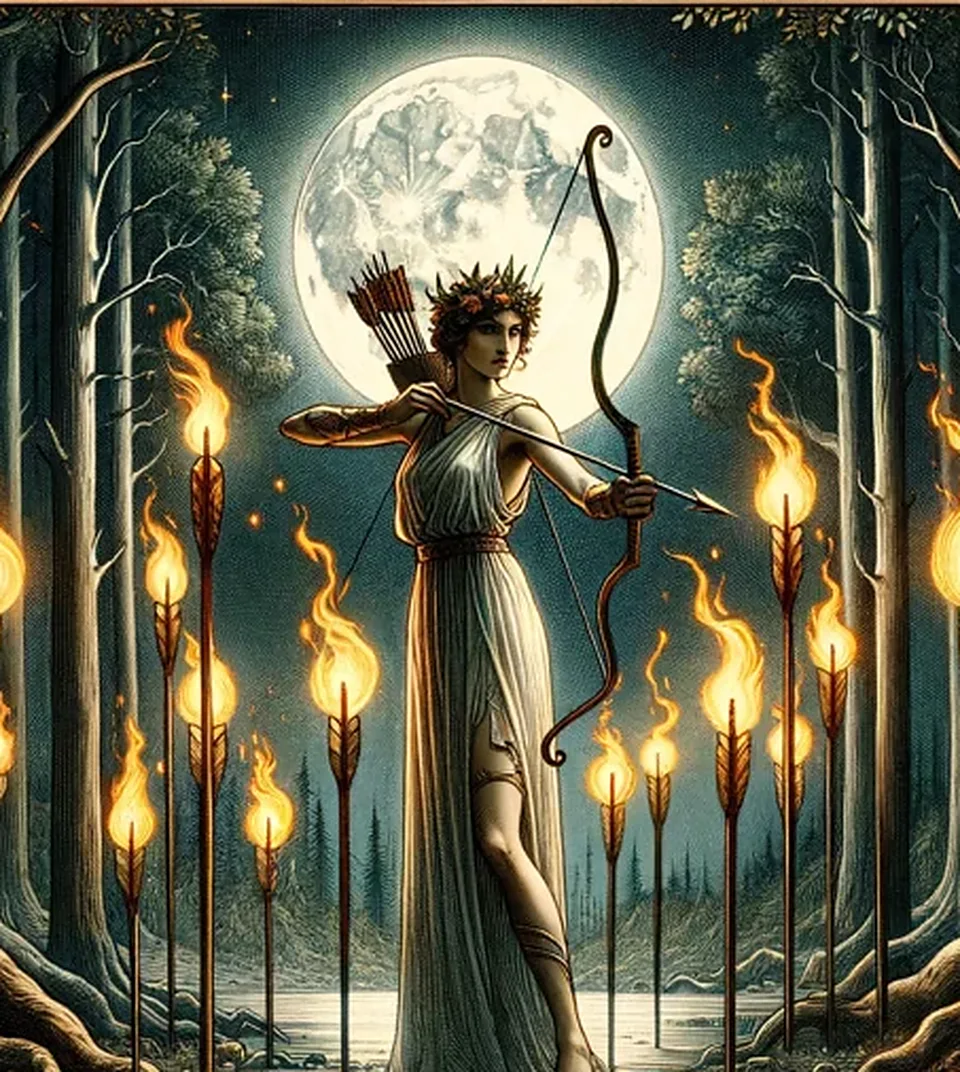
კალიმაქეს ჰიმნში პატარა არტემიდა მამის, ზევსის, მუხლზე ზის და თხოვნებს ჩამოთვლის: მარადიული ქალწულობა, ბევრი სახელი, მშვილდი და ისრები, ნიმფების ამალა — და ყველა მთა. ქალაქი, ამბობს ის, თითქმის არ მჭირდება.[1]
აპოლონის ტყუპისცალი
არტემიდა ზევსისა და ლეტოს ასულია, აპოლონის ტყუპისცალი. ჰომეროსული ჰიმნი აპოლონისადმი ამბობს, რომ აპოლონი კლდოვან დელოსზე დაიბადა, არტემიდა კი — ორტიგიაზე. ოცდამეშვიდე ჰომეროსული ჰიმნი მას მთების მონადირედ ხატავს: ქარიან მწვერვალებზე მშვილდს ჭიმავს, მერე კი დელფოში ძმის სახლში მიდის და მუზებისა და ქარიტების ცეკვას წინ უძღვება.[1][2]
„ილიადაში“ მას „პოტნია თერონი“ ჰქვია — „ცხოველთა ქალბატონი“. ის ნადირის მფარველიცაა და მონადირეც.[3]
საზღვარი, რომელსაც ვერ გადალახავ
არტემიდას მითებში ხშირად ვინმე საზღვარს არღვევს და სასჯელს იღებს. ოვიდიუსთან მონადირე აქტეონი შემთხვევით ხედავს ქალღმერთს ბანაობისას; ის ირმად იქცევა და საკუთარი ძაღლები გლეჯენ. ნიობემ თქვა, რომ ლეტოზე მეტი შვილი ჰყავდა — აპოლონმა და არტემიდამ ყველა დაუხოცეს. აგამემნონმა არტემიდა განარისხა, და აულისში ბერძნულ ფლოტს ქარი არ ჰქონდა, სანამ მეფე საკუთარ ქალიშვილს, იფიგენიას, მსხვერპლად არ შესწირავდა. ზოგ ვერსიაში ქალღმერთი ბოლო წამს გოგონას ირმით ანაცვლებს.[1][4][5]
არტემიდა ქალების მფარველიცაა და მათი უეცარი სიკვდილის ღმერთიც. „ილიადის“ ოცდამეერთე სიმღერაში ჰერა მას საყვედურობს: ზევსმა ქალებისთვის ლომად გაქცია, ვისაც მოისურვებ, მოკლავო — და თან ქალღმერთს მისივე მშვილდით სცემს.[1][3]
ბრავრონი და ეფესო
ატიკაში, ბრავრონში, ათენელი გოგონები არტემიდას „დათვობანას“ თამაშობდნენ — ეს იყო რიტუალი, რომელიც გოგონას ქალობაზე გადასვლას აღნიშნავდა; არისტოფანე მას „ლისისტრატეში“ ახსენებს. მცირე აზიაში, ეფესოში, არტემიდას ტაძარი მსოფლიოს შვიდ საოცრებას შორის ითვლებოდა, მაგრამ ეფესელი არტემიდას ქანდაკება — მრავალი კვერცხისებრი ფორმით მკერდზე — ბერძნული მონადირე ქალწულისგან სრულიად განსხვავებულია.[1][6]
ბევრი მკვლევარი „ცხოველთა ქალბატონს“ უფრო ძველ ხატს უკავშირებს, რომელიც ბრინჯაოს ხანის ეგეოსურ და ახლო აღმოსავლურ ხელოვნებაში ჩანს: ქალღმერთი, რომელსაც ორივე ხელში თითო ცხოველი უჭირავს. ეს ინტერპრეტაციაა. არტემიდას შედარება სვანურ დალთან — მთის მეორე ქალბატონთან — ცალკე სტატიაში გვაქვს.[1]
რა არ ვიცით
ეფესელი არტემიდას მკერდის ფორმები რას გამოხატავს — მკერდს, კვერცხებს, ხარის სათესლეებს თუ სამკაულს — დღემდე სადავოა. არც ის ვიცით ზუსტად, როგორ შეერწყა ბერძნულ არტემიდას ადგილობრივი ანატოლიური ქალღმერთი.[1]
ILLUMINISMO-ში: არტემიდა ბერძნული ტაროს „კვერთხების შვიდია“ — დასტის ნახვა → · კარტების სტატიები: კვერთხების შვიდი
In Callimachus’ hymn the little Artemis sits on the knee of her father Zeus and lists her wishes: eternal maidenhood, many names, a bow and arrows, a train of nymphs — and all the mountains. A city, she says, she hardly needs.[1]
Apollo’s twin
Artemis is the daughter of Zeus and Leto, the twin of Apollo. The Homeric Hymn to Apollo says that Apollo was born on rocky Delos and Artemis on Ortygia. The twenty-seventh Homeric Hymn paints her as a huntress of the mountains: she draws her bow on windy peaks, then goes to her brother’s house at Delphi and leads the dance of the Muses and the Graces.[1][2]
In the Iliad she is called potnia thērōn — “mistress of animals”. She is both the protector of wild beasts and their hunter.[3]
A boundary you cannot cross
In the myths of Artemis someone often crosses a boundary and is punished. In Ovid the hunter Actaeon happens to see the goddess bathing; he is turned into a stag and torn apart by his own dogs. Niobe boasted that she had more children than Leto — Apollo and Artemis killed them all. Agamemnon angered Artemis, and at Aulis the Greek fleet had no wind until the king sacrificed his own daughter, Iphigenia. In some versions the goddess puts a deer in the girl’s place at the last moment.[1][4][5]
Artemis is a protector of women and also the god of their sudden death. In book 21 of the Iliad Hera reproaches her: Zeus made you a lion to women, to kill whichever you please — and strikes the goddess with her own bow.[1][3]
Brauron and Ephesus
At Brauron in Attica, Athenian girls “played the bear” for Artemis — a rite marking a girl’s passage towards womanhood; Aristophanes mentions it in Lysistrata. At Ephesus in Asia Minor, the temple of Artemis counted among the Seven Wonders of the World, yet the statue of Ephesian Artemis — with many egg-like shapes on her chest — is utterly unlike the Greek virgin huntress.[1][6]
Many scholars link the “mistress of animals” to an older image found in Bronze Age Aegean and Near Eastern art: a goddess holding an animal in each hand. This is an interpretation. A separate article compares Artemis with the Svan Dali — the other lady of the mountains.[1]
What we don’t know
What the shapes on the chest of Ephesian Artemis represent — breasts, eggs, bulls’ testicles or ornaments — is still disputed. Nor do we know exactly how a local Anatolian goddess merged with the Greek Artemis.[1]
In ILLUMINISMO: Artemis is the 7 of Wands of the Greek Tarot — see the deck → · Card articles: Seven of Wands
წყაროებიSources
- Callimachus, Hymn to Artemis (3) 1–40.
- Homeric Hymn to Apollo (3) 14–16; Homeric Hymn to Artemis (27).
- Homer, Iliad 21.470–496; 24.602–617.
- Ovid, Metamorphoses 3.138–252.
- Euripides, Iphigenia in Aulis; Proclus’ summary of the Cypria.
- Aristophanes, Lysistrata 641–647.
თემა, წყაროების შერჩევა და დასკვნები — ნიკა ხუცურაული. კვლევასა და თარგმანში დახმარებისთვის გამოყენებულია AI; ყოველი ფაქტი წყაროსთან შემოწმდა.Topic, choice of sources and conclusions — Nika Khutsurauli. AI was used to help with research and translation; every fact was checked against its source.