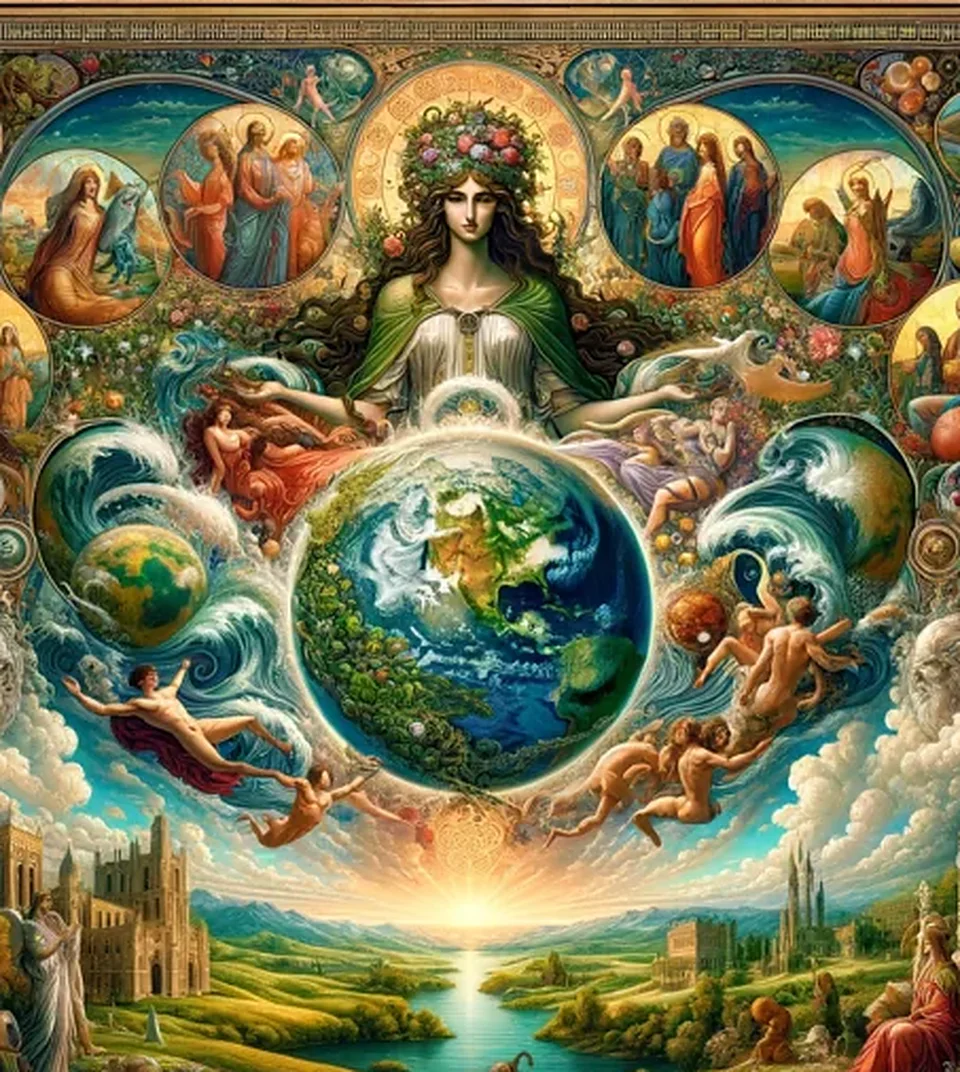
ჰესიოდეს „თეოგონიაში“ სამყარო ქაოსით იწყება — სიცარიელით, უფსკრულით. მის შემდეგ ჩნდება გეა, „ფართომკერდა“ დედამიწა, „ყველაფრის მარადიულად მყარი სადგომი“. ის პირველია, ვისაც ფორმა აქვს, და ყველაფერი დანარჩენი მისგან იბადება.[1]
თავად შობილი ცა
გეამ მარტომ, სიყვარულის გარეშე, შვა ურანოსი — ვარსკვლავიანი ცა, თავისი ტოლი, რომ ის ყოველი მხრიდან დაეფარა. შვა მთები და პონტოსი — უნაყოფო ზღვა. მერე ურანოსთან ერთად შვა ტიტანები, კიკლოპები და ასხელიანი გიგანტები.
ურანოსს შვილები სძულდა და ისინი დედამიწის წიაღში მალავდა. გეამ ნაცრისფერი ადამანტისგან ნამგალი გააკეთა და შვილებს დახმარება სთხოვა. მხოლოდ ყველაზე უმცროსი, კრონოსი, დათანხმდა: ჩასაფრდა და მამა დაასაჭურისა. ურანოსის სისხლის წვეთებიდან გეამ ერინიები, გიგანტები და იფნის ნიმფები შვა.
მრჩეველი
გეა ძალაუფლების ყოველ გარდატეხასთან ჩნდება. ის რეას ურჩევს, ახალშობილი ზევსი კრეტაზე დამალოს, რომ კრონოსმა არ გადაყლაპოს. ის ზევსს ურჩევს, ასხელიანები გაათავისუფლოს, რათა ტიტანებთან ომი მოიგოს. მაგრამ ტიტანების დამარცხების შემდეგ სწორედ ის შობს ტართაროსისგან ტიფონს — ურჩხულს, რომელიც ზევსს ძალაუფლებას ეცილება.
ესქილეს „ევმენიდების“ დასაწყისში დელფოს ქურუმი ამბობს, რომ ამ ადგილის პირველი წინასწარმეტყველი გეა იყო; მის შემდეგ — თემისი, ფებე და მხოლოდ ბოლოს აპოლონი.[3]
ყველაფრის დედა
ოცდამეათე ჰომეროსული ჰიმნი გეას „ყველაფრის დედად“ და „უხუცესად“ უწოდებს: ის კვებავს ყველაფერს, რაც ხმელეთზე დადის, ზღვაში ცურავს და ჰაერში დაფრინავს. „ილიადაში“ ფიცის დადებისას ზევსთან და მზესთან ერთად დედამიწასაც მოუხმობენ — მოწმედ. ათენში აკროპოლისთან გე კუროტროფოსის, „ბავშვების გამზრდელის“, სიწმინდე იდგა.[2][4]
1970-იან წლებში ბრიტანელმა მეცნიერმა ჯეიმზ ლავლოკმა „გეას ჰიპოთეზა“ წამოაყენა: დედამიწა თვითრეგულირებად სისტემად აღწერა, სადაც სიცოცხლე და გარემო ერთმანეთს ცვლიან. სახელი მეგობარმა მწერალმა, უილიამ გოლდინგმა, შესთავაზა. ეს მეცნიერული ჰიპოთეზაა, რომელმაც მითის სახელი ისესხა — და არა ძველი რელიგია.[6]
რა არ ვიცით
უცნობია, რამდენად ფართოდ ეთაყვანებოდნენ გეას ცალკე ღვთაებად — წყაროებში ის უფრო ხშირად საწყისი ძალა და მოწმეა, ვიდრე ტაძრის ქალღმერთი. დელფოში აპოლონამდელი „მიწის ორაკულის“ ამბავი ისტორიული მეხსიერებაა თუ მოგვიანებით შეთხზული მითი, მკვლევრები დაობენ.
ILLUMINISMO-ში: გეა ბერძნული ტაროს „სამყაროა“ — დასტის ნახვა → · კარტების სტატიები: სამყარო
In Hesiod’s Theogony the world begins with Chaos — a void, a gap. After it comes Gaia, “broad-breasted” Earth, “the ever-sure seat of all things”. She is the first being with a form, and everything else is born from her.[1]
A sky she bore herself
Alone, without love, Gaia bore Ouranos — the starry Sky, her equal, to cover her on every side. She bore the mountains and Pontus, the barren sea. Then with Ouranos she bore the Titans, the Cyclopes and the Hundred-Handed giants.
Ouranos hated his children and hid them in the depths of the earth. Gaia made a sickle of grey adamant and asked her children for help. Only the youngest, Cronus, agreed: he lay in ambush and castrated his father. From the drops of Ouranos’ blood Gaia bore the Erinyes, the Giants and the ash-tree nymphs.
The counsellor
Gaia appears at every turn of power. She advises Rhea to hide the newborn Zeus on Crete so that Cronus cannot swallow him. She advises Zeus to free the Hundred-Handers so that he can win the war against the Titans. Yet after the Titans’ defeat it is she who, with Tartarus, bears Typhon — the monster who challenges Zeus for power.
At the start of Aeschylus’ Eumenides the priestess of Delphi says that the first prophet of the place was Gaia; after her came Themis, Phoebe and only last Apollo.[3]
Mother of all
The thirtieth Homeric Hymn calls Gaia “mother of all” and “the eldest”: she feeds everything that walks on land, swims in the sea and flies in the air. In the Iliad, when an oath is sworn, Earth is called on as a witness together with Zeus and the Sun. In Athens, by the Acropolis, stood a shrine of Ge Kourotrophos, “nurse of children”.[2][4]
In the 1970s the British scientist James Lovelock put forward the “Gaia hypothesis”: he described the Earth as a self-regulating system in which life and environment shape each other. The name was suggested by his friend, the novelist William Golding. This is a scientific hypothesis that borrowed the myth’s name — not ancient religion.[6]
What we don’t know
It is unclear how widely Gaia was worshipped as a goddess in her own right — in the sources she is more often a primal power and a witness than the goddess of a temple. Whether the story of a pre-Apolline “oracle of Earth” at Delphi is historical memory or a later myth, scholars still debate.
In ILLUMINISMO: Gaia is The World of the Greek Tarot — see the deck → · Card articles: The World
წყაროებიSources
- Hesiod, Theogony 116–187, 469–484, 626–628, 820–822.
- Homeric Hymn to Earth, Mother of All (30).
- Aeschylus, Eumenides 1–8.
- Homer, Iliad 3.103–104, 3.276–279.
- Pausanias, Description of Greece 1.22.3.
- J. Lovelock, Gaia: A New Look at Life on Earth (1979).
თემა, წყაროების შერჩევა და დასკვნები — ნიკა ხუცურაული. კვლევასა და თარგმანში დახმარებისთვის გამოყენებულია AI; ყოველი ფაქტი წყაროსთან შემოწმდა.Topic, choice of sources and conclusions — Nika Khutsurauli. AI was used to help with research and translation; every fact was checked against its source.