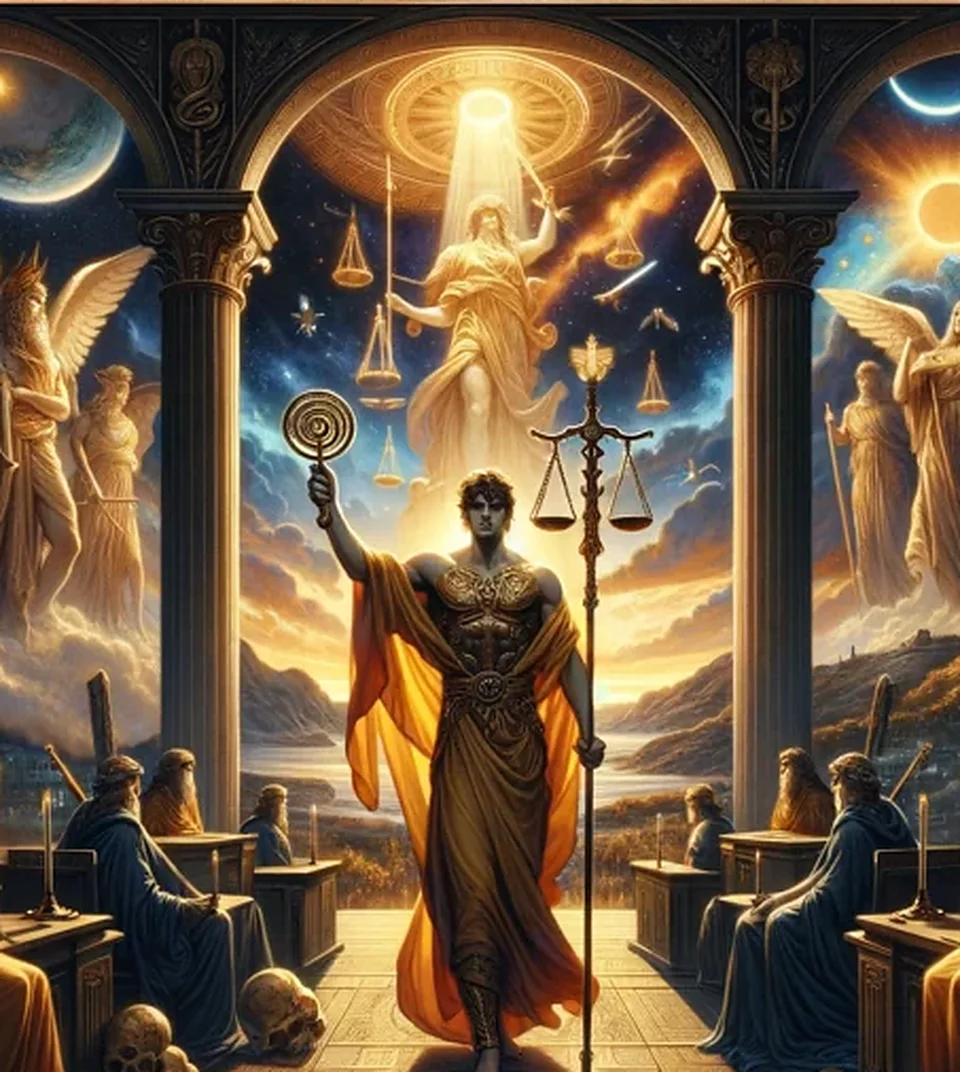
პლატონის „გორგიასში“ სოკრატე ამბობს: ძველად ადამიანებს სიკვდილის დღეს, ჯერ კიდევ ცოცხლებს, ასამართლებდნენ — და მოსამართლეები ტყუვდებოდნენ, რადგან ბრალდებულები ლამაზ სამოსს, სიმდიდრესა და მოწმეებს ეფარებოდნენ. ზევსმა წესი შეცვალა: ამიერიდან შიშველ სულს შიშველი სული განსჯის.[2][3]
მინოსი ჰომეროსთან
„ოდისეის“ მეთერთმეტე სიმღერაში ოდისევსი ქვესკნელში ხედავს კრეტის მეფეს, მინოსს — ზევსის ვაჟს, რომელსაც ოქროს კვერთხი უჭირავს და მიცვალებულებს სამართალს უყოფს; ისინი მის ირგვლივ სხედან და დგანან და მას საქმეებს ეკითხებიან. „ოდისეის“ მეოთხე სიმღერაში კი მინოსის ძმა, რადამანთი, ელისიონის ველზე ცხოვრობს — დედამიწის კიდეზე, სადაც არც თოვლია, არც ზამთარი.[1]
სამი მსაჯული
პლატონი ამ სახეებს სისტემად აქცევს. „გორგიასის“ მითში ზევსი სამ მსაჯულს ნიშნავს: რადამანთი აზიიდან მოსულებს განსჯის, ეაკოსი — ევროპიდან მოსულებს, მინოსი კი საბოლოო სიტყვას ამბობს, როცა ორივე ყოყმანობს. სამსჯავრო გზაჯვარედინზე, მდელოზეა: ერთი გზა ნეტართა კუნძულებისკენ მიდის, მეორე — ტართაროსისკენ.[2][3]
პლატონის „აპოლოგიაში“ სიკვდილმისჯილი სოკრატე ამბობს, რომ თუ სიკვდილი ჰადესში გადასვლაა, ის „ნამდვილ მსაჯულებს“ შეხვდება — მინოსს, რადამანთს, ეაკოსსა და ტრიპტოლემოსს — და ეს ათენის სასამართლოსგან გათავისუფლება იქნება.[2][3]
ეაკოსი
ეაკოსი ზევსისა და ნიმფა ეგინას ვაჟია, ეგინის კუნძულის მეფე და სამართლიანობით ცნობილი. ოვიდიუსის „მეტამორფოზებში“, როცა სენმა მისი ხალხი გაჟლიტა, ზევსმა ჭიანჭველები ადამიანებად აქცია — მირმიდონებად, ბერძნულად „ჭიანჭველა“ მირმექსია. მისი შვილიშვილი აქილევსია. არისტოფანეს „ბაყაყებში“ კი ეაკოსი კომიკურად ჰადესის მეკარეა.[4][5]
დანტეს „ჯოჯოხეთში“ მინოსი მეორე წრის შესასვლელთან ზის და კუდს იმდენჯერ იხვევს, რამდენ წრეზეც ცოდვილი უნდა დაეშვას. ბევრი მკითხველი ბერძნულ მსაჯულებს ეგვიპტურ „გულის აწონვასაც“ ადარებს. ეს პარალელებია, და პირდაპირი კავშირი დადასტურებული არ არის.[5]
რა არ ვიცით
ჰომეროსის მინოსი შესაძლოა სულაც არ განსჯიდეს ადამიანებს მიწიერი ცოდვებისთვის — ის შეიძლება უბრალოდ მიცვალებულთა შორის დავებს წყვეტდეს, როგორც სიცოცხლეში. როდის გაჩნდა ბერძნულ რწმენაში სიკვდილის შემდგომი განსჯის იდეა და რამდენად იყო ის გავრცელებული პლატონის ფილოსოფიური მითის მიღმა, მკვლევრები დაობენ.[1][2][3]
ILLUMINISMO-ში: მიცვალებულთა მსაჯულები ბერძნული ტაროს „გამოღვიძებაა“ — დასტის ნახვა → · კარტების სტატიები: გამოღვიძება
In Plato’s Gorgias Socrates says that long ago people were judged on the day of their death while still alive — and the judges were deceived, because the accused hid behind fine clothes, wealth and witnesses. Zeus changed the rule: from then on a naked soul would be judged by a naked soul.[2][3]
Minos in Homer
In book 11 of the Odyssey Odysseus sees in the underworld Minos, king of Crete and son of Zeus, holding a golden sceptre and giving judgement to the dead, who sit and stand around him and ask him for rulings. In book 4, Minos’ brother Rhadamanthys lives on the Elysian plain — at the end of the earth, where there is no snow and no winter.[1]
Three judges
Plato turns these figures into a system. In the myth of the Gorgias Zeus appoints three judges: Rhadamanthys judges those who come from Asia, Aeacus those from Europe, and Minos gives the final word when the two are in doubt. The court sits in a meadow at a crossroads: one road leads to the Isles of the Blessed, the other to Tartarus.[2][3]
In Plato’s Apology the condemned Socrates says that if death is a journey to Hades, he will meet “true judges” — Minos, Rhadamanthys, Aeacus and Triptolemus — and that would be a release from the court of Athens.[2][3]
Aeacus
Aeacus is the son of Zeus and the nymph Aegina, king of the island of Aegina and famous for his justice. In Ovid’s Metamorphoses, when a plague wiped out his people, Zeus turned ants into men — the Myrmidons, from the Greek myrmex, ant. His grandson is Achilles. In Aristophanes’ Frogs, comically, Aeacus is the doorkeeper of Hades.[4][5]
In Dante’s Inferno Minos sits at the entrance to the second circle and wraps his tail around himself as many times as the circles the sinner must descend. Many readers also compare the Greek judges with the Egyptian “weighing of the heart”. These are parallels; a direct link is not proven.[5]
What we don’t know
Homer’s Minos may not judge people for their earthly deeds at all — he may simply settle disputes among the dead, as he did in life. When the idea of judgement after death entered Greek belief, and how widespread it was beyond Plato’s philosophical myth, scholars still debate.[1][2][3]
In ILLUMINISMO: the judges of the dead are Judgement in the Greek Tarot — see the deck → · Card articles: Judgement
წყაროებიSources
- Homer, Odyssey 4.561–569; 11.568–571.
- Plato, Gorgias 523a–527a.
- Plato, Apology 40e–41a.
- Ovid, Metamorphoses 7.517–660.
- Aristophanes, Frogs 464–478; Dante, Inferno 5.4–15.
თემა, წყაროების შერჩევა და დასკვნები — ნიკა ხუცურაული. კვლევასა და თარგმანში დახმარებისთვის გამოყენებულია AI; ყოველი ფაქტი წყაროსთან შემოწმდა.Topic, choice of sources and conclusions — Nika Khutsurauli. AI was used to help with research and translation; every fact was checked against its source.