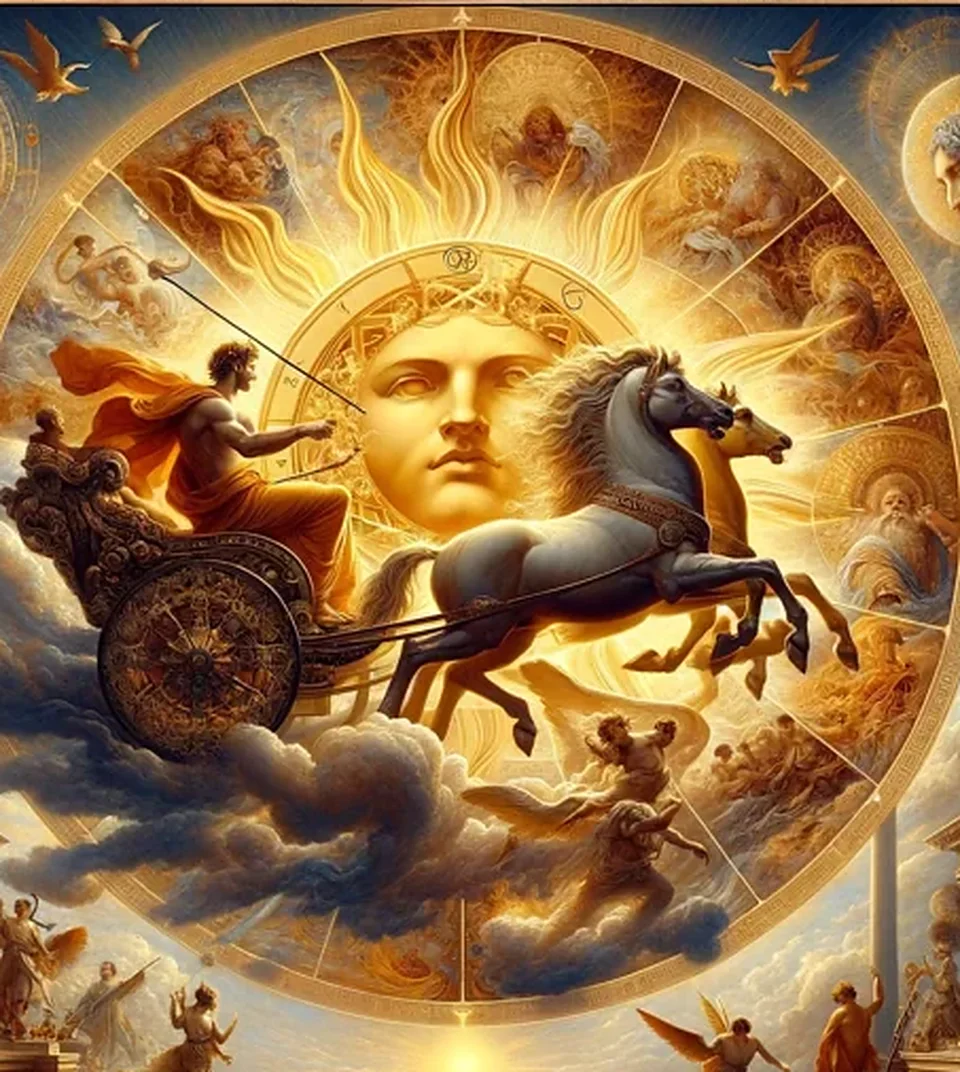
ჰელიოსი ყველაფერს ხედავს. როცა დემეტრე ცხრა დღე ამაოდ დაეძებს ქალიშვილს, მხოლოდ მზე ეუბნება მას სიმართლეს. როცა აფროდიტე და არესი ფარულად ხვდებიან ერთმანეთს, ჰელიოსი ამას ჰეფესტოს ატყობინებს. ბერძნებისთვის მზე ღმერთის თვალი იყო — და ამავე დროს, ის ციური სხეული, რომლის ზომასა და ადგილზეც პირველმა მეცნიერებმა იკამათეს.
ეტლი და ოქროს თასი
ჰესიოდესთან ჰელიოსი ტიტანების, ჰიპერიონისა და თეიას, ვაჟია, სელენესა და ეოსის ძმა. ოცდამეთერთმეტე ჰომეროსული ჰიმნი მას ოქროს ჩაფხუტში აღწერს, რომლიდანაც სხივები იღვრება, როცა ეტლით ცაზე გადის. ღამით, სხვა თქმულებებით, ის ოკეანოსზე ოქროს თასით აღმოსავლეთისკენ ბრუნდება — ეს თასი ერთხელ ჰერაკლესაც ათხოვა.[1][3]
მზის ძროხები
„ოდისეის“ მეთორმეტე სიმღერაში ოდისევსის მეგობრები კუნძულ თრინაკიაზე ჰელიოსის წმინდა ფარას ხვდებიან: შვიდი ნახირი ძროხა და შვიდი ფარა ცხვარი, თითოში ორმოცდაათი, რომლებიც არც მრავლდებიან და არც კვდებიან. გაფრთხილების მიუხედავად, შიმშილით გატანჯული მეგობრები ძროხებს კლავენ. ჰელიოსი ზევსს ემუქრება: თუ არ დასჯი, ჰადესში ჩავალ და მიცვალებულებს გავუნათებო. ზევსი ხომალდს ელვით ამსხვრევს.[2]
ქართველი მკითხველისთვის მნიშვნელოვანია, რომ ჰესიოდესა და ჰომეროსთან კოლხეთის მეფე აიეტი ჰელიოსის ვაჟია — და მისი ასული მედეაც, ამრიგად, მზის შვილიშვილია.[2][3]
როდოსი
პინდაროსის მეშვიდე ოლიმპიური ოდის მიხედვით, როცა ღმერთებმა დედამიწა გაინაწილეს, ჰელიოსი იქ არ იყო და წილი არ ერგო. მან ითხოვა კუნძული, რომელიც ჯერ ზღვის ფსკერზე იზრდებოდა — როდოსი. ძვ. წ. III საუკუნეში როდოსელებმა ნავსადგურთან ჰელიოსის ბრინჯაოს უზარმაზარი ქანდაკება — როდოსის კოლოსი — აღმართეს, რომელიც რამდენიმე ათეული წლის შემდეგ მიწისძვრამ დაანგრია.[4]
მზე ბერძნული მეცნიერების ერთ-ერთი პირველი საკითხი იყო. ანაქსაგორა ამბობდა, რომ ის გავარვარებული ქვაა, პელოპონესზე დიდი. ძვ. წ. III საუკუნეში არისტარქე სამოსელმა, არქიმედეს ცნობით, ივარაუდა, რომ დედამიწა მზის გარშემო მოძრაობს. ეს იდეა თითქმის ორი ათასი წელი დავიწყებული იყო, სანამ კოპერნიკი არ დაუბრუნდა. მითიდან მეცნიერებამდე გზა სწორედ ასეთი კითხვებით იწყება.[5]
რა არ ვიცით
ჰელიოსი და აპოლონი ადრეულ წყაროებში სხვადასხვა ღმერთია; მათი გაიგივება მოგვიანებით, ძვ. წ. V საუკუნიდან, ფილოსოფიურ და პოეტურ წრეებში ჩნდება. როდის და როგორ გახდა ეს ჩვეულებრივი, ზუსტად არ ვიცით.
ILLUMINISMO-ში: ჰელიოსი ბერძნული ტაროს „მზეა“ — დასტის ნახვა → · კარტების სტატიები: მზე
Helios sees everything. When Demeter has searched in vain for her daughter for nine days, only the Sun tells her the truth. When Aphrodite and Ares meet in secret, Helios reports it to Hephaestus. For the Greeks the Sun was the eye of a god — and at the same time the heavenly body whose size and place the first scientists argued about.
The chariot and the golden cup
In Hesiod, Helios is the son of the Titans Hyperion and Theia, brother of Selene and Eos. The thirty-first Homeric Hymn describes his golden helmet, from which rays stream as he drives his chariot across the sky. At night, according to other tales, he sails back east over Ocean in a golden cup — a cup he once lent to Heracles.[1][3]
The cattle of the Sun
In book 12 of the Odyssey, Odysseus’ companions come upon the sacred herds of Helios on the island of Thrinacia: seven herds of cattle and seven flocks of sheep, fifty in each, which neither breed nor die. Despite the warnings, the starving companions kill the cattle. Helios threatens Zeus: if you do not punish them, I will go down to Hades and shine among the dead. Zeus shatters their ship with lightning.[2]
For Georgian readers it matters that in Hesiod and Homer, Aeetes, king of Colchis, is a son of Helios — so his daughter Medea is a granddaughter of the Sun.[2][3]
Rhodes
According to Pindar’s seventh Olympian ode, when the gods divided the earth Helios was absent and received no share. He asked for an island that was still growing on the sea floor — Rhodes. In the 3rd century BC the Rhodians set up a huge bronze statue of Helios by their harbour — the Colossus of Rhodes — which an earthquake brought down a few decades later.[4]
The Sun was one of the first questions of Greek science. Anaxagoras said it was a red-hot stone larger than the Peloponnese. In the 3rd century BC Aristarchus of Samos, as Archimedes reports, proposed that the earth moves around the sun. The idea lay forgotten for almost two thousand years until Copernicus returned to it. The road from myth to science begins with questions like these.[5]
What we don’t know
In early sources Helios and Apollo are different gods; their identification appears later, from the 5th century BC on, in philosophical and poetic circles. When and how it became usual, we do not know exactly.
In ILLUMINISMO: Helios is The Sun of the Greek Tarot — see the deck → · Card articles: The Sun
წყაროებიSources
- Homeric Hymn to Helios (31); Homeric Hymn to Demeter (2) 62–89.
- Homer, Odyssey 8.270–271; 10.135–139; 12.127–141, 374–388.
- Hesiod, Theogony 371–374, 956–962.
- Pindar, Olympian 7.54–76; Apollodorus, Library 2.5.10.
- Archimedes, The Sand-Reckoner 1.4–5; Diogenes Laertius, Lives 2.8.
თემა, წყაროების შერჩევა და დასკვნები — ნიკა ხუცურაული. კვლევასა და თარგმანში დახმარებისთვის გამოყენებულია AI; ყოველი ფაქტი წყაროსთან შემოწმდა.Topic, choice of sources and conclusions — Nika Khutsurauli. AI was used to help with research and translation; every fact was checked against its source.