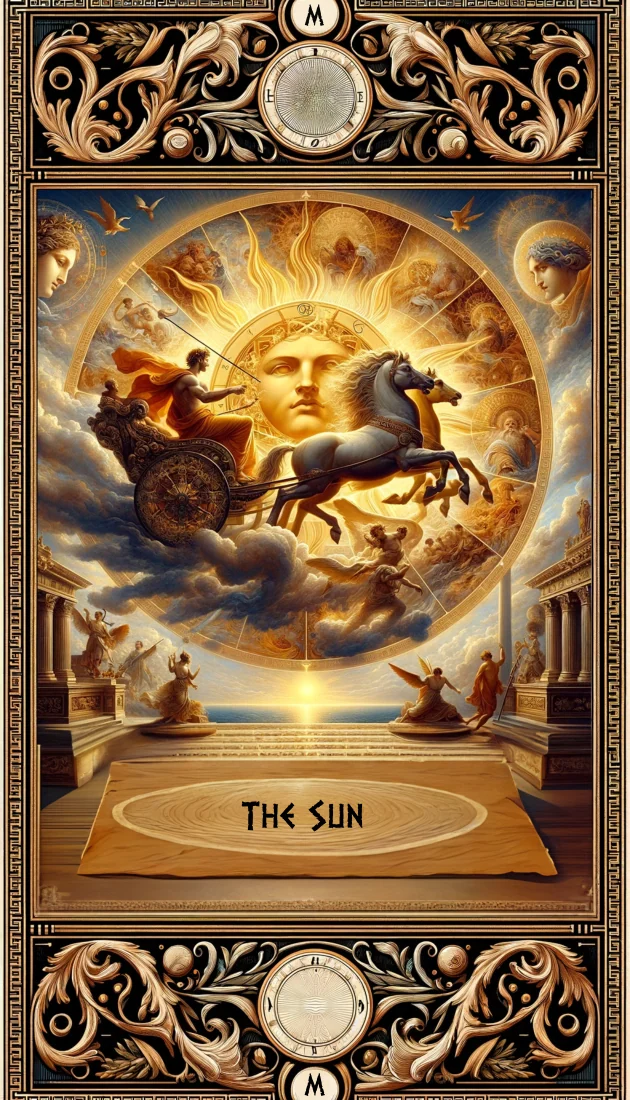
მზის დისკოში ეტლი და ცხენები მოძრაობენ, ქვემოთ კი სვეტები და პატარა ადამიანები ჩანან. ჰელიოსის ეტლის ყველაზე ცნობილი ამბავი ფაეთონს ეკუთვნის — ჭაბუკს, რომელმაც ერთი დღით მამის ცხენების მართვა ითხოვა. ოვიდიუსი ამ ამბავს მზის სასახლის აღწერით იწყებს — სვეტებით.[1]
რა ჩანს ნახატზე
სხივებიანი დიდი მზის დისკოში ეტლისა და ცხენების მოძრაობაა ჩასმული, კომპოზიციის შუაგულში მზის სახეა. ქვემოთ სვეტები, ნათელი მიწა და პატარა ადამიანის ფიგურები ჩანს. მთელი სივრცე ოქროსფერ შუქშია.
ეპიზოდი: ერთი დღის თხოვნა
ოვიდიუსის „მეტამორფოზების“ II წიგნი ასე იწყება: „მზის სასახლე მაღალ სვეტებზე იდგა“ — მბზინავი ოქროთი და ცეცხლისფერი ბრინჯაოთი, სპილოს ძვლის სახურავითა და ვერცხლის კარით, რომელზეც ვულკანმა (ჰეფესტომ) ზღვები, დედამიწა, ცა და ზოდიაქოს ნიშნები გამოჭედა. ფაეთონი იქ მოდის, რათა დარწმუნდეს, რომ მზის შვილია. მზე სტიქსზე ფიცს დებს, რომ ყველაფერს შეუსრულებს — და ფაეთონი ეტლს ითხოვს. მამა ცდილობს გადაარწმუნოს: გზა ციცაბოა, ცხენები ჩემს ხელსაც ძლივს ემორჩილებიან, თვითონ იუპიტერიც ვერ მართავდა ამ ეტლს. მაგრამ ფიცი უკან ვეღარ წაიღო. ცხენები — პიროისი, ეოოსი, ეთონი და ფლეგონი — ეტლის სიმსუბუქეს გრძნობენ და გზიდან გადადიან; დედამიწა იწვის, სანამ იუპიტერი ფაეთონს ელვით არ ჩამოაგდებს. ჭაბუკი მდინარე ერიდანოსში ჩავარდა.[1]
სიმბოლოები
სხივოსანი დისკო და სახე ჰელიოსის ძველი სახეა: ხელოვნებაში მას თავზე სხივოსანი გვირგვინი აქვს (იხ. ქვემოთ). ბერძნულ ვაზებზე მისი ოთხცხენიანი ეტლი დილით ზღვიდან ამოდის. ქვემოთ მდგომი სვეტები შეიძლება ოვიდიუსის მზის სასახლედ წავიკითხოთ — ეს ინტერპრეტაციაა. პატარა ადამიანის ფიგურები ილუსტრაციის დამატებაა.[1]
ტროაში, ათენას ტაძრის ნანგრევებში, ჰაინრიხ შლიმანმა 1872 წელს მარმარილოს მეტოპა იპოვა: ჰელიოსი ოთხცხენიან ეტლში, თავზე სხივოსანი გვირგვინით (ძვ. წ. III საუკუნის დასაწყისი). დღეს ის ბერლინის ანტიკურ კოლექციაშია.
კარტი ტაროს ისტორიაში
ვისკონტი–სფორცას დასტაში — ესეც დაახლოებით 1480 წლის შემცვლელი კარტია — ფრთოსანი ბავშვი ღრუბლებზე დგას და მაღლა წითელ დისკოს, მზის სახეს, სწევს. მარსელის ტაროში სახიანი მზის ქვეშ, დაბალი კედლის წინ, ორი ბავშვი დგას. რაიდერ–უეიტ–სმითის დასტაში (1909) ბავშვი თეთრ ცხენზე ზის, ზურგს უკან მზესუმზირები აქვს. ILLUMINISMO ბავშვს ეტლით ცვლის: ბერძნული მზე მოძრაობაა, არა მხოლოდ ნათება.
In the sun’s disc a chariot and horses are in motion, and below stand columns and small human figures. The most famous story of Helios’ chariot belongs to Phaethon — the youth who asked to drive his father’s horses for a single day. Ovid begins the story by describing the palace of the Sun — with its columns.[1]
What the image shows
Within a great radiant sun disc the movement of a chariot and horses is set, with the face of the sun at the centre of the composition. Below are columns, bright land and small human figures. The whole space is bathed in golden light.
The episode: the wish for one day
Book 2 of Ovid’s Metamorphoses opens: “The palace of the Sun stood high on lofty columns” — bright with gold and flame-coloured bronze, roofed with ivory, with silver doors on which Vulcan (Hephaestus) had carved the seas, the earth, the sky and the signs of the zodiac. Phaethon comes there to be sure that he is the Sun’s son. The Sun swears by the Styx to grant him anything — and Phaethon asks for the chariot. His father tries to dissuade him: the road is steep, the horses barely obey even me, not even Jupiter could drive this chariot. But the oath cannot be taken back. The horses — Pyrois, Eous, Aethon and Phlegon — feel how light the chariot is and leave the road; the earth burns until Jupiter strikes Phaethon down with a thunderbolt. The youth fell into the river Eridanus.[1]
Symbols
The radiant disc and face are Helios’ old image: in art he wears a crown of rays (see below). On Greek vases his four-horse chariot rises from the sea at dawn. The columns below can be read as Ovid’s palace of the Sun — this is an interpretation. The small human figures are an addition of the illustration.[1]
At Troy, in the ruins of the temple of Athena, Heinrich Schliemann found in 1872 a marble metope: Helios in a four-horse chariot, wearing a crown of rays (early 3rd century BC). It is now in the classical collection in Berlin.
The card in tarot history
In the Visconti-Sforza deck — this too is a replacement card of about 1480 — a winged child stands on clouds holding up a red disc, the face of the sun. In the Tarot de Marseille two children stand beneath a sun with a face, before a low wall. In the Rider–Waite–Smith deck (1909) a child rides a white horse with sunflowers behind. ILLUMINISMO replaces the child with the chariot: the Greek sun is motion, not only light.
წყაროებიSources
- Ovid, Metamorphoses 1.750–2.400.
- Euripides, Phaethon, ed. J. Diggle (1970).
- Helios metope from the Temple of Athena at Ilion, early 3rd century BC, Berlin, Antikensammlung.
- The Morgan Library & Museum, MS M.630 (Visconti-Sforza Tarot); A. E. Waite, The Pictorial Key to the Tarot (1910).
თემა, წყაროების შერჩევა და დასკვნები — ნიკა ხუცურაული. კვლევასა და თარგმანში დახმარებისთვის გამოყენებულია AI; ყოველი ფაქტი წყაროსთან შემოწმდა.Topic, choice of sources and conclusions — Nika Khutsurauli. AI was used to help with research and translation; every fact was checked against its source.