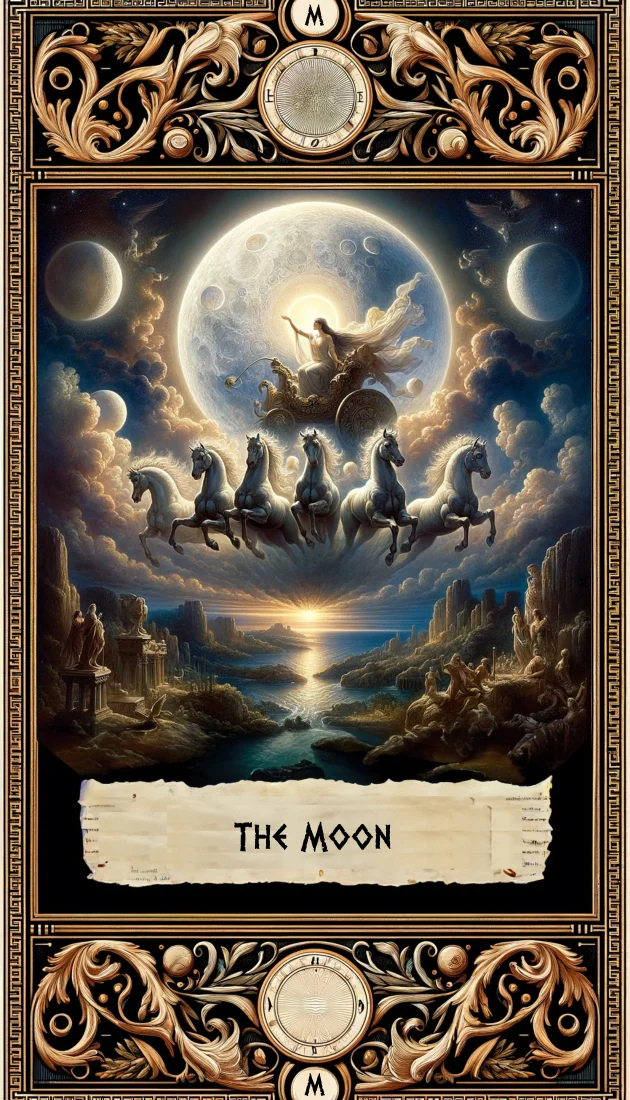
ექვსცხენიან ეტლს სელენე, მთვარის ქალღმერთი, მიაქროლებს. მისი ყველაზე ცნობილი სიყვარული ენდიმიონია. მაგრამ ერთი მოკლე, უცნაური ამბავი მას ამ დასტის სხვა კარტთან აკავშირებს: ვერგილიუსის მიხედვით, სელენე პანმა მოატყუა — თეთრი მატყლის საჩუქრით.[1]
რა ჩანს ნახატზე
უზარმაზარი სავსე მთვარის წინ ქალი ექვსცხენიან ეტლს ღრუბლებზე მიაქროლებს. ცაში კიდევ ორი დიდი და ერთი პატარა მთვარე ჩანს; ქვემოთ მდინარე, კლდეები, ქანდაკებები და პატარა ფიგურები ვერცხლისფერ შუქს იჭერენ.
ეპიზოდი: პანის საჩუქარი
ვერგილიუსის „გეორგიკების“ (ძვ. წ. 29) III წიგნში პოეტი მწყემსებს ცხვრის მოვლას ასწავლის: თუ თეთრი მატყლი გინდა, ვერძი, რაც არ უნდა თეთრი იყოს, თუ ენა შავი აქვს, ფარას მოაშორე. რჩევას კი უცებ მითი მოსდევს: „ასე, თუ ამის დაჯერება ღირს, თოვლივით თეთრი მატყლის საჩუქრით არკადიის ღმერთმა, პანმა, მოგხიბლა და მოგატყუა შენ, მთვარევ, როცა ღრმა ტყეში დაგიძახა; და შენ მის ძახილზე უარი არ თქვი“. V საუკუნის ავტორი მაკრობიუსი წერს, რომ ვერგილიუსმა ეს ამბავი ელინისტური პოეტისგან, ნიკანდროსისგან აიღო. ეს სულ სამი სტრიქონია — და სწორედ ამიტომ საინტერესოა: სელენეს მითები ენდიმიონით არ ამოიწურება, და მთვარე აქ პანს უკავშირდება, რომელიც ამ დასტაში „ეშმაკია“.[1]
სიმბოლოები
ხელოვნებაში სელენე ორცხენიან ეტლს მართავს, ზოგჯერ ხარებიანს, ან ცხენზე ამხედრებულია. ოთხცხენიანი ეტლი ჩვეულებრივ მზეს, ჰელიოსს, ეკუთვნის, ექვსცხენიანს კი ბერძნული ხელოვნება არ იცნობს — ნახატი ორი ძმის ნიშნებს ერთმანეთს უზიარებს და კიდევ ამრავლებს. დამატებითი მთვარეები ძველ წყაროებში არ ჩანს, მაგრამ ბუნებაში მსგავსი რამ ხდება: „ცრუ მთვარეები“, ანუ პარასელენები — ნათელი ლაქები მთვარის ორივე მხარეს, რომლებსაც ჰაერში ყინულის კრისტალები ქმნიან. მდინარე და კლდეები ილუსტრაციისაა.
ანტიკითერის მექანიზმში — ბერძნულ ასტრონომიულ ხელსაწყოში, ძვ. წ. II–I საუკუნეებისა — მთვარის ფაზას პატარა ბურთულა აჩვენებდა: ნახევრად ღია, ნახევრად მუქი. ის მექანიზმთან ერთად ბრუნავდა და ფანჯარაში მთვარის ზრდასა და კლებას აჩვენებდა. ეს რეკონსტრუქცია მაიკლ რაიტმა შემოგვთავაზა, და დღეს ის საყოველთაოდ მიღებულია.[3]
კარტი ტაროს ისტორიაში
ვისკონტი–სფორცას დასტაში მთვარის კარტზე ქალს ნამგალა მთვარე უჭირავს. მარსელის ტაროში სახიანი მთვარე ორ კოშკს შორის ანათებს, ქვემოთ ორი ძაღლი ყეფს, წყალში კი კიბორჩხალა ამოდის. რაიდერ–უეიტ–სმითის დასტა (1909) ამ კომპოზიციას იმეორებს, ერთ-ერთ ცხოველს მგლად აქცევს. ILLUMINISMO მთვარეს ქალღმერთს უბრუნებს — ეტლით, როგორც ბერძნულ ჰიმნშია.[4]
Selene, goddess of the Moon, drives a chariot drawn by six horses. Her most famous love is Endymion. But one short, strange story links her to another card in this deck: according to Virgil, Selene was beguiled by Pan — with a gift of white wool.[1]
What the image shows
Before a huge full moon a woman drives a chariot drawn by six horses across the clouds. Two more large moons and a smaller one appear in the sky; below, a river, rocks, statues and small figures catch the silver light.
The episode: Pan’s gift
In book 3 of Virgil’s Georgics (29 BC) the poet teaches shepherds how to care for sheep: if you want white wool, reject a ram, however white, if his tongue is black. Then, suddenly, the advice gives way to myth: “So, if it is worth believing, with a gift of snow-white wool Pan, god of Arcadia, charmed and deceived you, Moon, calling you into the deep woods; and you did not refuse his call.” Macrobius, writing in the 5th century, says Virgil took the story from the Hellenistic poet Nicander. It is only three lines — and that is exactly why it matters: Selene’s myths do not end with Endymion, and here the Moon is linked to Pan, who in this deck is The Devil.[1]
Symbols
In art Selene drives a two-horse chariot, sometimes one drawn by oxen, or rides on horseback. The four-horse chariot usually belongs to the Sun, Helios, and a team of six is unknown to Greek art — the image lets the two siblings share their signs and multiplies them. The extra moons do not appear in ancient sources, but nature produces something similar: “mock moons”, or paraselenae — bright spots on either side of the Moon made by ice crystals in the air. The river and rocks belong to the illustration.
In the Antikythera Mechanism — a Greek astronomical device of the 2nd–1st century BC — the phase of the Moon was shown by a small ball, half pale and half dark. It turned with the mechanism and showed the waxing and waning Moon in a window. The reconstruction was proposed by Michael Wright and is now generally accepted.[3]
The card in tarot history
In the Visconti-Sforza deck the Moon card shows a woman holding a crescent moon. In the Tarot de Marseille a moon with a face shines between two towers, two dogs bay below, and a crayfish climbs out of the water. The Rider–Waite–Smith deck (1909) repeats this composition, turning one of the animals into a wolf. ILLUMINISMO gives the Moon back to the goddess — with her chariot, as in the Greek hymn.[4]
წყაროებიSources
- Virgil, Georgics 3.384–393; Macrobius, Saturnalia 5.22.9–10.
- Homeric Hymn to Selene (32) 7–11.
- M. T. Wright, “The Antikythera Mechanism and the early history of the moon-phase display”, Antiquarian Horology 29 (2006); T. Freeth et al., Nature 444 (2006) 587–591.
- M. Dummett, The Game of Tarot (1980); A. E. Waite, The Pictorial Key to the Tarot (1910).
თემა, წყაროების შერჩევა და დასკვნები — ნიკა ხუცურაული. კვლევასა და თარგმანში დახმარებისთვის გამოყენებულია AI; ყოველი ფაქტი წყაროსთან შემოწმდა.Topic, choice of sources and conclusions — Nika Khutsurauli. AI was used to help with research and translation; every fact was checked against its source.