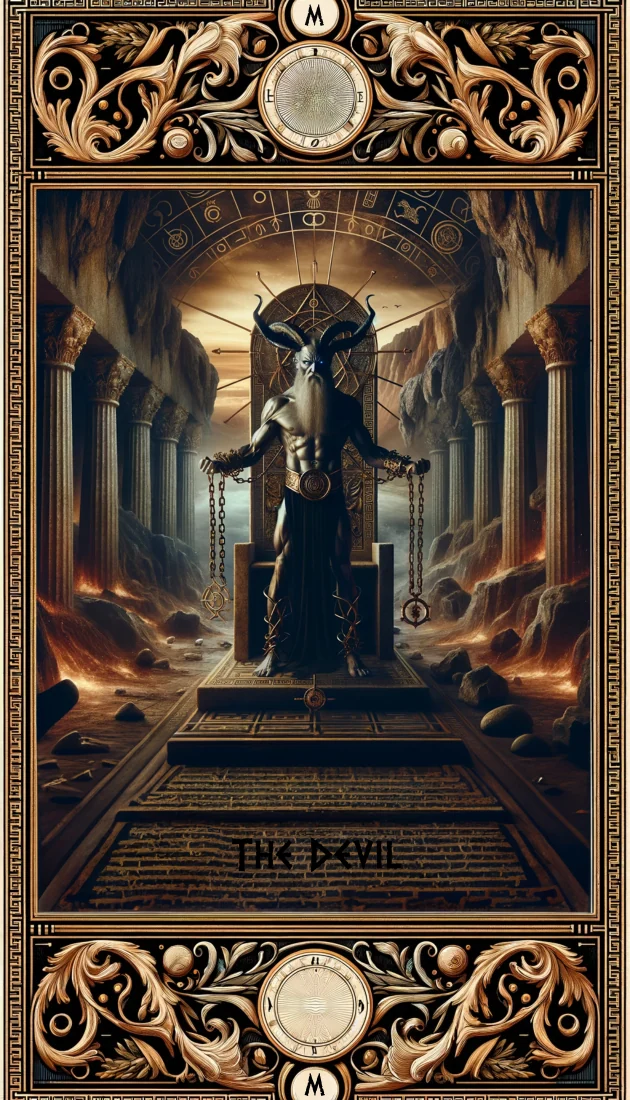
თხისთავიანი, რქიანი ღმერთი ტახტზე ზის და ჯაჭვები უჭირავს. ეს პანია — ბერძნებისთვის სულაც არა ბოროტების ღმერთი. მაგრამ ერთი ძალა მას მართლაც მიეწერებოდა: მოულოდნელი, უმიზეზო შიში, რომელიც მთელ ჯარს იპყრობს. ამ შიშს მისი სახელი ჰქვია — პანიკა.
რა ჩანს ნახატზე
თხისთავიანი, რქიანი ფიგურა გრძელი სვეტებიანი დარბაზის ბოლოს, ტახტზე ზის და ორივე ხელში ჯაჭვები უჭირავს. ორივე მხრიდან უხეში კლდე და მძიმე ქვის წყობა იკეტება, ყველაფერი თბილი, დაბალი შუქით არის განათებული.
ეპიზოდი: ღამე პარნასის ქვეშ
ძვ. წ. 279 წელს გალების (კელტების) ჯარი ბრენოსის მეთაურობით დელფოს ტაძარს დაესხა. პავსანიასი მოგვითხრობს: მთელი დღე მიწა ძლიერად ზანზარებდა, ქუხდა და ელავდა; ღამით ყინვა და თოვლი დაეცა, პარნასიდან კლდეები ჩამოცვივდა. უკანდახეულმა ჯარმა იქ დაიბანაკა, სადაც ღამემ მიუსწრო — და ღამით მას „პანიკა“ დაეცა, „რადგან უმიზეზო შიში, ამბობენ, პანისგან მოდის“. მეომრებს ეგონათ, რომ მტერი უკვე ბანაკში იყო; იარაღს ეცნენ და ორ მხარედ გაყოფილები ერთმანეთს ხოცავდნენ — ვეღარც მშობლიურ ენას ცნობდნენ, ვეღარც ერთმანეთის სახეს და ფარის ფორმას. პირველებმა ეს მინდვრებში ფარის მცველად დატოვებულმა ფოკიელებმა შენიშნეს. პავსანიასის ამბავი ისტორიასა და სასწაულს ერთად ჰყვება: გალების უკუქცევა ნამდვილი მოვლენაა, ღმერთების ჩარევა — მისი ბერძნული ახსნა.[1]
სიმბოლოები
რქები და თხის ნიშნები პანს უძველესი დროიდან აქვს: ჰომეროსის ჰიმნი მას თხისფეხა და ორრქიან ღმერთად აღწერს, ადრეულ ხელოვნებაში კი მას ზოგჯერ ადამიანის სხეულზე მთლიანად თხის თავი აქვს — ასეა, მაგალითად, ძვ. წ. დაახლ. 470 წლის ათენურ კრატერზე, რომლის მიხედვითაც მის უცნობ მხატვარს „პანის მხატვარი“ უწოდეს. ჯაჭვები ბერძნული არ არის — ის ტაროს ეშმაკის ნიშანია (ქვემოთ). ტახტი და სვეტებიანი დარბაზი ილუსტრაციისაა: ბერძნული პანი გამოქვაბულებში ცხოვრობდა, ხოლო ათენში, მარათონის ბრძოლის შემდეგ, მას აკროპოლისის ფერდობზე გამოქვაბული მიუძღვნეს.
დელფოში გალებზე გამარჯვების ხსოვნად დაარსდა სოტერია — „ხსნის“ დღესასწაული მუსიკალური და სპორტული შეჯიბრებებით. მას საუკუნეების განმავლობაში მართავდნენ, და მისი წარწერები ჰელინისტური საბერძნეთის ისტორიის მნიშვნელოვანი წყაროა.
კარტი ტაროს ისტორიაში
ვისკონტი–სფორცას დასტაში ეშმაკის კარტი არ შემორჩენილა — კოშკიც დაკარგულია. მარსელის ტაროში ეშმაკს ღამურის ფრთები, რქები და ჩირაღდანი აქვს, მის კვარცხლბეკზე კი თოკით ორი პატარა რქიანი ფიგურაა მიბმული. რაიდერ–უეიტ–სმითის დასტაში (1909) ეშმაკის სახე ელიფას ლევის „ბაფომეტს“ მიჰყვება, ჯაჭვებით კი კაცი და ქალია შებოჭილი — ხშირად აღნიშნავენ, რომ ეს „შეყვარებულების“ წყვილის ბნელი ანარეკლია. ILLUMINISMO ეშმაკს იმ ღმერთს უბრუნებს, ვისგანაც მისი სახე ისესხეს — და ჯაჭვს ტოვებს, როგორც კითხვას.
A goat-headed, horned god sits on a throne holding chains. This is Pan — for the Greeks by no means a god of evil. Yet one power was truly ascribed to him: a sudden, causeless fear that seizes a whole army. That fear bears his name — panic.
What the image shows
A goat-headed, horned figure sits on a throne at the end of a long columned hall, holding chains in both hands. On both sides rough rock and heavy masonry close in, all lit by a warm, low light.
The episode: a night below Parnassus
In 279 BC an army of Gauls (Celts) under Brennus attacked the sanctuary of Delphi. Pausanias tells that all day the ground shook violently, with thunder and lightning; at night came frost and snow, and rocks fell from Parnassus. The retreating army camped where night overtook it — and in the night a “panic” fell upon it, “for causeless terrors are said to come from the god Pan”. The warriors thought the enemy was already in the camp; they rushed to arms and, split into two sides, killed one another — recognising neither their mother tongue nor each other’s faces and the shape of their shields. The first to notice were the Phocians left in the fields to guard the flocks. Pausanias’ account tells history and miracle together: the Gauls’ retreat is a real event; the gods’ intervention is its Greek explanation.[1]
Symbols
Horns and goat features belong to Pan from the earliest times: the Homeric Hymn describes him as goat-footed and two-horned, and in early art he sometimes has a full goat’s head on a human body — as on an Athenian krater of about 470 BC, after which its unknown painter is called the Pan Painter. The chains are not Greek — they are the sign of the tarot Devil (below). The throne and the columned hall belong to the illustration: the Greek Pan lived in caves, and in Athens, after the battle of Marathon, he was given a cave on the slope of the Acropolis.
At Delphi the victory over the Gauls was commemorated by the Soteria — a festival of “Salvation” with musical and athletic contests. It was held for centuries, and its inscriptions are an important source for the history of Hellenistic Greece.
The card in tarot history
No Devil survives from the Visconti-Sforza deck — the Tower is lost too. In the Tarot de Marseille the Devil has bat wings, horns and a torch, and two small horned figures are tied by ropes to his pedestal. In the Rider–Waite–Smith deck (1909) the Devil’s figure follows Éliphas Lévi’s “Baphomet”, and the chains bind a man and a woman — often noted as a dark reflection of the couple of The Lovers. ILLUMINISMO returns the Devil to the god whose features were borrowed for him — and keeps the chain as a question.
წყაროებიSources
- Pausanias, Description of Greece 10.22.12–10.23.14.
- Homeric Hymn to Pan (19); Herodotus, Histories 6.105; bell krater of the Pan Painter, c. 470 BC, Boston, Museum of Fine Arts 10.185.
- G. Nachtergael, Les Galates en Grèce et les Sôtéria de Delphes (1977); Ph. Borgeaud, The Cult of Pan in Ancient Greece (1988).
- The Morgan Library & Museum, MS M.630 (Visconti-Sforza Tarot); A. E. Waite, The Pictorial Key to the Tarot (1910).
თემა, წყაროების შერჩევა და დასკვნები — ნიკა ხუცურაული. კვლევასა და თარგმანში დახმარებისთვის გამოყენებულია AI; ყოველი ფაქტი წყაროსთან შემოწმდა.Topic, choice of sources and conclusions — Nika Khutsurauli. AI was used to help with research and translation; every fact was checked against its source.