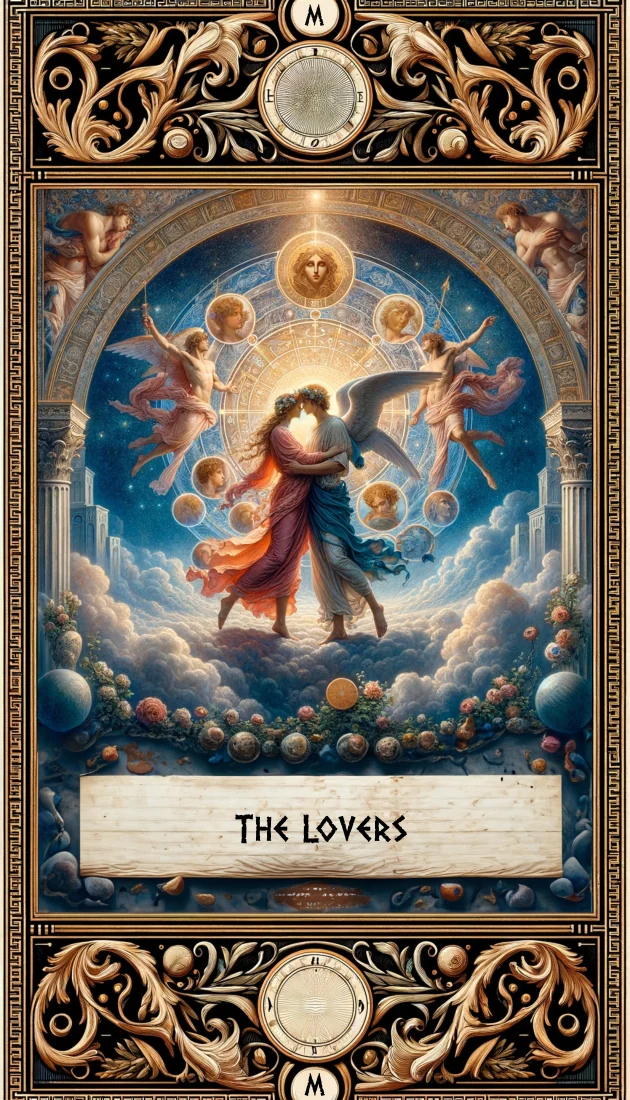
ფრთიანი ჭაბუკი და ქალი ღრუბლებზე ერთმანეთს ეხვევიან. ფრთები ეროსზე მიუთითებს, ქალი კი ფსიქედ შეიძლება წავიკითხოთ — ეს ზღაპრის ბოლო სცენაა, როცა მოკვდავი ქალი ღმერთების ქორწილში შედის. სახელები ბერძნულია, მაგრამ ამბავი ჩვენამდე ლათინურმა რომანმა მოიტანა.
რა ჩანს ნახატზე
ღრუბლებზე ფრთიანი ჭაბუკი და ქალი ერთმანეთს ეხვევიან. გარშემო პატარა ფრთიანი ფიგურები დაფრინავენ. სცენას სვეტებიანი თაღი ჩარჩოავს, თაღში კი სახეებიანი მედალიონები ნათელ რკალს ქმნის. ნახატზე ორი ადამიანია და არა სამი, როგორც მარსელის ტაროში.
ეპიზოდი: ქორწილი ოლიმპოზე
აპულეიუსის „მეტამორფოზებში“ (II საუკუნე) ფსიქე, რომელმაც ქმარი დაკარგა, ვენერას (აფროდიტეს) ოთხ რთულ დავალებას ასრულებს. ბოლოს იუპიტერი (ზევსი) ღმერთებს კრებს და აცხადებს, რომ ეს ქორწინება კანონიერი იქნება. მერკური (ჰერმესი) ფსიქეს ცაში აიყვანს, იუპიტერი კი ამბროსიის თასს აწვდის: დალიე და უკვდავი იქნები. ქორწილის ნადიმზე ჰორები ვარდებს აბნევენ, ქარიტები სურნელს აფრქვევენ, მუზები მღერიან, აპოლონი ლირაზე უკრავს, ვენერა ცეკვავს. დროთა განმავლობაში მათ ქალიშვილი შეეძინათ, რომელსაც ვოლუპტასი — „სიამოვნება“ — დაარქვეს. ნახატის ღრუბლები და მფრინავი ფიგურები სწორედ ამ ციურ ქორწილს შეესაბამება.[1][3]
სიმბოლოები
ფრთები ეროსს უკვე არქაულ ხელოვნებაში აქვს. არისტოფანეს „ფრინველებში“ (ძვ. წ. 414) ის ღამის კვერცხიდან იბადება და ზურგზე ოქროს ფრთები უბრწყინავს. პატარა ფრთიანი ფიგურები ეროტებია: ჰესიოდესთან აფროდიტეს დაბადებისას ეროსი და ჰიმეროსი — „წადილი“ — ახლავან, ელინისტურ და რომაულ ხელოვნებაში კი ერთი ეროსი მრავალ ბავშვად იქცა. სახეებიანი მედალიონები და სვეტებიანი თაღი ILLUMINISMO-ს ილუსტრაციის დამატებაა; ძველი წყარო მათ არ იცნობს.[2]
ოვიდიუსის „მეტამორფოზებში“ ეროსს (კუპიდონს) ორი ისარი აქვს: ოქროსი, წვეტიანი, რომელიც სიყვარულს აღვიძებს, და ტყვიისა, ბლაგვი, რომელიც სიყვარულს აფრთხობს. პირველით მან აპოლონი დაჭრა, მეორით — ნიმფა დაფნე. ასე იწყება ევროპული ხელოვნების ერთ-ერთი ყველაზე ხშირად დახატული დევნა.[1][3]
კარტი ტაროს ისტორიაში
XV საუკუნის იტალიურ დასტებში ამ კარტს ხშირად „სიყვარული“ (L’Amore) ერქვა. ვისკონტი–სფორცას დასტაში წყვილი ერთმანეთს ხელს უწვდის, ზემოთ კი კვარცხლბეკზე თვალახვეული კუპიდონი დგას — სცენა ქორწინების რიტუალად იკითხება. მარსელის ტაროში ჭაბუკი ორ ქალს შორის დგას, ზემოდან კი კუპიდონი მშვილდს უმიზნებს; აქედან მოდის კარტის წაკითხვა, როგორც „არჩევანის“. რაიდერ–უეიტ–სმითის დასტაში (1909) შიშველი კაცი და ქალი ორ ხესთან დგანან, ზემოთ დიდი ფრთიანი ფიგურაა; უეიტი მათ ადამსა და ევას უკავშირებს. ILLUMINISMO ამ ბიბლიურ ფენას ბერძნულ წყაროს უბრუნებს.[4]
A winged youth and a woman embrace on the clouds. The wings point to Eros, and the woman can be read as Psyche — this is the final scene of the tale, when a mortal woman enters a wedding of the gods. The names are Greek, but the story reached us through a Latin novel.
What the image shows
On the clouds a winged youth and a woman embrace. Small winged figures fly around them. A columned arch frames the scene, and inside the arch medallions with faces form a bright arc. There are two people in the image, not three as in the Tarot de Marseille.
The episode: a wedding on Olympus
In Apuleius’ Metamorphoses (2nd century AD), Psyche, who has lost her husband, carries out four hard tasks set by Venus (Aphrodite). At last Jupiter (Zeus) calls the gods together and declares that this marriage will be lawful. Mercury (Hermes) brings Psyche up to heaven, and Jupiter hands her a cup of ambrosia: drink, and you will be immortal. At the wedding feast the Hours scatter roses, the Graces sprinkle balm, the Muses sing, Apollo plays the lyre and Venus dances. In due time a daughter was born to them, named Voluptas — “Pleasure”. The clouds and flying figures of the image match this heavenly wedding.[1][3]
Symbols
Eros already has wings in archaic art. In Aristophanes’ Birds (414 BC) he is born from the egg of Night, golden wings gleaming on his back. The small winged figures are Erotes: in Hesiod, Eros and Himeros — “Longing” — attend Aphrodite at her birth, and in Hellenistic and Roman art the one Eros multiplied into many children. The medallions with faces and the columned arch are additions of the ILLUMINISMO illustration; no ancient source knows them.[2]
In Ovid’s Metamorphoses Eros (Cupid) has two arrows: a sharp golden one that kindles love and a blunt leaden one that puts love to flight. With the first he wounded Apollo, with the second the nymph Daphne. So begins one of the most often painted pursuits in European art.[1][3]
The card in tarot history
In 15th-century Italian decks this card was often called “Love” (L’Amore). In the Visconti-Sforza deck a couple join hands while a blindfolded Cupid stands on a pedestal above them — the scene reads as a marriage rite. In the Tarot de Marseille a young man stands between two women and Cupid aims his bow from above; from this comes the reading of the card as “a choice”. In the Rider–Waite–Smith deck (1909) a naked man and woman stand by two trees beneath a great winged figure; Waite connects them with Adam and Eve. ILLUMINISMO takes this biblical layer back to its Greek source.[4]
წყაროებიSources
- Apuleius, Metamorphoses 6.22–24.
- Aristophanes, Birds 693–697; Hesiod, Theogony 201–202.
- Ovid, Metamorphoses 1.452–476.
- M. Dummett, The Visconti-Sforza Tarot Cards (1986); A. E. Waite, The Pictorial Key to the Tarot (1910).
თემა, წყაროების შერჩევა და დასკვნები — ნიკა ხუცურაული. კვლევასა და თარგმანში დახმარებისთვის გამოყენებულია AI; ყოველი ფაქტი წყაროსთან შემოწმდა.Topic, choice of sources and conclusions — Nika Khutsurauli. AI was used to help with research and translation; every fact was checked against its source.