ეტლში მდგომი ფიგურა ორ ცხენს მართავს. კარტი პლატონის მეეტლეს ეყრდნობა, მაგრამ ბერძნებისთვის ეტლის მართვა ჯერ ნამდვილი და სახიფათო ხელობა იყო. ერთ-ერთი უძველესი ბერძნული ტექსტი სწორედ ამას ასწავლის: როგორ მოაბრუნო ორი ცხენი ისე, რომ ეტლი არ დაიმსხვრეს.[2]
რა ჩანს ნახატზე
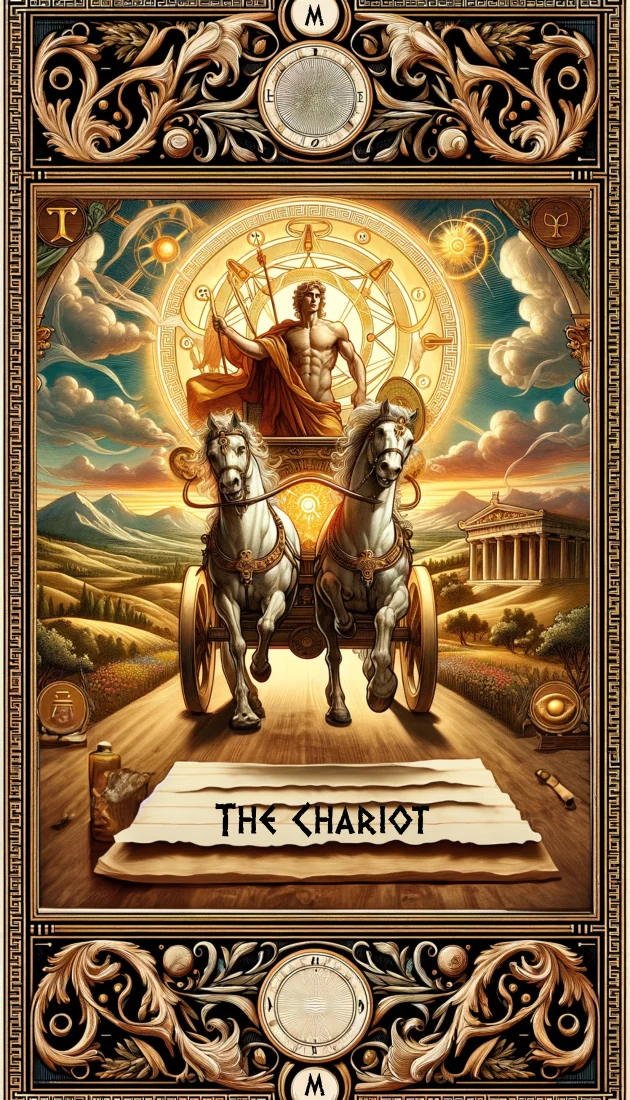
ეტლში მდგომ ფიგურას ორი თეთრი ცხენი წინ მიუძღვის. მის უკან დიდი ნათელი წრე და გეომეტრიული ნიშნებია; გვერდებზე ვრცელი ლანდშაფტი და ტაძრის მსგავსი შენობა ჩანს. მოძრაობა ცენტრალურ გზას მიჰყვება ნათელი ჰორიზონტისკენ.
ეპიზოდი: ნესტორის რჩევა
„ილიადის“ XXIII სიმღერაში აქილევსი პატროკლეს დაკრძალვაზე ეტლების რბოლას აწყობს. სანამ ახალგაზრდა ანტილოქე ეტლზე შედგება, მამამისი ნესტორი რჩევას აძლევს: მეეტლე მეეტლეს ჭკუით სჯობნის და არა ძალით. მობრუნების ნიშანი ხმელი ხის ძელია, ორ თეთრ ქვას შორის. მასთან მარცხენა ცხენი ისე ახლოს უნდა გაატარო, რომ ბორბლის კვერი თითქოს ძელს შეეხოს, ქვას კი არ მიედოს; მარჯვენა ცხენს სადავე მოუშვა და დაუყვირე. შეცდომა ცხენებსაც დააზიანებს და ეტლსაც დაამსხვრევს. ორი ცხენი, რომლებსაც ერთსა და იმავე წამს სხვადასხვა რამ სჭირდებათ — ეს ის სურათია, რომელსაც პლატონი საუკუნეების შემდეგ სულის მეტაფორად აქცევს.[1][2]
სიმბოლოები
პლატონის „ფედროსში“ ორი ცხენი განსხვავდება: ერთი თეთრია და წესიერი, მეორე — მუქი და ჯიუტი. ნახატზე კი ორივე თეთრია — ილუსტრაციამ ის ბრძოლა მოხსნა, რომელსაც პლატონი აღწერს. დიდი ნათელი წრე შეიძლება იმავე დიალოგის ციურ ბრუნვად წავიკითხოთ: ღმერთების ეტლები ცის თაღზე ადიან და ცის ბრუნვა მათ წრეზე ატარებს. ეს ინტერპრეტაციაა; გეომეტრიული ნიშნები და ტაძარი ილუსტრაციის დამატებაა.[2]
დელფოს მეეტლე — ბრინჯაოს ქანდაკება, სიმაღლით დაახლოებით 1.8 მეტრი, ძვ. წ. 470-იანი წლებისა — 1896 წელს ფრანგულმა ექსპედიციამ დელფოში იპოვა. წარწერის მიხედვით, ის გელას ტირანმა პოლიზალოსმა მიუძღვნა აპოლონს პითიურ თამაშებზე ეტლების რბოლაში გამარჯვების აღსანიშნავად. ეტლიდან და ცხენებიდან მხოლოდ ფრაგმენტებია შემორჩენილი.
კარტი ტაროს ისტორიაში
ტაროს კოზირებს ძველად trionfi — „ტრიუმფები“ — ერქვა, და სახელი ტრიუმფალურ მსვლელობას ეხმიანება, ისეთს, როგორიც პეტრარკას პოემაშია. ვისკონტი–სფორცას დასტაში ეტლში ქალი ზის და მას ორი თეთრი ცხენი მიაქანებს. მარსელის ტაროში ეტლზე აბჯრიანი, გვირგვინოსანი მმართველი დგას, ხელში სადავე არ უჭირავს. ელიფას ლევიმ (1854–1856) ცხენები ორ სფინქსად — თეთრად და შავად — წარმოიდგინა, და ეს მოტივი რაიდერ–უეიტ–სმითის დასტაში (1909) გადავიდა. ILLUMINISMO ცხენებს უბრუნდება — ჰომეროსისა და პლატონის ცხენებს.[1][2][4]
A figure standing in a chariot drives two horses. The card rests on Plato’s charioteer, but for the Greeks driving a chariot was first a real and dangerous skill. One of the oldest Greek texts teaches exactly that: how to turn two horses without wrecking the chariot.[2]
What the image shows
Two white horses lead a figure standing in a chariot. Behind him are a great bright circle and geometric signs; at the sides lie a wide landscape and a temple-like building. The movement follows a central road towards a bright horizon.
The episode: Nestor’s advice
In book 23 of the Iliad Achilles holds a chariot race at the funeral of Patroclus. Before young Antilochus mounts his chariot, his father Nestor gives him advice: one charioteer beats another by cunning, not by strength. The turning mark is a dry wooden post between two white stones. There you must bring the left horse so close that the hub of the wheel seems to graze the post, yet never strike the stone; give the right horse its rein and shout to it. A mistake will injure the horses and smash the chariot. Two horses that need different things at the same moment — this is the picture Plato would turn, centuries later, into a metaphor of the soul.[1][2]
Symbols
In Plato’s Phaedrus the two horses differ: one is white and well-ordered, the other dark and unruly. In the image both are white — the illustration has removed the struggle Plato describes. The great bright circle can be read as the heavenly revolution of the same dialogue: the chariots of the gods climb to the vault of heaven and the turning sky carries them round. This is an interpretation; the geometric signs and the temple are additions of the illustration.[2]
The Charioteer of Delphi — a bronze statue about 1.8 metres tall from the 470s BC — was found at Delphi in 1896 by a French excavation. According to its inscription, Polyzalus, tyrant of Gela, dedicated it to Apollo to mark a victory in the chariot race at the Pythian Games. Of the chariot and horses only fragments survive.
The card in tarot history
Tarot trumps were once called trionfi — “triumphs” — and the name recalls a triumphal procession like the one in Petrarch’s poem. In the Visconti-Sforza deck a woman sits in the chariot, drawn by two white horses. In the Tarot de Marseille an armoured, crowned ruler stands in the chariot holding no reins. Éliphas Lévi (1854–1856) imagined the horses as two sphinxes, one white and one black, and the motif passed into the Rider–Waite–Smith deck (1909). ILLUMINISMO returns to the horses — the horses of Homer and Plato.[1][2][4]
წყაროებიSources
- Homer, Iliad 23.262–652, esp. 23.306–348.
- Plato, Phaedrus 246a–254e.
- F. Chamoux, L’Aurige (Fouilles de Delphes IV.5, 1955).
- É. Lévi, Dogme et rituel de la haute magie (1854–1856); M. Dummett, The Game of Tarot (1980).
თემა, წყაროების შერჩევა და დასკვნები — ნიკა ხუცურაული. კვლევასა და თარგმანში დახმარებისთვის გამოყენებულია AI; ყოველი ფაქტი წყაროსთან შემოწმდა.Topic, choice of sources and conclusions — Nika Khutsurauli. AI was used to help with research and translation; every fact was checked against its source.