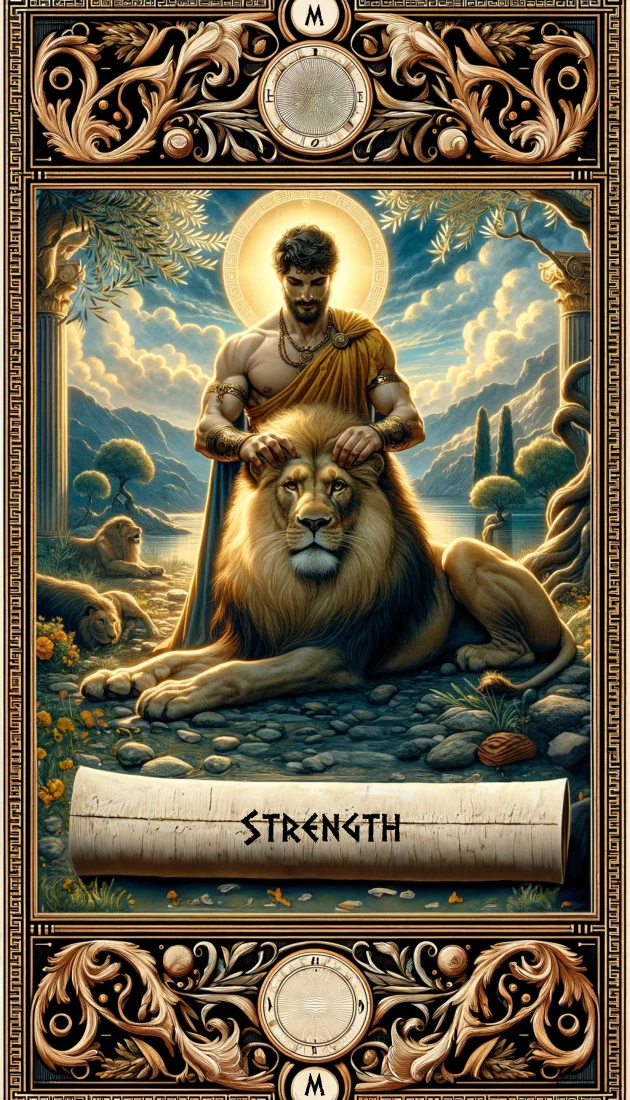
კაცი ლომს თავზე ხელს ადებს — არც დარტყმა ჩანს, არც ბრძოლა. მითში კი ჰერაკლემ ნემეის ლომი მოგუდა. ეს სიმშვიდე შემთხვევითი არ არის: ტაროს ისტორიაში ძალის კარტზე ბრძოლა თანდათან შეკავებამ შეცვალა, და ILLUMINISMO-ს ნახატი ამ გვიანდელ წაკითხვას მიჰყვება.
რა ჩანს ნახატზე
მამაკაცი დიდი ლომის უკან დგას და ხელები მის თავსა და ფაფარზე უდევს; მის თავს შარავანდედის მსგავსი ნათება აქვს, ტანზე ოქროსფერი მოსასხამი ახურავს. უკან, ზეთისხილის ხეებსა და სვეტებს შორის, მეორე ლომი წევს. იარაღი არსად ჩანს.
ეპიზოდი: პირველი გმირობა
აპოლოდოროსის „ბიბლიოთეკის“ მიხედვით, ნემეის ლომს ტყავს ვერცერთი იარაღი ვერ ხვრეტდა. ჰერაკლე კლეონაიში ღარიბ მუშა მოლორქოსთან გაჩერდა და სთხოვა, ოცდაათი დღე მოეცადა: თუ დაბრუნდებოდა, მსხვერპლი ზევს მხსნელისთვის შეეწირა, თუ არა — თავად მისთვის, როგორც მიცვალებული გმირისთვის. ლომს ჯერ ისრები ესროლა და როცა დარწმუნდა, რომ ტყავს ვერ ატანდა, კომბლით სდია ორპირ გამოქვაბულამდე. ერთი შესასვლელი ამოქოლა, მეორიდან შევიდა, ლომს კისერზე ხელი შემოხვია და ახრჩო, სანამ არ მოკლა. ოცდამეათე დღეს დაბრუნდა, სწორედ მაშინ, როცა მოლორქოსი მისთვის, როგორც მკვდრისთვის, მსხვერპლის შეწირვას აპირებდა. თეოკრიტეს XXV იდილიაში ჰერაკლე თავად ჰყვება, რომ ტყავი მხოლოდ ლომის საკუთარი კლანჭებით გაატყავა.[1][2]
სიმბოლოები
ლომის ტყავი ჰერაკლეს მთავარი ნიშანი გახდა: მას აბჯრად ატარებდა, ლომის თავს კი მუზარადად. ათენაიოსი ძველ ავტორზე, მეგაკლეიდესზე დაყრდნობით წერს, რომ ჰერაკლე ლომის ტყავით, კომბლითა და მშვილდით პირველად პოეტმა სტესიქორემ წარმოადგინა. კომბალი, აპოლოდოროსის მიხედვით, ჰერაკლემ თავად მოჭრა. ნახატზე არც კომბალია, არც ლომის ტყავი და არც ბრძოლა — ლომზე დადებული ხელები მითიდან კი არა, ტაროს გვიანდელი „ძალიდან“ მოდის.[1]
ერატოსთენეს სახელით ცნობილი „კატასტერიზმების“ მიხედვით, ზევსმა ნემეის ლომი ვარსკვლავებს შორის დასვა, და ის ლომის თანავარსკვლავედად იქცა — ან როგორც ყველა ცხოველის მეფე, ან ჰერაკლეს პირველი და ყველაზე სახელოვანი გმირობის ხსოვნად.[3]
კარტი ტაროს ისტორიაში
ძალა (Fortitudo) ოთხი კარდინალური სათნოებიდან ერთია. ვისკონტი–სფორცას დასტაში — ეს კონკრეტული კარტი დაახლოებით 1480 წლის შემცვლელია — კაცი ორივე ხელით აწეულ კომბალს ლომს უღერებს; გამოსახულება ჰერაკლედ იკითხება. მარსელის ტაროში ქალი ლომს ხახას ხელით უღებს, ყოველგვარი იარაღის გარეშე. ძველ დასტებში ძალა XI-ეა, სამართლიანობა — VIII. რაიდერ–უეიტ–სმითის დასტაში (1909) უეიტმა ისინი ადგილებით შეცვალა, „ოქროს განთიადის“ ორდენის ასტროლოგიური შესაბამისობის მიხედვით: ლომი — ძალა, სასწორი — სამართლიანობა. ILLUMINISMO უეიტის თანმიმდევრობას მიჰყვება.
A man rests his hands on a lion’s head — no blow, no fight. In the myth, however, Heracles throttled the Nemean lion. The calm is no accident: in the history of tarot the struggle on the Strength card was gradually replaced by restraint, and the ILLUMINISMO image follows that later reading.
What the image shows
A man stands behind a great lion, his hands on its head and mane; a halo-like glow surrounds his head, and he wears a golden cloak. Behind, among olive trees and columns, a second lion lies resting. No weapon is to be seen.
The episode: the first labour
According to Apollodorus’ Library, no weapon could pierce the hide of the Nemean lion. At Cleonae Heracles lodged with a poor labourer, Molorchus, and asked him to wait thirty days: if he came back, Molorchus should sacrifice to Zeus the Saviour; if not, to Heracles himself as a dead hero. He first shot arrows at the lion, and when he saw they could not pierce it, he chased it with his club to a cave with two mouths. He blocked one entrance, came in through the other, put his arm round the lion’s neck and held it in a choke until it died. He returned on the thirtieth day, just as Molorchus was about to sacrifice to him as one dead. In Theocritus’ twenty-fifth Idyll Heracles himself says that he could flay the hide only with the lion’s own claws.[1][2]
Symbols
The lion skin became Heracles’ chief sign: he wore it as armour and the lion’s head as a helmet. Athenaeus, drawing on an older writer, Megaclides, says that the poet Stesichorus was the first to present Heracles with lion skin, club and bow. The club, according to Apollodorus, Heracles cut for himself. The image has no club, no lion skin and no fight — the hands laid on the lion come not from the myth but from the later tarot Strength.[1]
According to the Catasterisms attributed to Eratosthenes, Zeus placed the Nemean lion among the stars, and it became the constellation Leo — either as king of all animals or in memory of Heracles’ first and most famous labour.[3]
The card in tarot history
Strength (Fortitudo) is one of the four cardinal virtues. In the Visconti-Sforza deck — this particular card is a replacement from about 1480 — a man swings a club raised in both hands over a lion; the figure reads as Heracles. In the Tarot de Marseille a woman opens the lion’s jaws with her hands, without any weapon. In the old decks Strength is XI and Justice VIII. In the Rider–Waite–Smith deck (1909) Waite swapped them, following the astrological correspondences of the Golden Dawn: Leo for Strength, Libra for Justice. ILLUMINISMO follows Waite’s order.
წყაროებიSources
- Apollodorus, Library 2.4.11, 2.5.1.
- Theocritus, Idyll 25.
- [Eratosthenes], Catasterisms 12; Athenaeus, Deipnosophists 12.512e–513a.
- The Morgan Library & Museum, MS M.630 (Visconti-Sforza Tarot); A. E. Waite, The Pictorial Key to the Tarot (1910).
თემა, წყაროების შერჩევა და დასკვნები — ნიკა ხუცურაული. კვლევასა და თარგმანში დახმარებისთვის გამოყენებულია AI; ყოველი ფაქტი წყაროსთან შემოწმდა.Topic, choice of sources and conclusions — Nika Khutsurauli. AI was used to help with research and translation; every fact was checked against its source.