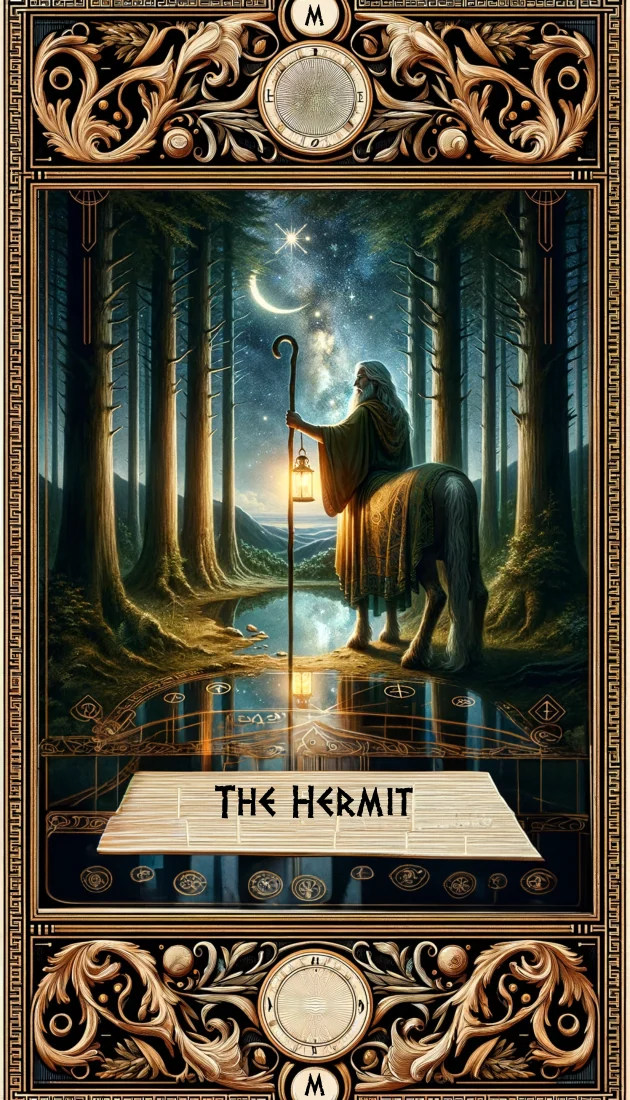
ბნელ ტყეში ფარნიანი კენტავრი დგას. ეს ქირონია — ბერძნული მითის ყველაზე ცნობილი მასწავლებელი. თესალიაში, პელიონის მთაზე მის განმარტოებას ერთი უჩვეულო თვისება ჰქონდა: მასთან ბავშვები მიჰყავდათ.
რა ჩანს ნახატზე
კენტავრი — ნახევრად ადამიანი, ნახევრად ცხენი — ბნელ ტყეში, წყნარი წყლის პირას დგას. ხელში ფარანი და მწყემსის კვერთხი უჭირავს. ხეებს შორის ნამგალა მთვარე და ვარსკვლავები ჩანს, ფარნის შუქი კი წყალში ორმაგდება.
ეპიზოდი: სკოლა მთაზე
პინდაროსის მესამე ნემეურ ოდაში ექვსი წლის აქილევსი ქირონის სახლში ლომებსა და ტახებს ხოცავს და მათ ჯერ კიდევ სუნთქვაშეკრულ სხეულებს კენტავრთან მიათრევს. არტემიდესა და ათენას უკვირთ, როგორ აღწევს ის ირმებს ძაღლებისა და მახეების გარეშე — მხოლოდ სირბილით. იმავე ოდაში ქირონი ზრდის იასონსაც და ასკლეპიოსსაც, რომელსაც „რბილხელიანი“ მკურნალობის წესი ასწავლა. ქსენოფონტე თავის ტრაქტატს „ნადირობაზე“ ქირონის მოწაფეების სიით იწყებს: ოცდაერთი სახელი, მათ შორის კეფალოსი, ასკლეპიოსი, ნესტორი, პელევსი, თესევსი, ოდისევსი, დიომედე, კასტორი და პოლიდევკე, ენეასი და აქილევსი. მისთვის ნადირობა სათნოების სკოლაა: ტყეში ისწავლება მოთმინება და ის გამძლეობა, რომელიც ომში დასჭირდებათ.[1][2]
სიმბოლოები
ბერძნული კენტავრები ჩვეულებრივ ველურები არიან; ქირონი გამონაკლისია, სხვა წარმოშობისაც, როგორც მითის ისტორია ჰყვება. ფარანი ძველ წყაროებში არ ჩანს — ის ტაროს განდეგილის ნიშანია. მწყემსის კვერთხიც ტაროდან მოდის; ათენურ ვაზებზე ქირონი ხშირად მხარზე გადებულ ტოტს ატარებს, რომელზეც ნანადირევი ჰკიდია. ნამგალა მთვარე და წყალი ილუსტრაციის დამატებაა.
ძველ ბერძნებს ჰქონდათ პოემა „ქირონის დარიგებები“, რომელსაც ჰესიოდეს მიაწერდნენ: ბრძენი კენტავრის რჩევები ახალგაზრდა აქილევსისთვის. პოემა დაკარგულია; სხვა ავტორების ციტატებით მხოლოდ რამდენიმე სტრიქონია შემორჩენილი.[3]
კარტი ტაროს ისტორიაში
XV საუკუნის იტალიურ დასტებში ამ კარტს ხშირად „დრო“ (il Tempo) ან „მოხუცი“ ერქვა. ვისკონტი–სფორცას დასტაში მოხუცს ქვიშის საათი უჭირავს. მოგვიანო დასტებში, მარსელის ტაროს ჩათვლით, მას ფარანი უჭირავს და „განდეგილი“ (l’Ermite) ჰქვია; ზოგი მკვლევარი ფიქრობს, რომ საათი თანდათან ფარნად იქცა. რაიდერ–უეიტ–სმითის დასტაში (1909) ფარანში ექვსქიმიანი ვარსკვლავი ანთია. ILLUMINISMO-ში ფარანს მასწავლებელი ატარებს — დროის ნაცვლად ცოდნის გადაცემის ფიგურა.
In a dark forest stands a centaur with a lantern. This is Chiron — the most famous teacher of Greek myth. His solitude on Mount Pelion in Thessaly had one unusual feature: children were brought to him.
What the image shows
A centaur — half man, half horse — stands in a dark forest at the edge of still water. He holds a lantern and a shepherd’s staff. Between the trees a crescent moon and stars appear, and the lantern’s light is doubled in the water.
The episode: a school on the mountain
In Pindar’s third Nemean ode the six-year-old Achilles kills lions and boars at Chiron’s home and drags their still-gasping bodies to the centaur. Artemis and Athena marvel at how he runs down deer without hounds or nets — by speed alone. In the same ode Chiron raises Jason, and Asclepius too, whom he taught the “gentle-handed” ways of healing. Xenophon opens his treatise On Hunting with a list of Chiron’s pupils: twenty-one names, among them Cephalus, Asclepius, Nestor, Peleus, Theseus, Odysseus, Diomedes, Castor and Polydeuces, Aeneas and Achilles. For him hunting is a school of virtue: in the forest one learns patience and the endurance that war will demand.[1][2]
Symbols
Greek centaurs are usually wild; Chiron is the exception, with a different birth as well, as the full myth tells. The lantern does not appear in ancient sources — it is the sign of the tarot Hermit. The shepherd’s staff also comes from tarot; on Athenian vases Chiron often carries a branch over his shoulder with game hanging from it. The crescent moon and the water are additions of the illustration.
The ancient Greeks had a poem, the Precepts of Chiron, attributed to Hesiod: the wise centaur’s advice to the young Achilles. The poem is lost; only a few lines survive, quoted by other authors.[3]
The card in tarot history
In 15th-century Italian decks this card was often called “Time” (il Tempo) or “the Old Man”. In the Visconti-Sforza deck the old man holds an hourglass. In later decks, including the Tarot de Marseille, he holds a lantern and is called the Hermit (l’Ermite); some scholars think the hourglass gradually became a lantern. In the Rider–Waite–Smith deck (1909) a six-pointed star burns in the lantern. In ILLUMINISMO the lantern is carried by a teacher — a figure of passing on knowledge rather than of time.
წყაროებიSources
- Pindar, Nemean 3.43–58.
- Xenophon, On Hunting 1.1–17.
- Hesiod, fr. 283–285 Merkelbach–West (Precepts of Chiron).
- The Morgan Library & Museum, MS M.630 (Visconti-Sforza Tarot, “Time”); M. Dummett, The Game of Tarot (1980).
თემა, წყაროების შერჩევა და დასკვნები — ნიკა ხუცურაული. კვლევასა და თარგმანში დახმარებისთვის გამოყენებულია AI; ყოველი ფაქტი წყაროსთან შემოწმდა.Topic, choice of sources and conclusions — Nika Khutsurauli. AI was used to help with research and translation; every fact was checked against its source.