ბერძნულ მითში ასტრეამ დედამიწა დატოვა და ცაზე ქალწულის თანავარსკვლავედად იქცა. მის ხელში ყველაზე კაშკაშა ვარსკვლავი ანთია — სპიკა, „თავთავი“. ამ ერთ ვარსკვლავზე დაკვირვებით ბერძენმა ასტრონომმა ძვ. წ. II საუკუნეში ცის ერთ-ერთი ყველაზე ნელი მოძრაობა აღმოაჩინა.
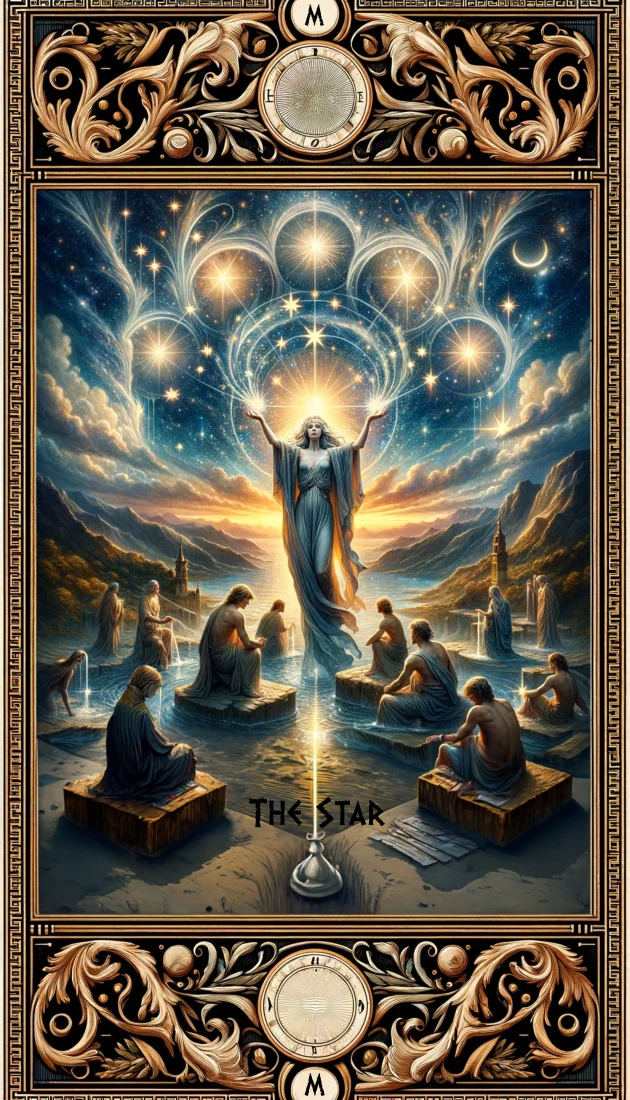
რა ჩანს ნახატზე
გრძელსამოსიანი ქალი ხელებაწეული ღია სივრცეში აღიმართება; მისგან ძირს, მიწაზე მდგარ ვერცხლის ჭურჭლამდე, სინათლის წვრილი სხივი ეშვება და ნათელ ვერტიკალურ ღერძს ქმნის. გარშემო, წყლისა და მიწის საზღვარზე, ქვის ბლოკებზე ადამიანები სხედან, ზოგი პატარა ნაკადთან. ზემოთ მრავალი ვარსკვლავი, ნათელი წრეები და ნამგალა მთვარეა; ყველას მზერა სინათლისკენ არის მიმართული.
ეპიზოდი: ვარსკვლავი, რომელიც ადგილს იცვლის
როგორ დატოვა ასტრეამ ადამიანები, ამას მითის სრული ისტორია ჰყვება; კარტი იმ მომენტს აჩვენებს, როცა ის უკვე ვარსკვლავია. არატოსის „ფენომენებში“ (ძვ. წ. III ს.) ქალწულს ხელში ბრწყინვალე თავთავი უჭირავს. დაახლოებით ძვ. წ. 130 წელს ასტრონომმა ჰიპარქემ ამ ვარსკვლავის მდებარეობა გაზომა: ის შემოდგომის ბუნიობის წერტილიდან 6 გრადუსით იყო დაშორებული. ალექსანდრიელი ტიმოქარისის ჩანაწერებით, დაახლოებით 150 წლით ადრე ეს მანძილი 8 გრადუსი ყოფილა. ჰიპარქემ დაასკვნა, რომ ვარსკვლავები ერთმანეთის მიმართ კი არ იძვრიან, არამედ ბუნიობის წერტილები ნელა მიცურავენ ზოდიაქოს გასწვრივ — საუკუნეში არანაკლებ ერთი გრადუსით. ამას დღეს ბუნიობათა პრეცესია ჰქვია: დედამიწის ღერძი ბზრიალასავით ნელა ბრუნავს და სრულ წრეს დაახლოებით 26 ათას წელიწადში ასრულებს. ჰიპარქეს ნაშრომი დაკარგულია; ეს ამბავი პტოლემაიოსის „ალმაგესტიდან“ ვიცით.[1][2]
სიმბოლოები
ვარსკვლავები ასტრეას — ქალწულის თანავარსკვლავედს — უკავშირდება. ნათელი ვერტიკალური ღერძი შეიძლება ცის ღერძად წავიკითხოთ: არატოსი თავის პოემას სწორედ ღერძით იწყებს, რომელიც უძრავად დგას, დედამიწას შუაში იჭერს და ცას თავის გარშემო ატრიალებს. გეომეტრიული წრეები ცის წრეებს — ეკლიპტიკასა და ეკვატორს — ეხმიანება, რომლებსაც ბერძენი ასტრონომები ხაზავდნენ; ეს ინტერპრეტაციაა. წყალი და მჯდომი ადამიანები ტაროს ვარსკვლავის წყლიდან მოდის და ილუსტრაციის გადაწყვეტილებაა.[1]
სპიკა სინამდვილეში ორი ვარსკვლავია: ორი ცხელი, ლურჯი ვარსკვლავი ერთმანეთის გარშემო ოთხ დღეზე ცოტა მეტ დროში ბრუნავს და ისე ახლოს არიან, რომ ტელესკოპით ცალ-ცალკე არ ჩანან. მათი ორბიტა XX საუკუნეში ინტერფერომეტრით გაზომეს.
კარტი ტაროს ისტორიაში
ვისკონტი–სფორცას დასტაში ქალს ხელში ვარსკვლავი უჭირავს. მარსელის ტაროში შიშველი ქალი მუხლმოყრილი ორი დოქიდან წყალს ასხამს — ერთს წყალში, მეორეს მიწაზე; მის თავზე ერთი დიდი და შვიდი პატარა ვარსკვლავია. რაიდერ–უეიტ–სმითის დასტა (1909) ამ კომპოზიციას ინარჩუნებს. ILLUMINISMO ვარსკვლავს სახელს აძლევს: ქალწული, რომელმაც დედამიწა დატოვა — და რომლის ხელში ანთებულმა ვარსკვლავმა ცის ნელი ბრუნვა გაგვიმხილა.[4]
In Greek myth Astraea left the earth and became the constellation of the Virgin in the sky. In her hand burns its brightest star — Spica, “the ear of grain”. By watching this one star a Greek astronomer of the 2nd century BC discovered one of the slowest motions of the sky.
What the image shows
A woman in a long robe rises with her arms raised in open space; from her a thin beam of light runs down to a silver vessel standing on the ground, forming a bright vertical axis. Around her, where water meets land, people sit on stone blocks, some beside small streams. Above are many stars, bright circles and a crescent moon; every gaze is turned towards the light.
The episode: a star that changes place
How Astraea left humankind is told in the full myth; the card shows the moment when she is already a star. In Aratus’ Phaenomena (3rd century BC) the Virgin holds a shining ear of grain. Around 130 BC the astronomer Hipparchus measured this star’s position: it lay 6 degrees from the autumn equinox. According to the records of Timocharis of Alexandria, about 150 years earlier the distance had been 8 degrees. Hipparchus concluded that the stars were not shifting against one another; rather, the equinox points were slowly sliding along the zodiac — by no less than one degree a century. Today this is called the precession of the equinoxes: the Earth’s axis turns slowly like a spinning top and completes a full circle in about 26,000 years. Hipparchus’ own work is lost; we know the story from Ptolemy’s Almagest.[1][2]
Symbols
The stars belong to Astraea — the constellation of the Virgin. The bright vertical axis can be read as the axis of the sky: Aratus opens his poem with exactly that axis, which stands fixed, holds the earth in the middle and turns the heavens around itself. The geometric circles echo the circles of the sky — the ecliptic and the equator — that Greek astronomers drew; this is an interpretation. The water and the seated people come from the water of the tarot Star and are a choice of the illustration.[1]
Spica is in fact two stars: two hot blue stars orbit each other in a little over four days, so close together that no telescope shows them apart. Their orbit was measured in the 20th century with an interferometer.
The card in tarot history
In the Visconti-Sforza deck a woman holds a star in her hand. In the Tarot de Marseille a naked woman kneels and pours water from two jugs — one into the water, one onto the land; above her are one large star and seven small ones. The Rider–Waite–Smith deck (1909) keeps this composition. ILLUMINISMO gives the star a name: the Virgin who left the earth — whose star revealed the slow turning of the sky.[4]
წყაროებიSources
- Aratus, Phaenomena 19–26, 96–136.
- Ptolemy, Almagest 7.1–3, trans. G. J. Toomer (1984).
- D. Herbison-Evans et al., “A study of α Virginis with an intensity interferometer”, Monthly Notices of the Royal Astronomical Society 151 (1971).
- M. Dummett, The Game of Tarot (1980); A. E. Waite, The Pictorial Key to the Tarot (1910).
თემა, წყაროების შერჩევა და დასკვნები — ნიკა ხუცურაული. კვლევასა და თარგმანში დახმარებისთვის გამოყენებულია AI; ყოველი ფაქტი წყაროსთან შემოწმდა.Topic, choice of sources and conclusions — Nika Khutsurauli. AI was used to help with research and translation; every fact was checked against its source.