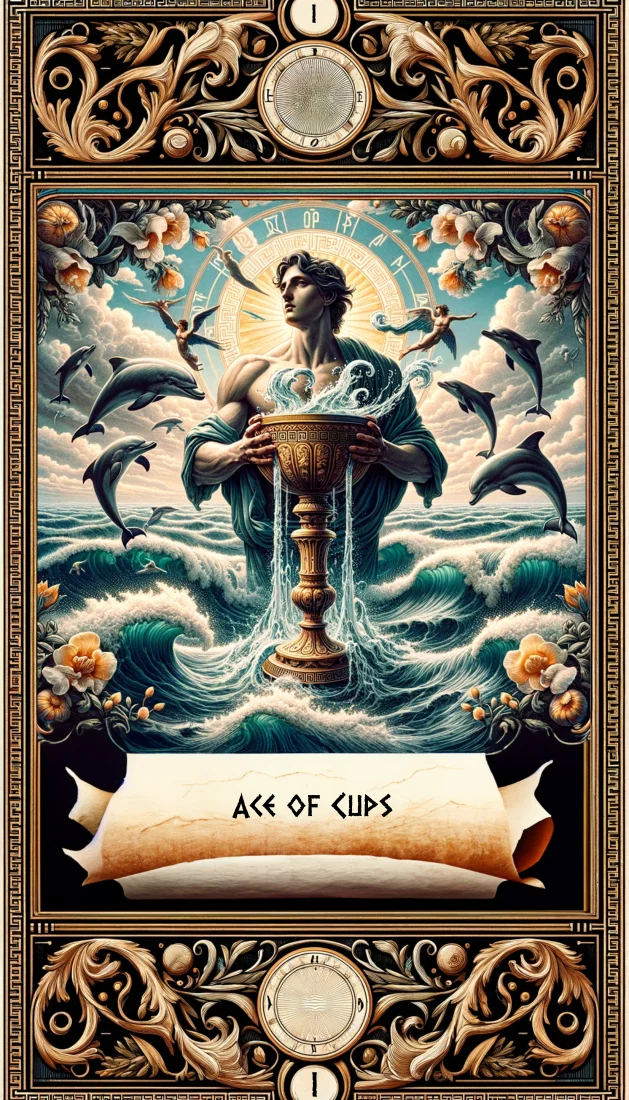
ზღვის ტალღებში ახალგაზრდა დგას, დიდ თასს ატარებს, გარშემო დელფინები დაცურავენ. ბერძნულ სამყაროში დელფინზე ამხედრებული ჭაბუკი ერთი ქალაქის, ტარასის — დღევანდელი ტარანტოს — ნიშანი იყო. მისი დაარსების ამბავში კი წყალი, რომელიც გადმოდის, ცრემლად იქცევა.
რა ჩანს ნახატზე
ზღვის ტალღებში მდგომ ახალგაზრდას დიდი თასი უჭირავს. თასიდან წყალი გადმოდის, გარშემო დელფინები და პატარა ფრთიანი ფიგურები დაფრინავენ, ზემოთ ასოებიანი ნათელი წრიული რკალი და ყვავილები ჩანს. გამოსახულება წყლის უწყვეტ მოძრაობას ადამიანის სხეულთან აერთებს.
ეპიზოდი: წვიმა მოწმენდილი ციდან
პავსანიასი ჰყვება, რომ სპარტელმა ფალანთოსმა, რომელიც ახალშენელებს იტალიისკენ მიუძღოდა, დელფოში ასეთი პასუხი მიიღო: მიწასა და ქალაქს მაშინ მოიპოვებ, როცა მოწმენდილი ციდან წვიმას იგრძნობ. ფალანთოსმა პასუხი ვერ გაიგო, ადგილობრივებთან ბრძოლა არ ეწყობოდა და ქალაქები ვერ აიღო. სასოწარკვეთილი ცოლთან იჯდა, რომელმაც მისი თავი კალთაში ჩაიდო და, ქმრის უიღბლობაზე ფიქრით, ატირდა. ცრემლები ფალანთოსს თავზე დაეცა — და მან ორაკული გაიგო: ცოლს აითრა ერქვა, ბერძნულად „მოწმენდილი ცა“. იმავე ღამეს მან ტარასი აიღო, ადგილობრივთა ყველაზე დიდი და აყვავებული ქალაქი. იმავე ავტორის თქმით, იტალიამდე ფალანთოსის ხომალდი ჩაიძირა და ნაპირზე ის დელფინმა გამოიყვანა; ქალაქს კი სახელი ტარასისგან ჰქონდა, პოსეიდონისა და ადგილობრივი ნიმფის ვაჟისგან.[1]
სიმბოლოები
დელფინები პოსეიდონის ცხოველებია, და დელფინზე ამხედრებული ჭაბუკი ამ ამბის ცენტრალური სახეა. გადმომდინარე თასი შეიძლება აითრას ცრემლებად წავიკითხოთ — წყალი, რომელმაც გაუგებარი სიტყვა გასაგები გახადა; ეს ინტერპრეტაციაა. ნათელი რკალი და ყვავილები ილუსტრაციის დამატებაა.
ტარასის ვერცხლის მონეტებზე დელფინზე ამხედრებული ჭაბუკი ძვ. წ. დაახლ. 500 წლიდან რამდენიმე საუკუნის განმავლობაში გამოისახებოდა. ძველი ცნობის თანახმად, არისტოტელე „ტარენტელთა პოლიტიაში“ ამ მხედარს ტარასად, პოსეიდონის ვაჟად, ასახელებდა; მკვლევრები დღესაც კამათობენ, ტარასია ის თუ ფალანთოსი.
კარტი ტაროს ისტორიაში
თასების წყობაც მამლუქური კარტებიდან მოდის, სადაც თასი ერთ-ერთი ოთხი ნიშანთაგანია. მარსელის ტაროს ტუზზე დიდი, მორთული თასია, რომელიც ხან ციხე-კოშკს ჰგავს, ხან შადრევანს. რაიდერ–უეიტ–სმითის დასტაში (1909) ღრუბლიდან გამოსულ ხელს თასი უჭირავს, რომლიდანაც ხუთი ნაკადი ჩამოდის, ზემოდან კი მტრედი ეშვება ჯვრიანი სეფისკვერით — ევქარისტიული სახე. ILLUMINISMO თასს ზღვას უბრუნებს, საიდანაც ბერძნული წყალი მოდიოდა.[4]
A youth stands in the sea waves carrying a great cup, with dolphins swimming around him. In the Greek world a youth riding a dolphin was the emblem of one city, Taras — today’s Taranto. And in the story of its founding, water that overflows turns into tears.
What the image shows
A youth standing in the sea waves holds a great cup. Water spills from the cup, dolphins and small winged figures fly around him, and above a bright circular arc with letters and flowers appear. The image joins the unbroken movement of water with the human body.
The episode: rain from a clear sky
Pausanias tells that the Spartan Phalanthus, leading settlers to Italy, received this answer at Delphi: you will win land and a city when you feel rain from a clear sky. Phalanthus did not understand the answer; his fights with the natives went badly and he could take no city. In despair he sat with his wife, who laid his head in her lap and, thinking of her husband’s misfortune, began to weep. Her tears fell on Phalanthus’ head — and he understood the oracle: his wife’s name was Aethra, Greek for “clear sky”. That same night he took Taras, the largest and most prosperous city of the natives. The same author says that before reaching Italy Phalanthus was shipwrecked and a dolphin carried him ashore; and that the city was named after Taras, a son of Poseidon and a local nymph.[1]
Symbols
Dolphins are Poseidon’s creatures, and the youth riding a dolphin is the central image of this story. The overflowing cup can be read as Aethra’s tears — water that made an obscure word clear; this is an interpretation. The bright arc and the flowers are additions of the illustration.
A youth riding a dolphin appeared on the silver coins of Taras from about 500 BC for several centuries. According to an ancient report, Aristotle, in his Constitution of the Tarentines, named this rider as Taras, son of Poseidon; scholars still argue whether he is Taras or Phalanthus.
The card in tarot history
The suit of cups also comes from the Mamluk cards, where the cup is one of the four signs. On the Tarot de Marseille ace stands a great ornate cup that looks now like a castle tower, now like a fountain. In the Rider–Waite–Smith deck (1909) a hand from a cloud holds a cup from which five streams fall, while a dove descends with a host marked with a cross — a eucharistic image. ILLUMINISMO gives the cup back to the sea from which Greek water came.[4]
წყაროებიSources
- Pausanias, Description of Greece 10.10.6–8; 10.13.10.
- Pollux, Onomasticon 9.80 (Aristotle on the coins of Taras).
- Strabo, Geography 6.3.2 (the founding of Taras).
- A. E. Waite, The Pictorial Key to the Tarot (1910).
თემა, წყაროების შერჩევა და დასკვნები — ნიკა ხუცურაული. კვლევასა და თარგმანში დახმარებისთვის გამოყენებულია AI; ყოველი ფაქტი წყაროსთან შემოწმდა.Topic, choice of sources and conclusions — Nika Khutsurauli. AI was used to help with research and translation; every fact was checked against its source.