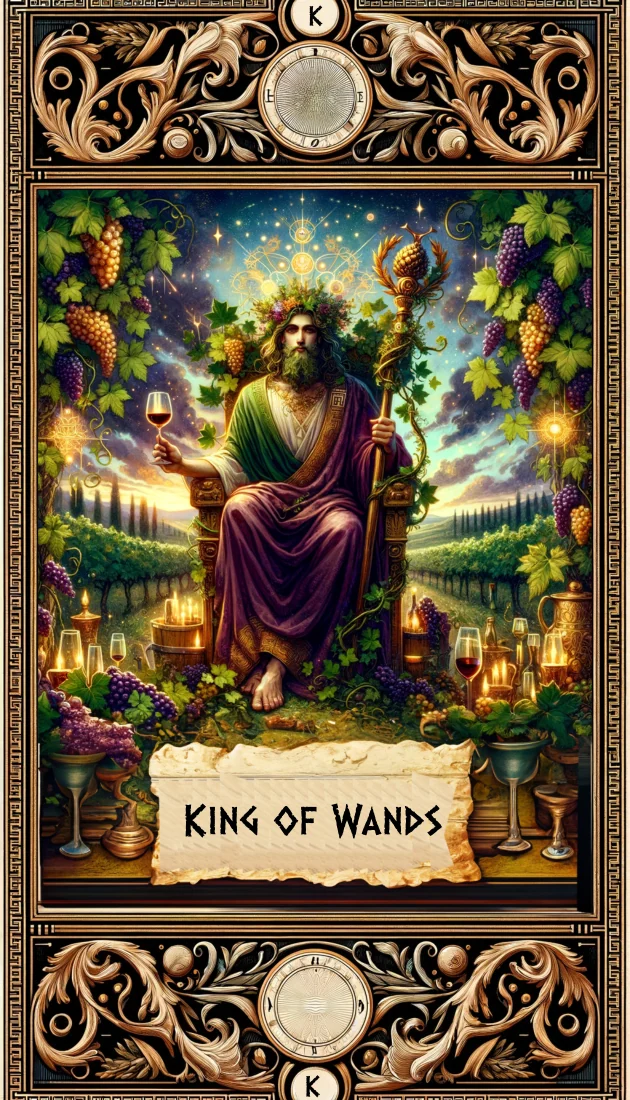
გვირგვინოსანი მეფე ვენახში ზის, ხელში წითელი ღვინით სავსე ჭიქა და მაღალი კვერთხი უჭირავს. ეს კვერთხი დიონისეს თირსია — სუროშემოხვეული ღერო, თავზე გირჩით. ევრიპიდეს „ბაკქებში“ ის მიწიდან წყალს, ღვინოს, რძეს და თაფლს ადინებს — და იმავე დღეს იარაღად იქცევა.[1]
რა ჩანს ნახატზე
ფოთლების გვირგვინითა და ოქროს სხივოსანი გვირგვინით შემკული წვეროსანი ფიგურა ვენახსა და უხვ ხილს შორის, ტახტზე ზის. ერთ ხელში წითელი ღვინით სავსე ფეხიანი ჭიქა უჭირავს, მეორეში — მაღალი, მორთული კვერთხი; გარშემო ყურძენი, ანთებული სანთლები და ღვინის ჭიქები დგას. სცენის ცენტრში სიმშვიდე და სიუხვე ერთად ჩანს.
ეპიზოდი: თირსის სასწაულები
„ბაკქებში“ (ძვ. წ. 405) კითერონის მთიდან ჩამოსული მწყემსი მეფე პენთევსს უამბობს, რა ნახა. მენადები, დიონისეს მიმდევარი ქალები, მშვიდად ეძინათ; გაღვიძებულებმა ირმის ტყავები გველებით შემოიკრეს და ძუძუთი ირმის ნუკრებსა და მგლის ლეკვებს კვებავდნენ. ერთმა თირსით კლდეს დაჰკრა — და კლდიდან წყალი წამოვიდა; მეორემ ნართექსი მიწაში ჩაარჭო — და ღმერთმა იქ ღვინის წყარო ამოადინა; ვისაც რძე უნდოდა, თითის წვერებით მიწას ფხეკდა და რძე მოედინებოდა; სუროიანი თირსებიდან კი თაფლი წვეთავდა. მაგრამ როცა მწყემსებმა ერთ-ერთი მათგანის შეპყრობა სცადეს, მენადებმა ნახირი დაგლიჯეს, სოფლებს დაესხნენ, და მამაკაცების შუბები მათ ვერ ჭრიდა, თირსები კი კაცებს ჭრიდა. ერთი და იგივე კვერთხი სიუხვესაც შობს და ძალადობასაც.[1]
სიმბოლოები
თირსი ნართექსის — გიგანტური კამის — ღეროა, სუროთი შემოხვეული და გირჩით დაგვირგვინებული. ფეხიანი შუშის ჭიქა თანამედროვე ნივთია: ბერძნულ ვაზებზე დიონისეს ხელში კანთაროსია — მაღალყურიანი თიხის ან ლითონის თასი. ყურძენი და ვენახი ღვინის ღმერთის ნიშნებია. ოქროს სხივოსანი გვირგვინი ილუსტრაციისაა; ფოთლების გვირგვინი კი ბერძნულ ტრადიციას შეესაბამება — დიონისე ჩვეულებრივ სუროს ან ვაზის გვირგვინს ატარებს.
ნართექსი ის მცენარეა, რომელშიც ჰესიოდესთან პრომეთემ ცეცხლი დამალა (იხ. „კვერთხების ორი“). ჯეიმზ ფრეიზერი აპოლოდოროსის კომენტარში იმოწმებს XVIII საუკუნის ფრანგ ბოტანიკოსს, ტურნეფორს: ღეროს მშრალი, თეთრი გული პატრუქივით ეკიდება ცეცხლს, ნელა იწვის და ქერქს არ აზიანებს, ამიტომ ხალხი მას ცეცხლის ერთი ადგილიდან მეორეზე გადასატანად იყენებდა. ერთი მცენარე ორივე მითს ემსახურება — ცეცხლის მომტანსაც და ღვინის ღმერთსაც.[2][3]
კარტი ტაროს ისტორიაში
მეფე სასახლის კარტებში უმაღლესია. მარსელის ტაროში მეფეს დიდი ხელკეტი უჭირავს. რაიდერ–უეიტ–სმითის დასტაში (1909) მეფე ლომებითა და სალამანდრებით მორთულ ტახტზე ზის, ხელში ყვავილოვანი კვერთხი აქვს, ფეხებთან ხვლიკია. ILLUMINISMO მეფეს დიონისეს აძლევს — ღმერთს, რომლის ძალაც სიუხვითაც იზომება და მისი ფასითაც.[4]
A crowned king sits in a vineyard holding a glass of red wine and a tall staff. The staff is the thyrsus of Dionysus — a stalk wound with ivy and topped with a pine cone. In Euripides’ Bacchae it makes water, wine, milk and honey flow from the earth — and on the same day becomes a weapon.[1]
What the image shows
A bearded figure crowned with leaves and a radiant golden crown sits on a throne among vines and abundant fruit. In one hand he holds a stemmed glass of red wine, in the other a tall ornate staff; grapes, lit candles and wine glasses stand around him. At the centre of the scene calm and abundance appear together.
The episode: the miracles of the thyrsus
In the Bacchae (405 BC) a herdsman who has come down from Mount Cithaeron tells King Pentheus what he saw. The maenads, the women who followed Dionysus, were sleeping peacefully; on waking they belted their fawnskins with snakes and suckled fawns and wolf cubs. One struck a rock with her thyrsus — and water gushed from the rock; another drove her fennel stalk into the ground — and there the god sent up a spring of wine; those who wanted milk scratched the earth with their fingertips and milk flowed; and honey dripped from their ivied thyrsi. But when the herdsmen tried to seize one of them, the maenads tore the cattle apart and fell upon the villages, and the men’s spears could not wound them, while the thyrsi wounded the men. One and the same staff brings forth abundance and violence.[1]
Symbols
The thyrsus is a stalk of narthex — giant fennel — wound with ivy and crowned with a pine cone. The stemmed glass is a modern object: on Greek vases Dionysus holds a kantharos — a high-handled cup of clay or metal. The grapes and vines are the signs of the wine god. The radiant golden crown belongs to the illustration; the wreath of leaves, however, fits Greek tradition — Dionysus usually wears a wreath of ivy or vine.
Narthex is the plant in which, in Hesiod, Prometheus hid the fire (see Two of Wands). In his commentary on Apollodorus, James Frazer quotes the 18th-century French botanist Tournefort: the dry white pith of the stalk catches fire like a wick, burns slowly and does not harm the rind, so people used it to carry fire from one place to another. One plant serves both myths — the bringer of fire and the god of wine.[2][3]
The card in tarot history
The King is the highest of the court cards. In the Tarot de Marseille the King holds a great baton. In the Rider–Waite–Smith deck (1909) the King sits on a throne decorated with lions and salamanders, a flowering staff in hand and a lizard at his feet. ILLUMINISMO gives the King to Dionysus — a god whose power is measured both by abundance and by its price.[4]
წყაროებიSources
- Euripides, Bacchae 677–774, esp. 704–711.
- Hesiod, Works and Days 50–52; Theogony 565–567.
- J. G. Frazer, Apollodorus: The Library (Loeb, 1921), note on 1.7.1; J. P. de Tournefort, Relation d’un voyage du Levant (1718).
- A. E. Waite, The Pictorial Key to the Tarot (1910).
თემა, წყაროების შერჩევა და დასკვნები — ნიკა ხუცურაული. კვლევასა და თარგმანში დახმარებისთვის გამოყენებულია AI; ყოველი ფაქტი წყაროსთან შემოწმდა.Topic, choice of sources and conclusions — Nika Khutsurauli. AI was used to help with research and translation; every fact was checked against its source.