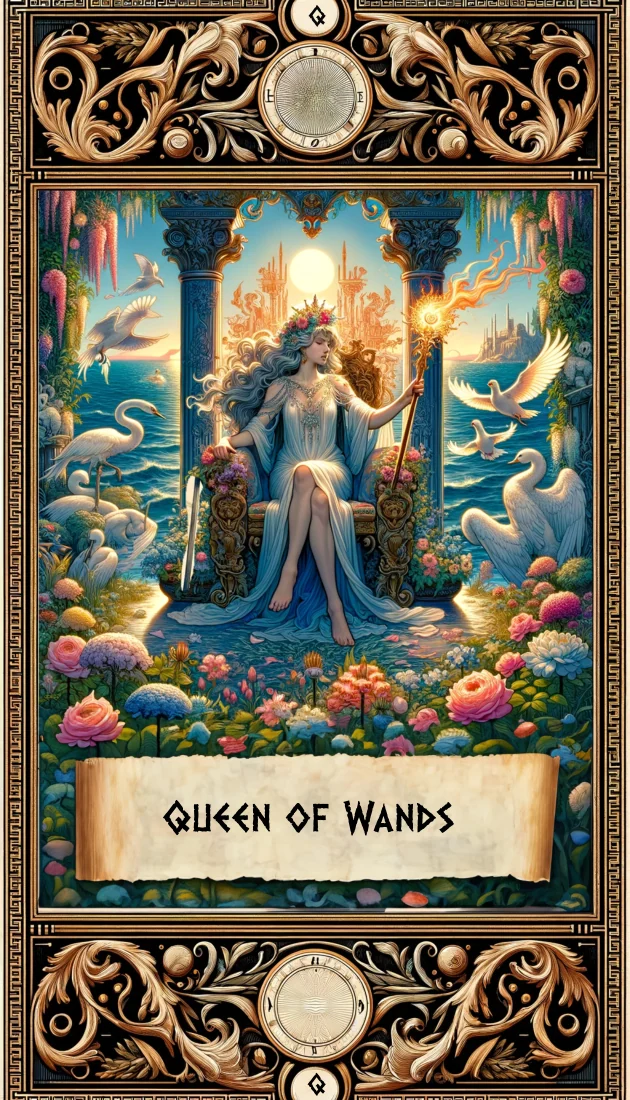
ვარდებით გარშემორტყმულ ტახტზე აფროდიტე ზის, გედები და მტრედები ახლავს. ამ ქალღმერთის ერთ-ერთი ყველაზე ადამიანური სახე ლესბოსელმა პოეტმა, საფომ, დაგვიტოვა — ლოცვაში, სადაც აფროდიტე ციდან ეშვება და ღიმილით ეკითხება: ახლა რაღა მოგივიდა?[1]
რა ჩანს ნახატზე
ქალი ვარდებითა და ყვავილებით გარშემორტყმულ ტახტზე ზის; ხელში კვერთხი უჭირავს, რომელსაც ნათელი ალი ადგას. გვერდით, წყალზე, გედები დაცურავენ, უკან, სვეტებს შორის, თეთრი მტრედები დაფრინავენ.
ეპიზოდი: საფოს ლოცვა
საფოს პირველ ლექსში (დაახლ. ძვ. წ. 600) პოეტი „ჭრელტახტიან“, ეშმაკობის მქსოველ აფროდიტეს, ზევსის ასულს, სთხოვს, ტკივილით არ დაუთრგუნოს გული და ისე მოვიდეს, როგორც ადრე მოსულა. და ის მართლაც მოვიდა: ეტლი შეაბა, და ლამაზმა, სწრაფმა ბეღურებმა ის შავ მიწაზე ჩამოიყვანეს, ციდან ჰაერის შუაგულით, ფრთების ფართქალით. უკვდავი სახით გაიღიმა და ჰკითხა: ახლა რა გტანჯავს, რატომ მიხმობ კიდევ, ვინ უნდა დავარწმუნო, რომ შენი სიყვარული მიიღოს? ვინ გაწყენინებს, საფო? თუ ახლა გაურბის, მალე თვითონ დაგედევნება; თუ საჩუქრებს არ იღებს, თვითონ მოგცემს; თუ არ უყვარს, მალე შეუყვარდება — თუნდაც არ სურდეს. ლექსი კვლავ თხოვნით მთავრდება: ახლაც მოდი და ჩემი მოკავშირე იყავი.[1]
სიმბოლოები
საფოსთან აფროდიტეს ეტლს ბეღურები მიაქანებენ; მტრედები და გედები მისი სხვა ფრინველებია — ათენურ ვაზებზე ის ზოგჯერ ბატზე თუ გედზე ამხედრებული დაფრინავს. ვარდი მოგვიანებით დაუკავშირდა: ბიონის „ადონისის გლოვაში“ ადონისის სისხლი ვარდს შობს, აფროდიტეს ცრემლები — ქარგვალას. ანთებული კვერთხი ტაროს წყობის ნიშანია, რომელიც დედოფალს ცეცხლის სტიქიას უკავშირებს.[1][2]
საფოს ეს ლექსი ჩვენამდე პაპირუსმა კი არა, ერთმა ძველმა რიტორიკულმა ტრაქტატმა მოიტანა: დიონისე ჰალიკარნასელმა ის მთლიანად მოიყვანა, როგორც „გლუვი“ სტილის მაგალითი. დიდხანს ეს საფოს ერთადერთი სრული ლექსი იყო, სანამ 2004 წელს კიოლნის პაპირუსზე თითქმის სრული „ტითონოსის ლექსი“ არ ამოიცნეს.[1]
კარტი ტაროს ისტორიაში
ტაროს ოთხი სასახლის ფიგურა აქვს. იტალიურ და ესპანურ სათამაშო კარტებში დედოფალი არ არის — მხოლოდ მეფე, რაინდი და ფანტე; ტარო დედოფალს ინარჩუნებს. მარსელის ტაროში დედოფალს დიდი ხელკეტი უჭირავს. რაიდერ–უეიტ–სმითის დასტაში (1909) ის ლომებით მორთულ ტახტზე ზის, ხელში მზესუმზირა უჭირავს, ფეხებთან შავი კატა ზის. ILLUMINISMO დედოფალს სიყვარულის ქალღმერთს აძლევს — სითბოს, რომელიც ძალადობის გარეშე მოქმედებს.[4]
Aphrodite sits on a throne surrounded by roses, attended by swans and doves. One of the most human pictures of this goddess was left to us by Sappho, the poet of Lesbos — in a prayer in which Aphrodite comes down from the sky and asks with a smile: what is it this time?[1]
What the image shows
A woman sits on a throne surrounded by roses and flowers, holding a staff topped with a bright flame. Beside her swans swim on the water; behind, between columns, white doves fly.
The episode: Sappho’s prayer
In Sappho’s first poem (c. 600 BC) the poet begs Aphrodite of the many-coloured throne, the weaver of wiles, daughter of Zeus, not to crush her heart with pain, but to come as she has come before. And she did come: she yoked her chariot, and lovely swift sparrows brought her down over the black earth, from the sky through the middle air, wings whirring. She smiled with her immortal face and asked: what do you suffer now, why do you call me again, whom must I persuade to accept your love? Who wrongs you, Sappho? If she flees now, soon she will pursue; if she refuses gifts, she will give them; if she does not love, soon she will love — even against her will. The poem ends with a plea again: come to me now too, and be my ally.[1]
Symbols
In Sappho Aphrodite’s chariot is drawn by sparrows; doves and swans are her other birds — on Athenian vases she sometimes flies seated on a goose or swan. The rose came later: in Bion’s Lament for Adonis Adonis’ blood gives birth to the rose and Aphrodite’s tears to the anemone. The burning staff is the tarot suit sign, linking the Queen to the element of fire.[1][2]
This poem of Sappho reached us not on papyrus but through an ancient treatise on rhetoric: Dionysius of Halicarnassus quoted it in full as an example of the “smooth” style. For a long time it was Sappho’s only complete poem, until in 2004 a nearly complete “Tithonus poem” was identified on a papyrus in Cologne.[1]
The card in tarot history
Tarot has four court figures. Italian and Spanish playing cards have no queen — only king, knight and jack; the tarot keeps her. In the Tarot de Marseille the Queen holds a great baton. In the Rider–Waite–Smith deck (1909) she sits on a throne decorated with lions, holding a sunflower, with a black cat at her feet. ILLUMINISMO gives the Queen to the goddess of love — warmth that works without force.[4]
წყაროებიSources
- Sappho, fr. 1 Voigt, preserved in Dionysius of Halicarnassus, On Literary Composition 23.
- Bion, Lament for Adonis 64–66.
- M. Gronewald and R. W. Daniel, “Ein neuer Sappho-Papyrus”, Zeitschrift für Papyrologie und Epigraphik 147 (2004).
- A. E. Waite, The Pictorial Key to the Tarot (1910).
თემა, წყაროების შერჩევა და დასკვნები — ნიკა ხუცურაული. კვლევასა და თარგმანში დახმარებისთვის გამოყენებულია AI; ყოველი ფაქტი წყაროსთან შემოწმდა.Topic, choice of sources and conclusions — Nika Khutsurauli. AI was used to help with research and translation; every fact was checked against its source.