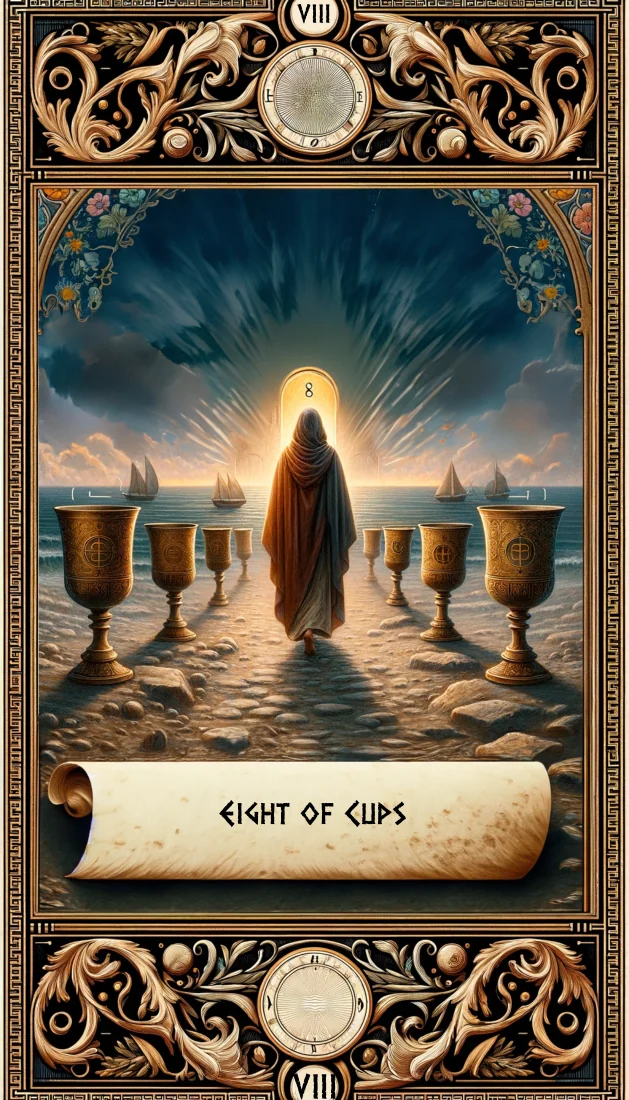
სამოსიანი ადამიანი თასებს შორის გზაზე ზურგით მიდის, ნათელი ჰორიზონტისკენ. ოდისევსის მოგზაურობაში პირველივე ცდუნება სწორედ ასეთი იყო: ხილი, რომლის გემოც შინ დაბრუნების სურვილს აქრობდა. მას უკან დატოვება სჭირდებოდა.
რა ჩანს ნახატზე
სამოსიანი ადამიანი ქვიან გზაზე, თასების ორ რიგს შორის, ზურგით მიდის განათებული კარისკენ, რომელზეც რიცხვი 8 წერია. ზღვაზე რამდენიმე იალქნიანი ნავი ჩანს, ზემოთ მუქი ცა და გაშლილი სხივებია. უკან დარჩენილი ჭურჭელი და წინ გადადგმული ნაბიჯი გამიჯვნის სცენას ქმნის.
ეპიზოდი: ლოტოფაგები
„ოდისეის“ IX სიმღერაში ოდისევსი ფეაკებს თავის თავგადასავალს უყვება. ცხრადღიანი ქარიშხლის შემდეგ ხომალდები ლოტოფაგების — „ლოტოსის მჭამელების“ — ქვეყანას მიადგნენ. ოდისევსმა სამი კაცი გაგზავნა, რომ გაეგოთ, ვინ ცხოვრობდა იქ. ადგილობრივებმა მათ ზიანი არ მიაყენეს — მხოლოდ ლოტოსი გაასინჯეს, თაფლივით ტკბილი ხილი. ვინც მას შეჭამდა, აღარ სურდა ამბის მოტანა და შინ დაბრუნება: იქ დარჩენა უნდოდა, ლოტოსის ჭამა და შინ დაბრუნების დავიწყება. ოდისევსმა ისინი ძალით, ტირილით დააბრუნა ხომალდებზე, სკამების ქვეშ მიაბა და დანარჩენებს უბრძანა, სასწრაფოდ ჩამსხდარიყვნენ, რომ ლოტოსი სხვას არავის ეჭამა და სახლი არ დავიწყებოდა.[1]
სიმბოლოები
უკან დატოვებული თასები შეიძლება ლოტოსად წავიკითხოთ — სიამოვნებად, რომელიც გზას აჩერებს; ეს ინტერპრეტაციაა. ნათელი ჰორიზონტი ითაკას, შინ დაბრუნების მიზანს შეესაბამება, რომელიც ოდისევსისთვის უკვდავებაზე მნიშვნელოვანიც კი აღმოჩნდა (იხ. სრული მითი). ზღვაზე იალქნიანი ნავები ოდისევსის ხომალდებს იხსენებს, რომლებიც ლოტოსის მჭამელთა ნაპირიდან უნდა გასულიყვნენ; მუქი ცა, სხივები და განათებული კარი ილუსტრაციისაა.
ძველები ლოტოფაგებს რეალურ ადგილას ეძებდნენ. ჰეროდოტე მათ ლიბიის სანაპიროზე ათავსებს და წერს, რომ ლოტოსის ნაყოფი მასტიკის კენკრის ოდენაა, ფინიკივით ტკბილი, და ღვინოსაც აკეთებენ. თეოფრასტე ლიბიურ ლოტოსის ხეს აღწერს. დღეს მას ხშირად ველურ უნაბს (Ziziphus lotus) უკავშირებენ, ლოტოფაგების კუნძულად კი ტრადიციულად ჯერბას (ტუნისი) ასახელებენ — თუმცა ჰომეროსის გეოგრაფია ზუსტ რუკად არ იკითხება.[1][2][3]
კარტი ტაროს ისტორიაში
მარსელის ტაროში რვა თასზე რვა თასის განლაგებაა. რაიდერ–უეიტ–სმითის დასტაში (1909) კაცი კვერთხით რვა დალაგებულ თასს ზურგს აქცევს და მთებისკენ მიდის, დაბნელებული მთვარის ქვეშ; „ოქროს განთიადის“ სისტემაში კარტს „მიტოვებული წარმატების მბრძანებელი“ ჰქვია. ILLUMINISMO წასვლას ოდისევსის პირველ არჩევანს უკავშირებს: დატოვე ტკბილი, რათა შინ მიხვიდე.[4]
A robed figure walks away along a road between cups, back turned, towards a bright horizon. The very first temptation of Odysseus’ voyage was of this kind: a fruit whose taste put out the wish to go home. It had to be left behind.
What the image shows
A robed figure walks away along a stony path between two rows of cups, towards a lit doorway marked with the number 8. On the sea several sailing boats appear; above are a dark sky and spreading rays. The vessels left behind and the step forward create a scene of parting.
The episode: the Lotus-Eaters
In book 9 of the Odyssey Odysseus tells the Phaeacians of his wanderings. After a nine-day storm the ships reached the land of the Lotophagi — the “Lotus-Eaters”. Odysseus sent three men to learn who lived there. The natives did them no harm — they only gave them the lotus to taste, a fruit sweet as honey. Whoever ate it no longer wanted to bring back word or return home: he wanted to stay there, eating lotus and forgetting his homecoming. Odysseus brought them back to the ships by force, weeping, tied them under the benches and ordered the rest to embark at once, so that no one else would eat the lotus and forget his home.[1]
Symbols
The cups left behind can be read as the lotus — a pleasure that halts the journey; this is an interpretation. The bright horizon matches Ithaca, the goal of homecoming, which for Odysseus proved more important even than immortality (see the full myth). The sailing boats recall Odysseus’ ships, which had to put out from the shore of the Lotus-Eaters; the dark sky, the rays and the lit doorway belong to the illustration.
The ancients looked for the Lotus-Eaters in a real place. Herodotus puts them on the Libyan coast and writes that the lotus fruit is the size of a mastic berry, sweet as a date, and is also made into wine. Theophrastus describes the Libyan lotus tree. Today it is often identified with the wild jujube (Ziziphus lotus), and the island of Djerba (Tunisia) is traditionally named as the Lotus-Eaters’ home — though Homer’s geography cannot be read as an exact map.[1][2][3]
The card in tarot history
In the Tarot de Marseille the Eight of Cups is an arrangement of eight cups. In the Rider–Waite–Smith deck (1909) a man with a staff turns his back on eight stacked cups and walks towards the mountains under an eclipsed moon; in the Golden Dawn system the card is the “Lord of Abandoned Success”. ILLUMINISMO links the departure to Odysseus’ first choice: leave the sweet thing behind to reach home.[4]
წყაროებიSources
- Homer, Odyssey 9.82–104.
- Herodotus, Histories 4.177.
- Theophrastus, Enquiry into Plants 4.3.1–2; Polybius, Histories 12.2.
- A. E. Waite, The Pictorial Key to the Tarot (1910).
თემა, წყაროების შერჩევა და დასკვნები — ნიკა ხუცურაული. კვლევასა და თარგმანში დახმარებისთვის გამოყენებულია AI; ყოველი ფაქტი წყაროსთან შემოწმდა.Topic, choice of sources and conclusions — Nika Khutsurauli. AI was used to help with research and translation; every fact was checked against its source.