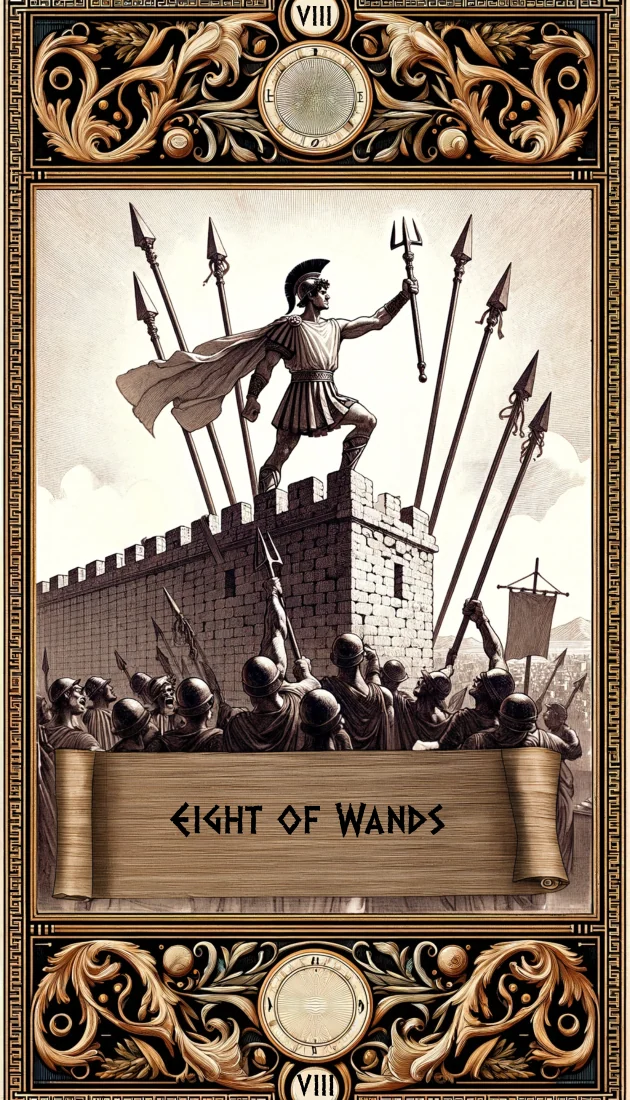
შავ-თეთრ სცენაში სამკაპიანი მეომარი მაღალი ქვის კედლიდან წინ იწევს, ჰაერში გრძელი იარაღები მიფრინავს. კარტს საკუთარი მითი არ აქვს. მაგრამ სამკაპი და კედელი „ილიადაში“ ერთ ღმერთს უკავშირდება — პოსეიდონს, რომელმაც აქაველთა კედელი ისე წაშალა, რომ მისი კვალიც აღარ დარჩა.[1]
რა ჩანს ნახატზე
შავ-თეთრ სცენაში მეომარი მაღალი ქვის კედლიდან წინ იწევს. ერთ ხელში სამკაპი აქვს, გარშემო რამდენიმე გრძელი იარაღი მიფრინავს, ქვემოთ კი ხალხი შეკრებილა. სხეულის პოზა შეკრებილ ენერგიას სწრაფ მოქმედებად აქცევს.
ბერძნული ფონი: კედელი, რომელიც წაიშალა
„ილიადის“ VII სიმღერაში აქაველები ხომალდების დასაცავად კედელსა და თხრილს აშენებენ. პოსეიდონი ზევსს უჩივის: მათ კედელი ღმერთებისთვის მსხვერპლის შეწირვის გარეშე ააშენეს, და ახლა მისი სახელი იმ კედლის სახელს დაჩრდილავს, რომელიც მე და აპოლონმა ლაომედონისთვის ტროაში ავაგეთ. ზევსი ნებას რთავს: როცა აქაველები წავლენ, დაანგრიე. XII სიმღერის დასაწყისში ჰომეროსი წინასწარ მოგვითხრობს, როგორ მოხდება ეს: ტროის დაცემის შემდეგ პოსეიდონი და აპოლონი იდას მთის რვა მდინარეს კედლისკენ მიმართავენ, ზევსი ცხრა დღე წვიმს, და თავად პოსეიდონი, სამკაპით ხელში, წინ მიდის და კედლის საძირკველს ტალღებში რეცხავს, ისე რომ ნაპირი კვლავ ქვიშით იფარება. ამავე ღმერთის სისწრაფეს ჰომეროსი XIII სიმღერაში ასე ზომავს: სამოთრაკიდან სამი ნაბიჯი გადადგა და მეოთხეთი აიგაიში მივიდა.[1][3]
სიმბოლოები
სამკაპი პოსეიდონის იარაღია: ჰომეროსთან ის სამკაპით ზღვას აღელვებს და კლდეებს აპობს. კედელი ამ ამბავში ადამიანური შრომისა და ღმერთის შურის საზღვარია. ჰაერში მიმფრენი იარაღები ტაროს რვა კვერთხს ეხმიანება, სისწრაფის ნიშანს; შავ-თეთრი გამა და ქვემოთ შეკრებილი ხალხი ილუსტრაციის გადაწყვეტილებაა.[1][3]
სტრაბონი იმოწმებს არისტოტელეს აზრს აქაველთა კედელზე: „პოეტმა, რომელმაც ის შექმნა, თავადვე გააქრო“. ანუ კედელი შეიძლება ჰომეროსის გამოგონება იყო, და დანგრევის ამბავი ხსნიდა, რატომ ვერ პოულობდნენ მის ნაშთებს ტროას მონახულებლები. ეს ერთ-ერთი უძველესი მაგალითია, როცა ძველმა მეცნიერმა მითი არქეოლოგიურ კითხვად წაიკითხა.[1][2][3]
კარტი ტაროს ისტორიაში
მარსელის ტაროში რვა კვერთხზე ხელკეტების განლაგებაა. რაიდერ–უეიტ–სმითის დასტაში (1909) ადამიანები საერთოდ არ ჩანან: რვა კვერთხი ღია ლანდშაფტზე, მდინარის თავზე, ჰაერში მიფრინავს; უეიტი ამას „უძრავში მოძრაობას“ უწოდებს. „ოქროს განთიადის“ სისტემაში კარტს „სისწრაფის მბრძანებელი“ ჰქვია. ILLUMINISMO სისწრაფეს იმ ღმერთს აძლევს, ვინც სამ ნაბიჯში ზღვას გადაკვეთდა.[4]
In a black-and-white scene a warrior with a trident surges forward from a high stone wall while long weapons fly through the air. The card has no myth of its own. But trident and wall belong, in the Iliad, to one god — Poseidon, who erased the Achaean wall so completely that no trace of it remained.[1]
What the image shows
In a black-and-white scene a warrior surges forward from a high stone wall. He holds a trident in one hand, several long weapons fly around him, and a crowd has gathered below. The pose of the body turns gathered energy into swift action.
The Greek background: a wall that was erased
In book 7 of the Iliad the Achaeans build a wall and a ditch to protect their ships. Poseidon complains to Zeus: they built the wall without offering sacrifice to the gods, and now its fame will eclipse the wall that Apollo and I built for Laomedon at Troy. Zeus gives his consent: when the Achaeans leave, tear it down. At the start of book 12 Homer tells in advance how it will happen: after Troy falls, Poseidon and Apollo turn eight rivers of Mount Ida against the wall, Zeus rains for nine days, and Poseidon himself, trident in hand, leads the way and washes the wall’s foundations into the waves, so that the shore is covered with sand again. Homer measures the same god’s speed in book 13: from Samothrace he took three strides, and with the fourth he reached Aegae.[1][3]
Symbols
The trident is Poseidon’s weapon: in Homer he stirs up the sea and splits rocks with it. In this story the wall is the boundary between human labour and a god’s envy. The weapons flying through the air echo the tarot Eight of Wands, the sign of speed; the black-and-white palette and the crowd below are choices of the illustration.[1][3]
Strabo quotes Aristotle’s view of the Achaean wall: “the poet who created it also made it vanish.” In other words, the wall may have been Homer’s invention, and the story of its destruction explained why visitors to Troy could find no trace of it. It is one of the oldest examples of an ancient scholar reading a myth as an archaeological question.[1][2][3]
The card in tarot history
In the Tarot de Marseille the Eight of Wands is an arrangement of batons. In the Rider–Waite–Smith deck (1909) there are no people at all: eight staves fly through the air over open country and a river; Waite calls it “motion through the immovable”. In the Golden Dawn system the card is the “Lord of Swiftness”. ILLUMINISMO gives speed to the god who could cross the sea in three strides.[4]
წყაროებიSources
- Homer, Iliad 7.433–463; 12.3–35; 13.10–20.
- Strabo, Geography 13.1.36.
- Homer, Odyssey 4.499–511 (Poseidon’s trident splits the rock).
- A. E. Waite, The Pictorial Key to the Tarot (1910).
თემა, წყაროების შერჩევა და დასკვნები — ნიკა ხუცურაული. კვლევასა და თარგმანში დახმარებისთვის გამოყენებულია AI; ყოველი ფაქტი წყაროსთან შემოწმდა.Topic, choice of sources and conclusions — Nika Khutsurauli. AI was used to help with research and translation; every fact was checked against its source.