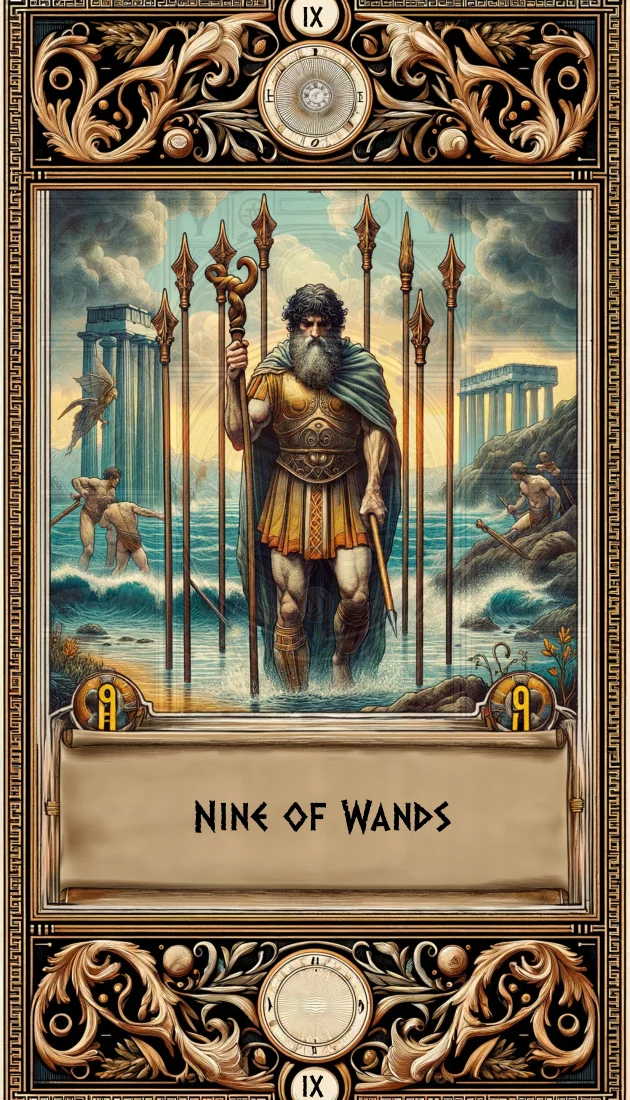
აბჯრიანი, წვეროსანი კაცი მუხლამდე ზღვაში, მაღალი კვერთხების რიგის უკან დგას. „ილიადაში“ ერთი ასეთი დამცველი ყველაზე მძიმე დღეს თითქმის მარტო დარჩა: აიასი, რომელიც აქაველთა ხომალდებს გრძელი საზღვაო შუბით იცავდა.[1]
რა ჩანს ნახატზე
აბჯრიანი, წვეროსანი მამაკაცი მუხლამდე ზღვის ტალღებში დგას. ერთ ხელში კვერთხი უჭირავს, რომელსაც დახვეული გველი აგვირგვინებს, მეორეში — მოკლე წვეტიანი ძელი; მის წინ და გარშემო მაღალი კვერთხების რიგია. უკან დანგრეული ტაძრის სვეტები, ნაპირზე მომუშავე კაცები და პატარა ფრთიანი ფიგურა ჩანს. მყარი პოზა და შემოსაზღვრული სივრცე ფხიზელ მზადყოფნას აჩვენებს.
ბერძნული ფონი: აიასი ხომალდებთან
აქილევსი ბრძოლაში არ გამოდის, და ჰექტორი ტროელებით აქაველთა ხომალდებს მიადგა. „ილიადის“ XV სიმღერაში აიასი, ტელამონის ძე, ხომალდიდან ხომალდზე გადადის, ხელში ოცდაორწყრთიანი, რკინის რგოლებით შეერთებული საზღვაო შუბი უჭირავს — ჰომეროსი მას ოსტატ მხედარს ადარებს, რომელიც ჭენებისას ცხენიდან ცხენზე გადახტება. ის აქაველებს უყვირის, რომ უკან სახსნელი კედელი არ დარჩათ, ხომალდებთან ზღვაა, და გადარჩენა მხოლოდ საკუთარ ხელშია. ვინც ხომალდისკენ ცეცხლით მოიწევდა, აიასი შუბით იგერიებდა, და ხომალდებთან თორმეტი დაჭრა. XVI სიმღერაში კი, დაქანცული, ჩამოჰკიდებული ფარითა და გაბრუებული თავით, ის უკან იხევს, როცა ჰექტორი მის შუბს წვერს წააჭრის — და პირველი ხომალდი იწვის. ამის დანახვაზე აქილევსი პატროკლეს ბრძოლაში გზავნის.[1]
სიმბოლოები
კვერთხების რიგი აქაველთა თხრილის წამახულ ბოძებს იხსენებს, რომლებიც ჰომეროსის თქმით მის კიდეზე იყო ჩასობილი. წყალი ზღვაა, ხომალდებთან. ჰომეროსი აიასს ხშირად „აქაველთა გალავანს“ უწოდებს — თავად კაცი კედელია. წვეროსანი სახე, გველიანი კვერთხი, ნანგრევები და სხვა ფიგურები ილუსტრაციისაა — ჰომეროსის აიასს გველიანი კვერთხი არ აქვს.[1]
აიასს ჰომეროსთან „კოშკის მსგავსი“ ფარი აქვს — შვიდი ხარის ტყავისა და ბრინჯაოსი. ასეთი ტანის სიგრძის ფარები ჰომეროსის ეპოქაში აღარ იყო; ისინი ძვ. წ. XVI–XV საუკუნეების მიკენურ ხელოვნებაში ჩანს, მაგალითად მიკენის IV შახტური სამარხიდან ამოღებულ ბრინჯაოს ხანჯალზე ლომზე ნადირობის სცენით. ეპოსმა ზოგი ნივთი საუკუნეების განმავლობაში შეინახა.[1]
კარტი ტაროს ისტორიაში
მარსელის ტაროში ცხრა კვერთხზე ხელკეტების განლაგებაა. რაიდერ–უეიტ–სმითის დასტაში (1909) თავშეხვეული კაცი კვერთხს ეყრდნობა და იცდის, ზურგს უკან რვა კვერთხი პალისადივით დგას; „ოქროს განთიადის“ სისტემაში კარტს „დიდი ძალის მბრძანებელი“ ჰქვია. ILLUMINISMO ამ დაჭრილ დარაჯს ჰომეროსის დამცველით ცვლის.[1][4]
An armoured, bearded man stands knee-deep in the sea behind a row of tall staves. In the Iliad one such defender was left almost alone on the hardest day: Ajax, who guarded the Achaean ships with a long naval pike.[1]
What the image shows
An armoured, bearded man stands knee-deep in the surf. In one hand he holds a staff topped by a coiled serpent, in the other a short pointed stake; a row of tall staves stands before and around him. Behind are the columns of a ruined temple, men working at the water’s edge and a small winged figure. The firm stance and the enclosed space show watchful readiness.
The Greek background: Ajax at the ships
Achilles stays out of the fighting, and Hector with the Trojans has reached the Achaean ships. In book 15 of the Iliad Ajax, son of Telamon, strides from ship to ship holding a naval pike twenty-two cubits long, joined with iron rings — Homer compares him to a skilled horseman who leaps from horse to horse at full gallop. He shouts to the Achaeans that they have no wall left behind them to save them, that the sea is at their backs, and that salvation lies in their own hands. Whoever came at the ships with fire, Ajax kept off with his pike, and he wounded twelve men before the ships. In book 16, exhausted, his shield drooping and his head ringing with blows, he gives way when Hector cuts the point off his pike — and the first ship burns. Seeing this, Achilles sends Patroclus into battle.[1]
Symbols
The row of staves recalls the sharpened stakes that, as Homer says, were planted along the edge of the Achaean ditch. The water is the sea beside the ships. Homer often calls Ajax the “bulwark of the Achaeans” — the man himself is a wall. The bearded face, the serpent staff, the ruins and the other figures belong to the illustration — Homer’s Ajax carries no serpent staff.[1]
In Homer Ajax carries a shield “like a tower” — of seven ox-hides and bronze. Such body-length shields were no longer used in Homer’s time; they appear in Mycenaean art of the 16th–15th centuries BC, for example on the bronze dagger with a lion-hunt scene from Shaft Grave IV at Mycenae. The epic preserved some objects across centuries.[1]
The card in tarot history
In the Tarot de Marseille the Nine of Wands is an arrangement of batons. In the Rider–Waite–Smith deck (1909) a man with a bandaged head leans on a staff and waits, with eight staves standing behind him like a palisade; in the Golden Dawn system the card is the “Lord of Great Strength”. ILLUMINISMO replaces this wounded sentry with Homer’s defender.[1][4]
წყაროებიSources
- Homer, Iliad 7.206–223, 7.436–441; 15.674–746; 16.101–124.
- H. L. Lorimer, Homer and the Monuments (1950).
- Lion-hunt dagger from Shaft Grave IV, Mycenae, 16th century BC, Athens, National Archaeological Museum.
- A. E. Waite, The Pictorial Key to the Tarot (1910).
თემა, წყაროების შერჩევა და დასკვნები — ნიკა ხუცურაული. კვლევასა და თარგმანში დახმარებისთვის გამოყენებულია AI; ყოველი ფაქტი წყაროსთან შემოწმდა.Topic, choice of sources and conclusions — Nika Khutsurauli. AI was used to help with research and translation; every fact was checked against its source.