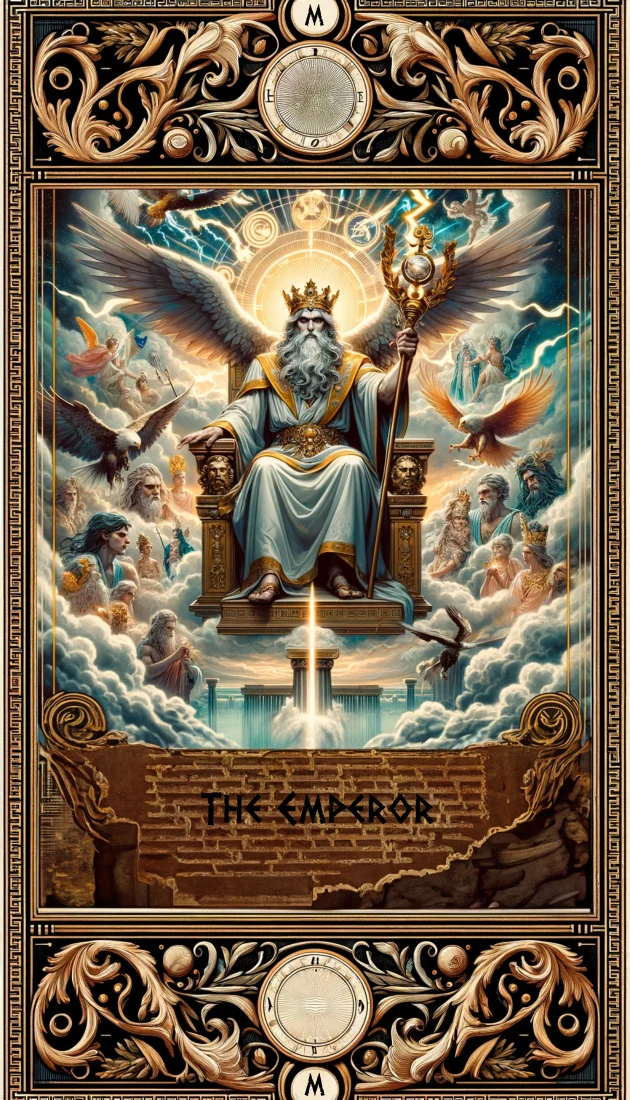
ღრუბლებზე მჯდომი მეფე ელვითა და არწივებით — ეს ზევსია, ღმერთებისა და ადამიანების მამა. ნახატის ორი ნიშანი ძველ წყაროებს ეყრდნობა, ერთი კი — ფრთები — ILLUMINISMO-ს ილუსტრაციის დამატებაა.
რა ჩანს ნახატზე
წვერიანი, გვირგვინოსანი მმართველი ღრუბლებში, ტახტზე ზის; ზურგს უკან დიდი ფრთები აქვს გაშლილი. ხელში ოქროს კვერთხი უჭირავს, რომელსაც სფერო აგვირგვინებს, ზემოთ, ცაში, ელვები იკლაკნება. გარშემო არწივები დაფრინავენ, ორივე მხარეს, ღრუბლებში, ღმერთებისა და ადამიანების მრავალი სახე ჩანს.
ეპიზოდი: ელვის მიღება
ჰესიოდეს „თეოგონიის“ მიხედვით, ზევსმა ელვა და ქუხილი კიკლოპებისგან მიიღო. ურანოსმა ისინი მიწის წიაღში ჩაკეტა; ზევსმა გაათავისუფლა, და სამადლობლოდ კიკლოპებმა მას ის იარაღი მისცეს, რომლითაც ტიტანებს დაამარცხებდა და ღმერთებსა და ადამიანებზე იმეფებდა. ნახატი ზევსს ამ გამარჯვების შემდეგ აჩვენებს — უკვე ტახტზე.[1]
სიმბოლოები
ელვა ზევსის მთავარი იარაღია. არწივი „ილიადაში“ ზევსის „ყველაზე საყვარელი ფრინველი“ და მისი ნიშანია: როცა პრიამოსი ღმერთისგან ნიშანს ითხოვს, ზევსი მარჯვნივ არწივს უგზავნის. კვერთხი მეფობის ნიშანია. ფრთები კი ბერძნულ ხელოვნებაში ზევსს არ აქვს — ფრთოსანი ღვთაებები ბერძნებთან სხვები არიან (ეროსი, ნიკე, ირისი, ჰერმესის სანდლები). ეს თანამედროვე ილუსტრაციის თავისუფლებაა.[2]
ფიდიასის ზევსის ქანდაკება ოლიმპიაში (დაახლ. ძვ. წ. 435), მსოფლიოს შვიდ საოცრებათაგანი, პავსანიასის აღწერით, ტახტზე იჯდა: მარჯვენა ხელზე გამარჯვების ქალღმერთი ნიკე ედგა, მარცხენაში კი კვერთხი ეჭირა, რომლის თავზე არწივი იჯდა.[3]
კარტი ტაროს ისტორიაში
„იმპერატორი“ ძველ იტალიურ და მარსელის დასტებში საღვთო რომის იმპერიის მმართველის ხატს მიჰყვება: ფარზე არწივი, ხელში სკიპტრა. რაიდერ–უეიტ–სმითის დასტაში მის ტახტს ვერძის თავები ამკობს — ზოდიაქოს ვერძის ნიშანი. ILLUMINISMO-ში იმპერიული არწივი ზევსის არწივს უბრუნდება, საიდანაც ის რომის გავლით ევროპულ ჰერალდიკაში მოხვდა.[4]
A king enthroned on the clouds with lightning and eagles — this is Zeus, father of gods and men. Two of the image’s signs rest on ancient sources; one — the wings — is an addition of the ILLUMINISMO illustration.
What the image shows
A bearded, crowned ruler sits on a throne among the clouds, great wings spread behind him. He holds a golden sceptre topped with a sphere, while lightning flashes in the sky above. Eagles circle around him, and on both sides many faces of gods and people appear in the clouds.
The episode: receiving the thunderbolt
According to Hesiod’s Theogony, Zeus received lightning and thunder from the Cyclopes. Ouranos had shut them in the depths of the earth; Zeus set them free, and in thanks the Cyclopes gave him the weapon with which he would defeat the Titans and rule over gods and humans. The image shows Zeus after that victory — already on his throne.[1]
Symbols
The thunderbolt is Zeus’s chief weapon. The eagle in the Iliad is Zeus’s “dearest of birds” and his sign: when Priam asks the god for an omen, Zeus sends an eagle on the right. The sceptre is a sign of kingship. Wings, however, Zeus does not have in Greek art — the winged deities of the Greeks are others (Eros, Nike, Iris, Hermes’ sandals). This is the freedom of a modern illustration.[2]
Phidias’ statue of Zeus at Olympia (c. 435 BC), one of the Seven Wonders of the World, sat on a throne according to Pausanias: on its right hand stood Nike, goddess of victory, and in its left it held a sceptre on which an eagle perched.[3]
The card in tarot history
In the old Italian and Marseille decks the Emperor follows the image of the ruler of the Holy Roman Empire: an eagle on his shield, a sceptre in his hand. In the Rider–Waite–Smith deck his throne is adorned with rams’ heads — the sign of Aries in the zodiac. In ILLUMINISMO the imperial eagle returns to the eagle of Zeus, from which, by way of Rome, it entered European heraldry.[4]
წყაროებიSources
- Hesiod, Theogony 139–141, 501–506.
- Homer, Iliad 24.308–321.
- Pausanias, Description of Greece 5.11.1–2.
- M. Dummett, The Game of Tarot (1980); A. E. Waite, The Pictorial Key to the Tarot (1910).
თემა, წყაროების შერჩევა და დასკვნები — ნიკა ხუცურაული. კვლევასა და თარგმანში დახმარებისთვის გამოყენებულია AI; ყოველი ფაქტი წყაროსთან შემოწმდა.Topic, choice of sources and conclusions — Nika Khutsurauli. AI was used to help with research and translation; every fact was checked against its source.