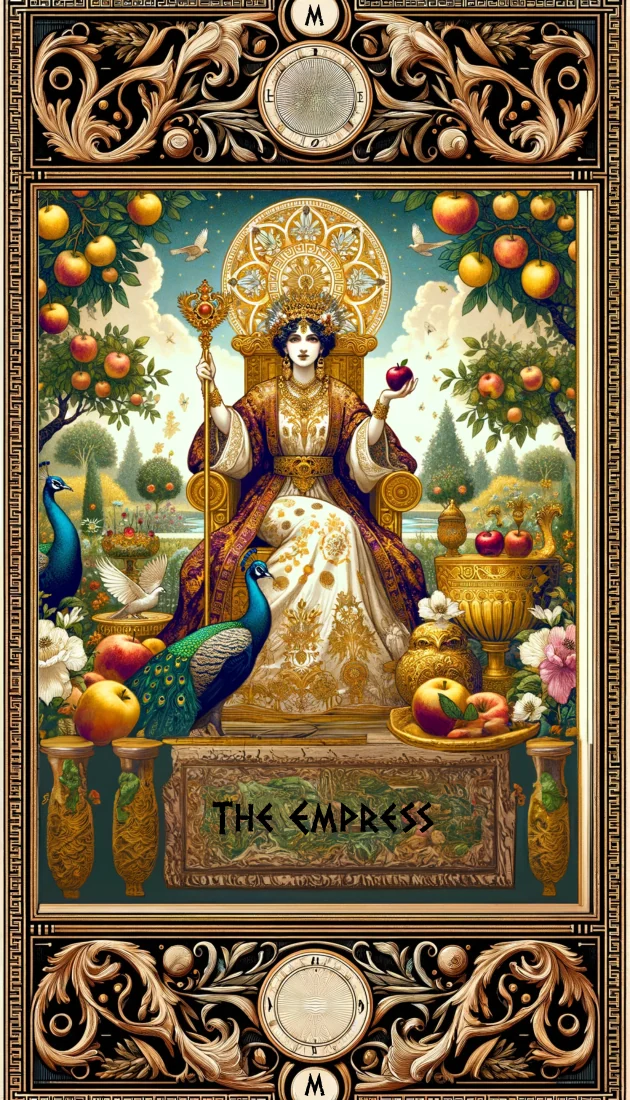
ამ კარტზე ჰერაა — ოლიმპოს დედოფალი, ტახტზე, ვაშლის ბაღში, ფარშევანგებით გარშემორტყმული. თითოეული დეტალი ძველ წყაროს ეყრდნობა: ფარშევანგის კუდიც, ოქროს ვაშლებიც და თავად ტახტიც.
რა ჩანს ნახატზე
გვირგვინოსანი ქალი ვაშლის ხეებით სავსე ბაღში, მოოქროვილ ტახტზე ზის. ერთ ხელში წითელი ნაყოფი უჭირავს, მეორეში — კვერთხი. გვერდით ფარშევანგები დგანან, ფეხებთან ხილი, ყვავილები და ოქროს ჭურჭელი გროვდება.
ეპიზოდი: ქორწილის საჩუქარი
ნახატი ზევსისა და ჰერას ქორწილს გვახსენებს. აპოლოდოროსის მიხედვით, ოქროს ვაშლები, რომლებსაც ჰესპერიდები სამყაროს კიდეზე დარაჯობდნენ, დედამიწამ — გეამ — ზევსს ჰერასთან ქორწინებისას აჩუქა. ესაა ის ვაშლები, რომლებსაც მოგვიანებით ჰერაკლე მოიტანს ატლასის დახმარებით.[1]
სიმბოლოები
ფარშევანგი ჰერას ფრინველია. ოვიდიუსის „მეტამორფოზების“ მიხედვით, როცა ჰერმესმა ასთვალა დარაჯი არგოსი მოკლა, ჰერამ მისი თვალები თავის ფრინველს, ფარშევანგს, კუდზე დაუწყო. სამოსზე ჰერას კუნძულ სამოსზე, მის დიდ ტაძარში, ფარშევანგებს წმინდა ფრინველებად ინახავდნენ, და ქალაქის მონეტებზეც ფარშევანგი ჩანს. ტახტი ჰერას ძალაუფლების ნიშანია: მისი ყველაზე ცნობილი ქანდაკება მჯდომარე ქალღმერთს გამოსახავდა — ხელში ნაყოფითა და კვერთხით, ზუსტად ისე, როგორც ნახატზე (იხ. ქვემოთ).[2]
პავსანიასი არგოსის ჰერაიონში ოქროსა და სპილოს ძვლის ქანდაკებას აღწერს, რომელიც პოლიკლეიტეს ეკუთვნოდა: ქალღმერთი ტახტზე ზის, ერთ ხელში ბროწეული უჭირავს, მეორეში — კვერთხი, რომლის თავზე გუგულია. ბროწეულის მნიშვნელობაზე პავსანიასი წერს, რომ ეს „საიდუმლო ამბავია“ და მას გამოტოვებს.[4]
კარტი ტაროს ისტორიაში
„იმპერატრიცა“ ტაროს ყველაზე ძველ დასტებშიც არის — გვირგვინოსანი ქალი ფარით, რომელზეც არწივია გამოსახული. რაიდერ–უეიტ–სმითის დასტაში ის ბუნებაში, ხორბლის ყანაში ზის, ფარზე კი ვენერას ნიშანია. ILLUMINISMO-ს ნახატი ამ „ნაყოფიერების“ ხატს ჰერასთან აერთებს — ქალღმერთთან, რომელიც ბერძნულ კულტში ქორწინებისა და ქალის ცხოვრების გზის მფარველი იყო.[5]
This card shows Hera — queen of Olympus, enthroned in an apple orchard, surrounded by peacocks. Every detail rests on an ancient source: the peacock’s tail, the golden apples and the throne itself.
What the image shows
A crowned woman sits on a gilded throne in a garden full of apple trees. In one hand she holds a red fruit, in the other a sceptre. Peacocks stand at her side, and fruit, flowers and golden vessels gather at her feet.
The episode: a wedding gift
The image recalls the marriage of Zeus and Hera. According to Apollodorus, the golden apples guarded by the Hesperides at the edge of the world were a gift from Earth — Gaia — to Zeus at his marriage to Hera. These are the apples that Heracles would later fetch with the help of Atlas.[1]
Symbols
The peacock is Hera’s bird. According to Ovid’s Metamorphoses, when Hermes killed the hundred-eyed watchman Argus, Hera set his eyes on the tail of her bird, the peacock. On Samos, in Hera’s great temple, peacocks were kept as sacred birds, and the peacock appears on the city’s coins too. The throne is a sign of Hera’s power: her most famous statue showed the goddess seated — with a fruit and a sceptre in her hands, just as in the image (see below).[2]
Pausanias describes a statue of gold and ivory by Polyclitus in the Heraion of Argos: the goddess sits on a throne, holding a pomegranate in one hand and in the other a sceptre topped by a cuckoo. Of the pomegranate, Pausanias says it is “a secret story” and passes it over.[4]
The card in tarot history
The Empress is present even in the oldest tarot decks — a crowned woman with a shield bearing an eagle. In the Rider–Waite–Smith deck she sits in nature, in a field of wheat, with the sign of Venus on her shield. The ILLUMINISMO image joins this image of “fertility” with Hera — the goddess who in Greek cult protected marriage and the stages of a woman’s life.[5]
წყაროებიSources
- Apollodorus, Library 2.5.11.
- Ovid, Metamorphoses 1.720–723.
- Athenaeus, Deipnosophists 14.655a (peacocks of Samos).
- Pausanias, Description of Greece 2.17.4.
- M. Dummett, The Game of Tarot (1980); A. E. Waite, The Pictorial Key to the Tarot (1910).
თემა, წყაროების შერჩევა და დასკვნები — ნიკა ხუცურაული. კვლევასა და თარგმანში დახმარებისთვის გამოყენებულია AI; ყოველი ფაქტი წყაროსთან შემოწმდა.Topic, choice of sources and conclusions — Nika Khutsurauli. AI was used to help with research and translation; every fact was checked against its source.