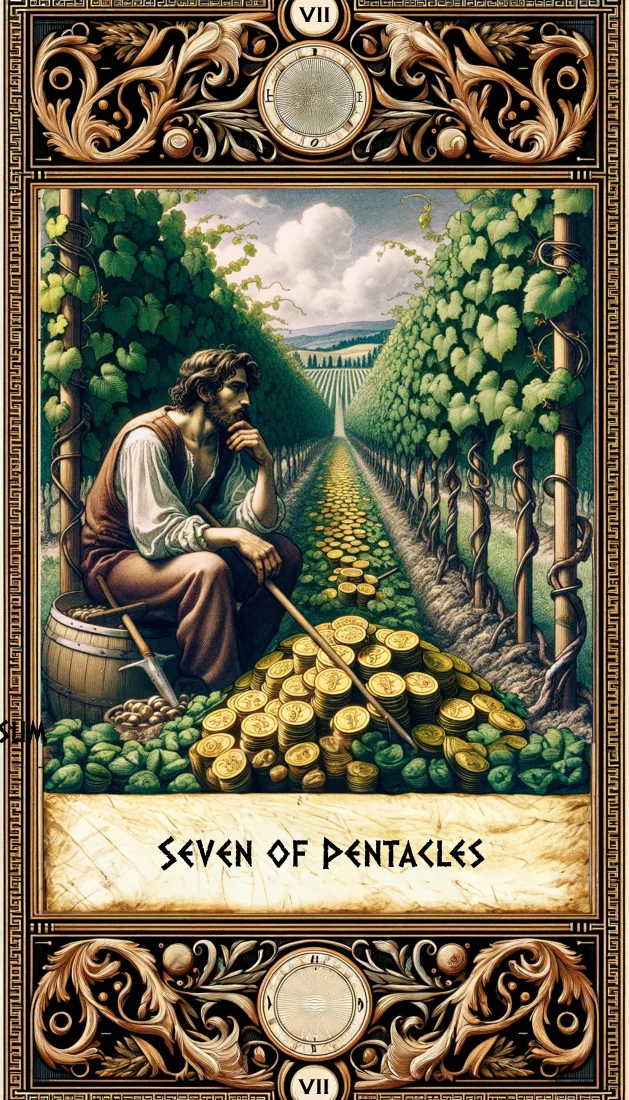
ვენახის რიგებს შორის კაცი ზის და ნაყოფს აკვირდება. კარტს საკუთარი მითი არ აქვს, მაგრამ ბერძნულ პოეზიაში ვენახს თავისი კალენდარი ჰქონდა — ვარსკვლავებით დაწერილი. ჰესიოდე ზუსტად ამბობს, როდის გასხლა და როდის მოკრიფო — და რამდენი ხანი უნდა ელოდო შუაში.[1][2]
რა ჩანს ნახატზე
ვენახის რიგებს შორის მჯდომი მამაკაცი ნაყოფსა და მონეტებს აკვირდება. ყურძნის რიგი შორეულ ჰორიზონტამდე გრძელდება, მის წინ კი დაგროვილი პენტაკლებია. ხელის თავთან მიტანა დაკვირვებით პაუზას აჩენს.
ბერძნული ფონი: ჰესიოდეს ვენახი
ჰესიოდეს „შრომასა და დღეებში“ ვენახის წელიწადი ცაზე იწყება. ზამთრის მზებუდობიდან სამოცი დღის შემდეგ არქტურუსი მწუხრისას ამოდის, მის შემდეგ კი მერცხალი ჩნდება — „მანამდე გასხლე ვაზი, ასე აჯობებს“. მერე მოდის ხანგრძლივი ლოდინი. მოსავალი მხოლოდ მაშინ, როცა ორიონი და სირიუსი ცის შუაგულს მიაღწევენ და ვარდისფერთითიანი განთიადი არქტურუსს დაინახავს — ეს სექტემბერია. მტევნები ათი დღე და ათი ღამე მზეს უნდა აჩვენო, ხუთი დღე დაჩრდილო, მეექვსე დღეს კი ჭურჭელში ჩაასხა „მხიარული დიონისეს ძღვენი“. გასხვლასა და რთველს შორის ნახევარი წელია, რომლის განმავლობაშიც მევენახეს მხოლოდ მოვლა და დაკვირვება შეუძლია.[1][2]
სიმბოლოები
მჯდომი ფიგურა და თავთან მიტანილი ხელი შეფასების პაუზაა: შრომა გაწეულია, შედეგი ჯერ მწიფდება. ჰორიზონტამდე გაწელილი რიგები იმ დროს ნიშნავს, რომელსაც საქმე მოითხოვს, მონეტები კი შრომის ხილულ საზომს — ეს ინტერპრეტაციაა. ჰესიოდესთან ლოდინი უმოქმედობა არ არის: ის ვარსკვლავებზე დაკვირვებაა.[1][2]
„შრომა და დღეები“ ძმისადმი მიმართული პოემაა. ჰესიოდე პერსესს მიმართავს, რომელმაც მამისეული მამულის გაყოფისას, „ქრთამიჭამია მეფეების“ დახმარებით, მეტი წილი მიითვისა და შემდეგ გაფლანგა. პოეტი მას სასამართლოს ნაცვლად შრომას ურჩევს: დავას დრო არ უნდა მოახმარო, სანამ წლის საზრდო ბეღელში არ გაქვს. პოემა, რომელიც ვენახის კალენდარს გვაძლევს, ერთი ოჯახური დავის პასუხია.[1][2]
კარტი ტაროს ისტორიაში
მარსელის ტაროში შვიდ პენტაკლზე შვიდი მონეტა ყვავილოვანი ორნამენტითაა გაყოფილი. რაიდერ–უეიტ–სმითის დასტაში (1909) ახალგაზრდა კაცი თოხს ეყრდნობა და მწვანე ბუჩქზე შემოსხმულ შვიდ პენტაკლს უყურებს; „ოქროს განთიადის“ სისტემაში კარტს „შეუსრულებელი წარმატების მბრძანებელი“ ჰქვია. ILLUMINISMO ამ ბუჩქს ჰესიოდეს ვენახით ცვლის.[1][2][4]
A man sits among the vine rows watching the fruit. The card has no myth of its own, but in Greek poetry the vineyard had its own calendar — written in the stars. Hesiod says exactly when to prune and when to pick — and how long you must wait in between.[1][2]
What the image shows
A man sitting among the vine rows watches the fruit and the coins. The rows of grapes run to the far horizon, and gathered pentacles lie before him. His hand raised to his head suggests a pause of observation.
The Greek background: Hesiod’s vineyard
In Hesiod’s Works and Days the year of the vine begins in the sky. Sixty days after the winter solstice Arcturus rises at dusk, and after him the swallow appears — “prune the vines before she comes, for it is best so”. Then comes a long wait. The harvest only when Orion and Sirius reach mid-heaven and rosy-fingered Dawn sees Arcturus — that is September. The clusters must be shown to the sun for ten days and ten nights, shaded for five, and on the sixth day drawn off into jars, “the gifts of joyful Dionysus”. Between pruning and vintage lies half a year in which the grower can only tend and watch.[1][2]
Symbols
The seated figure with his hand to his head is the pause of assessment: the work is done, the result is still ripening. The rows running to the horizon stand for the time the work requires, and the coins for the visible measure of labour — this is an interpretation. In Hesiod waiting is not idleness: it is watching the stars.[1][2]
The Works and Days is a poem addressed to a brother. Hesiod speaks to Perses, who, when their father’s estate was divided, took the larger share with the help of “gift-eating kings” and then squandered it. The poet urges him to work instead of going to court: no one should spend time on lawsuits until the year’s food is stored in the barn. The poem that gives us the vineyard’s calendar is the answer to a family dispute.[1][2]
The card in tarot history
In the Tarot de Marseille the Seven of Pentacles has seven coins divided by floral ornament. In the Rider–Waite–Smith deck (1909) a young man leans on a hoe and looks at seven pentacles grown on a green bush; in the Golden Dawn system the card is the “Lord of Success Unfulfilled”. ILLUMINISMO replaces the bush with Hesiod’s vineyard.[1][2][4]
წყაროებიSources
- Hesiod, Works and Days 564–570; 609–614.
- Hesiod, Works and Days 27–41.
- M. L. West, Hesiod: Works and Days (1978).
- A. E. Waite, The Pictorial Key to the Tarot (1910).
თემა, წყაროების შერჩევა და დასკვნები — ნიკა ხუცურაული. კვლევასა და თარგმანში დახმარებისთვის გამოყენებულია AI; ყოველი ფაქტი წყაროსთან შემოწმდა.Topic, choice of sources and conclusions — Nika Khutsurauli. AI was used to help with research and translation; every fact was checked against its source.