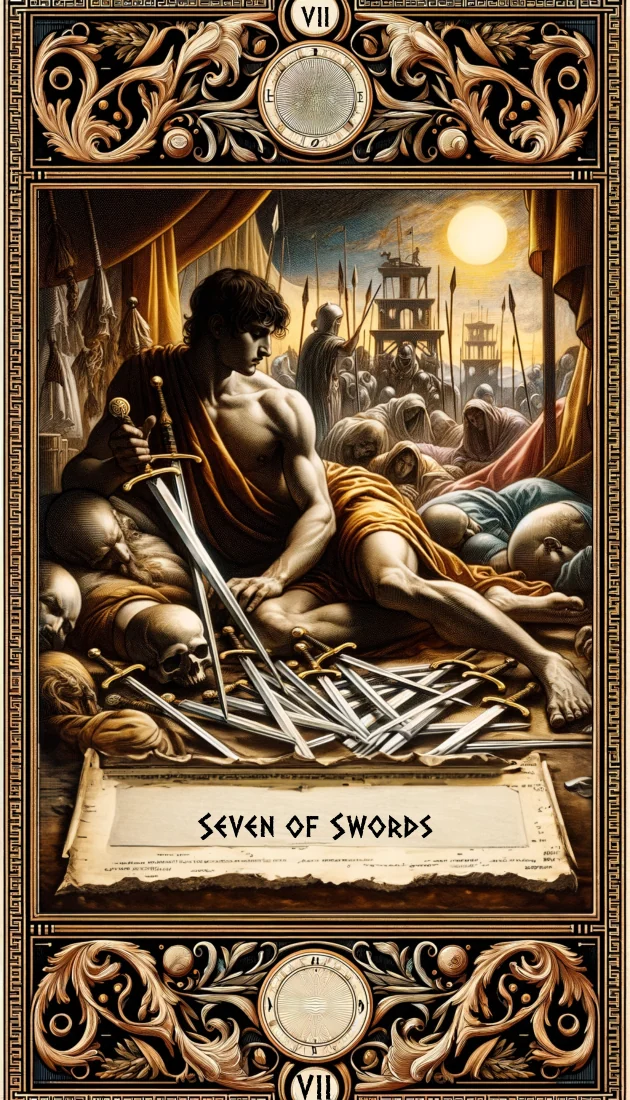
სამხედრო ბანაკში, კარვებს შორის, ახალგაზრდა კაცი ხმლების გროვიდან ხმლებს აგროვებს. აქილევსის სიკვდილის შემდეგ ასეთი გროვა აქაველთა ბანაკში იდო — მისი ღვთაებრივი აბჯარი — და მას ორი გმირი, ოდისევსი და აიასი, ედავებოდა. გამარჯვება სიტყვამ მოიპოვა და არა ძალამ, და ანტიკურ ავტორებს დიდხანს ედავათ, სამართლიანი იყო თუ არა.[3]
რა ჩანს ნახატზე
სამხედრო ბანაკში, კარვებს შორის, ახალგაზრდა კაცი ნახევრად წამოწოლილი ხმლების გროვიდან ხმლებს აგროვებს. გარშემო უძრავი ფიგურები — მძინარენი თუ დაღუპულები — და თავის ქალები ყრია; უკან შუბები, ხის საალყო კოშკები და ჩაფხუტიანი კაცი ჩანს, ცაზე კი ნათელი დისკო ანათებს. სცენა დახურულ, სტრატეგიულ სივრცეს აჩვენებს.
ეპიზოდი: აბჯრის განსჯა
აქილევსის დაღუპვის შემდეგ მისმა დედამ, თეტისმა, ჰეფესტოს ნაჭედი აბჯარი საუკეთესო აქაველისთვის დააწესა. პრეტენზია ორმა წამოაყენა: აიასმა, რომელმაც აქილევსის ცხედარი ბრძოლის ველიდან გამოიტანა, და ოდისევსმა, რომელიც მას იცავდა. „ოდისეის“ თანახმად, განსჯა ტროელების შვილებმა და პალადა ათენამ გადაწყვიტეს, და აბჯარი ოდისევსს ერგო. პინდაროსი ამ განაჩენს ღიად აკრიტიკებს: აქაველებმა ფარული კენჭისყრით ოდისევსს დაუჭირეს მხარი, შური და ცბიერი სიტყვა კი უფრო ძლიერი აღმოჩნდა, ვიდრე აიასის საქმე. აიასმა ეს შეურაცხყოფა ვერ აიტანა და დაიღუპა — სოფოკლეს ტრაგედია „აიასი“ სწორედ ამაზეა. ქვესკნელში ოდისევსი მის აჩრდილს ელაპარაკება და ამბობს: ნეტავ არ გამემარჯვა ამ შეჯიბრში. აიასი არაფერს პასუხობს და სხვა სულებისკენ, სიბნელეში მიდის.[1][2][3]
სიმბოლოები
ხმლების გროვა აქილევსის აბჯარს შეიძლება ნიშნავდეს, რომელიც ბანაკის შუაგულში იდო — ეს ინტერპრეტაციაა. ბანაკის კარვები საჯარო კრებისა და პირადი შეთანხმების სივრცეს აჩვენებს, სადაც, პინდაროსის თქმით, ფარული ხმები ითვლებოდა. ჩაფხუტიანი კაცი შეიძლება აიასი იყოს. მწოლიარე ფიგურები და თავის ქალები ილუსტრაციისაა; ისინი სცენას ღამის ქურდობის იერს აძლევს — ტაროს ხმლების შვიდის ძველი მნიშვნელობის მსგავსად.[2][3]
ოდისევსი ბერძნულ კულტურაში ორაზროვანი გმირი იყო. ჰომეროსთან ის „მრავალგზიანია“ და ათენას საყვარელი; პინდაროსი და სოფოკლეს „ფილოქტეტე“ კი მას ცბიერ სიტყვამოყვარულად ხატავენ, რომლისთვისაც შედეგი სიმართლეზე მნიშვნელოვანია. ერთი და იგივე თვისება — გონებამახვილობა — ერთ ავტორთან სიბრძნეა, მეორესთან ტყუილი.[1][2][3]
კარტი ტაროს ისტორიაში
მარსელის ტაროში შვიდ ხმალზე მოხრილი ხმლების ორნამენტია. რაიდერ–უეიტ–სმითის დასტაში (1909) კაცი ბანაკიდან ფეხაკრეფით მიდის და ხუთ ხმალს მიათრევს, ორი კი მიწაში ჩარჭობილი დარჩა; უკან ზურგს უკან იყურება. „ოქროს განთიადის“ სისტემაში კარტს „არამყარი ძალისხმევის მბრძანებელი“ ჰქვია. ILLUMINISMO ამ ფარულ ქმედებას ბერძნულ ბანაკში ათავსებს, სადაც გამარჯვება სიტყვით მოიპოვეს.[4]
In a military camp, among the tents, a young man gathers swords from a pile. After the death of Achilles such a pile lay in the Achaean camp — his divine armour — and two heroes, Odysseus and Ajax, contended for it. Words won the victory, not strength, and the ancients long argued whether it was just.[3]
What the image shows
In a military camp, among the tents, a young man, half-reclining, gathers swords from a pile. Around him lie motionless figures — sleeping or dead — and skulls; behind are spears, wooden siege towers and a helmeted man, and a bright disc shines in the sky. The scene shows a closed, strategic space.
The episode: the judgement of arms
After Achilles fell, his mother Thetis set his armour, forged by Hephaestus, as a prize for the best of the Achaeans. Two claimed it: Ajax, who had carried Achilles’ body out of the battle, and Odysseus, who had covered him. According to the Odyssey, the judgement was made by the children of the Trojans and Pallas Athena, and the armour went to Odysseus. Pindar openly criticises the verdict: in secret ballots the Achaeans favoured Odysseus, and envy and crafty speech proved stronger than Ajax’s deeds. Ajax could not bear the disgrace and died — Sophocles’ tragedy Ajax is about this. In the underworld Odysseus speaks to his shade and says: I wish I had never won that contest. Ajax answers nothing and goes off into the darkness, towards the other souls.[1][2][3]
Symbols
The pile of swords may stand for Achilles’ armour lying at the centre of the camp — this is an interpretation. The tents of the camp show a space of public assembly and private deals where, as Pindar says, secret votes were counted. The helmeted man may be Ajax. The lying figures and the skulls belong to the illustration; they give the scene the air of a theft by night — like the old meaning of the tarot Seven of Swords.[2][3]
Odysseus was an ambiguous hero in Greek culture. In Homer he is “of many turns” and Athena’s favourite; Pindar and Sophocles’ Philoctetes, however, paint him as a crafty talker for whom the result matters more than the truth. One and the same quality — cleverness — is wisdom for one author and lying for another.[1][2][3]
The card in tarot history
In the Tarot de Marseille the Seven of Swords is an ornament of curved swords. In the Rider–Waite–Smith deck (1909) a man tiptoes away from a camp carrying five swords, leaving two stuck in the ground, and looks back over his shoulder. In the Golden Dawn system the card is the “Lord of Unstable Effort”. ILLUMINISMO places this secret act in a Greek camp where victory was won by words.[4]
წყაროებიSources
- Homer, Odyssey 11.543–567.
- Pindar, Nemean 7.20–30; 8.21–34.
- Sophocles, Ajax; Philoctetes; Proclus’ summaries of the Aethiopis and the Little Iliad.
- A. E. Waite, The Pictorial Key to the Tarot (1910).
თემა, წყაროების შერჩევა და დასკვნები — ნიკა ხუცურაული. კვლევასა და თარგმანში დახმარებისთვის გამოყენებულია AI; ყოველი ფაქტი წყაროსთან შემოწმდა.Topic, choice of sources and conclusions — Nika Khutsurauli. AI was used to help with research and translation; every fact was checked against its source.