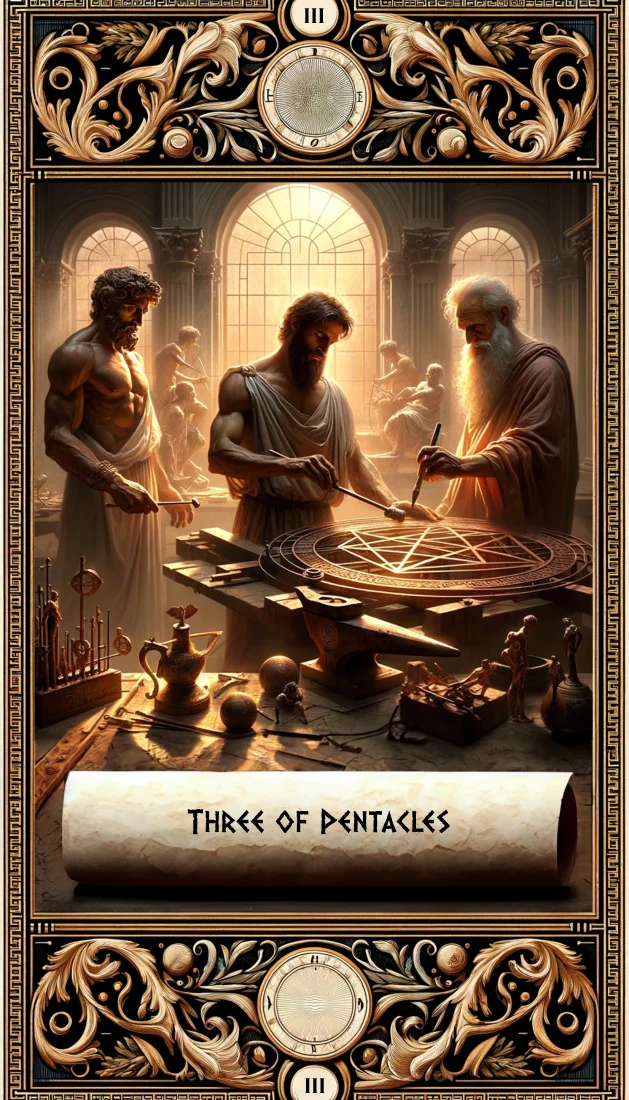
სამი კაცი სამუშაო მაგიდასთან ერთ ნახაზს აკვირდება. კარტს საკუთარი მითი არ აქვს, მაგრამ ბერძნულ ქვაზე ასეთი გუნდის სახელები ნამდვილად შემორჩა: ათენის აკროპოლისზე, ერექთეიონის მშენებლობის ანგარიშებში, ქალაქმა ყოველი ოსტატის სახელი და ანაზღაურება ჩაწერა — მოქალაქისაც, უცხოელისაც და მონისაც.
რა ჩანს ნახატზე
სამი მამაკაცი სამუშაო მაგიდასთან ერთ საგანს აკვირდება. ერთ-ერთი უფროსი ფიგურა ხელს ცენტრალური პენტაკლის ნახაზისკენ იწვდის; გარშემო იარაღები და სახელოსნოს ნივთებია. მაღალი ფანჯრიდან შემოსული ნათება საერთო საქმეს გამოყოფს.
ბერძნული ფონი: ერექთეიონის ანგარიშები
ძვ. წ. 409/408 წელს ათენელებმა ერექთეიონის — ათენასა და პოსეიდონის ტაძრის — დასრულება გადაწყვიტეს, და მშენებლობის ზედამხედველებმა ყოველი წლის ხარჯი მარმარილოზე ამოკვეთეს. ამ ანგარიშებში ჩანს, ვინ რას აკეთებდა: ფრიზის თითოეული ფიგურისთვის მოქანდაკეს ცალკე ეხდიდნენ — „შუბიანი კაცი, 60 დრაქმა“, „ცხენი და მის უკან კაცი, რომელიც მას ურტყამს, 120 დრაქმა“; სვეტების დაღარვაზე კი რამდენიმე კაცი ერთ სვეტზე მუშაობდა, და თითოეულს ერთი და იგივე თანხა ეკუთვნოდა. ამ ჯგუფებში ათენელი მოქალაქეები, ათენში მცხოვრები უცხოელები (მეტოიკები) და მონები გვერდიგვერდ მუშაობდნენ; მონები ანგარიშში თავიანთი პატრონის სახელით არიან აღნიშნული. ტაძარი ერთი ოსტატის კი არა, მრავალი სახელდებული ადამიანის ერთობლივი შრომაა.
სიმბოლოები
სამუშაო მაგიდა საერთო საქმის ადგილია, ნახაზი — ხარისხისა და მიზნის შეთანხმება. სხვადასხვა ასაკის ფიგურები ოსტატისა და მოწაფის ურთიერთობას შეიძლება ნიშნავდეს; ეს ინტერპრეტაციაა. მაღალი ფანჯარა სმითის კარტის გოთიკურ ეკლესიას იხსენებს (ქვემოთ) და ილუსტრაციის გადაწყვეტაა.
ოლიმპიაში 1950-იან წლებში არქეოლოგებმა ფიდიასის სახელოსნო იპოვეს, სადაც მან ზევსის ოქროსა და სპილოს ძვლის ქანდაკება შექმნა: თიხის ყალიბები ოქროს სამოსის ნაკეცებისთვის, იარაღები და პატარა შავი ჭურჭელი, რომლის ძირზეც ამოკაწრულია: „ფიდიასისა ვარ“. ძველი ხელოსნის პირადი ნივთი, რომელიც ტექსტებს ადასტურებს.
კარტი ტაროს ისტორიაში
მარსელის ტაროში სამ პენტაკლზე სამი მონეტის ორნამენტული განლაგებაა. რაიდერ–უეიტ–სმითის დასტაში (1909) ქვისმთლელი ეკლესიაში, სკამზე დგას და მუშაობს, მის წინ ბერი და მოსასხამიანი ფიგურა გეგმას ხსნიან; „ოქროს განთიადის“ სისტემაში კარტს „მატერიალური შრომის მბრძანებელი“ ჰქვია. ILLUMINISMO ამ სახელოსნოს ათენის აკროპოლისზე ათავსებს.[4]
Three men at a workbench study one drawing. The card has no myth of its own, but the names of such a team really do survive in Greek stone: on the Athenian Acropolis, in the building accounts of the Erechtheion, the city recorded the name and pay of every craftsman — citizen, foreigner and slave.
What the image shows
Three men at a workbench study one object. An older figure points to a central drawing of a pentacle; tools and workshop things lie around. Light from a high window singles out the shared task.
The Greek background: the Erechtheion accounts
In 409/408 BC the Athenians decided to finish the Erechtheion — the temple of Athena and Poseidon — and the overseers of the work carved each year’s expenses in marble. These accounts show who did what: a sculptor was paid separately for each figure of the frieze — “the man with the spear, 60 drachmas”, “the horse and the man behind it striking it, 120 drachmas”; for fluting the columns several men worked on one column, each receiving the same sum. In these teams Athenian citizens, foreigners living in Athens (metics) and slaves worked side by side; the slaves are listed in the accounts by their master’s name. The temple is the joint labour not of one master but of many named people.
Symbols
The workbench is the place of a shared task, the drawing the agreement on quality and aim. The figures of different ages may stand for master and apprentice; this is an interpretation. The high window recalls the Gothic church of Smith’s card (below) and is a choice of the illustration.
At Olympia in the 1950s archaeologists found the workshop of Phidias, where he made the gold-and-ivory statue of Zeus: clay moulds for the folds of the golden robe, tools, and a small black cup with words scratched on its base: “I belong to Phidias”. A personal object of an ancient craftsman that confirms the texts.
The card in tarot history
In the Tarot de Marseille the Three of Pentacles is an ornamental arrangement of three coins. In the Rider–Waite–Smith deck (1909) a stonemason works standing on a bench in a church, while a monk and a cloaked figure hold out a plan before him; in the Golden Dawn system the card is the “Lord of Material Works”. ILLUMINISMO places this workshop on the Athenian Acropolis.[4]
წყაროებიSources
- IG I³ 474–476 (Erechtheion building accounts, 409/8–408/7 BC); Attic Inscriptions Online.
- S. D. Lambert, “The Last Erechtheion Building Accounts”, AIO Papers 7.
- A. Mallwitz and W. Schiering, Die Werkstatt des Pheidias in Olympia (1964).
- A. E. Waite, The Pictorial Key to the Tarot (1910).
თემა, წყაროების შერჩევა და დასკვნები — ნიკა ხუცურაული. კვლევასა და თარგმანში დახმარებისთვის გამოყენებულია AI; ყოველი ფაქტი წყაროსთან შემოწმდა.Topic, choice of sources and conclusions — Nika Khutsurauli. AI was used to help with research and translation; every fact was checked against its source.