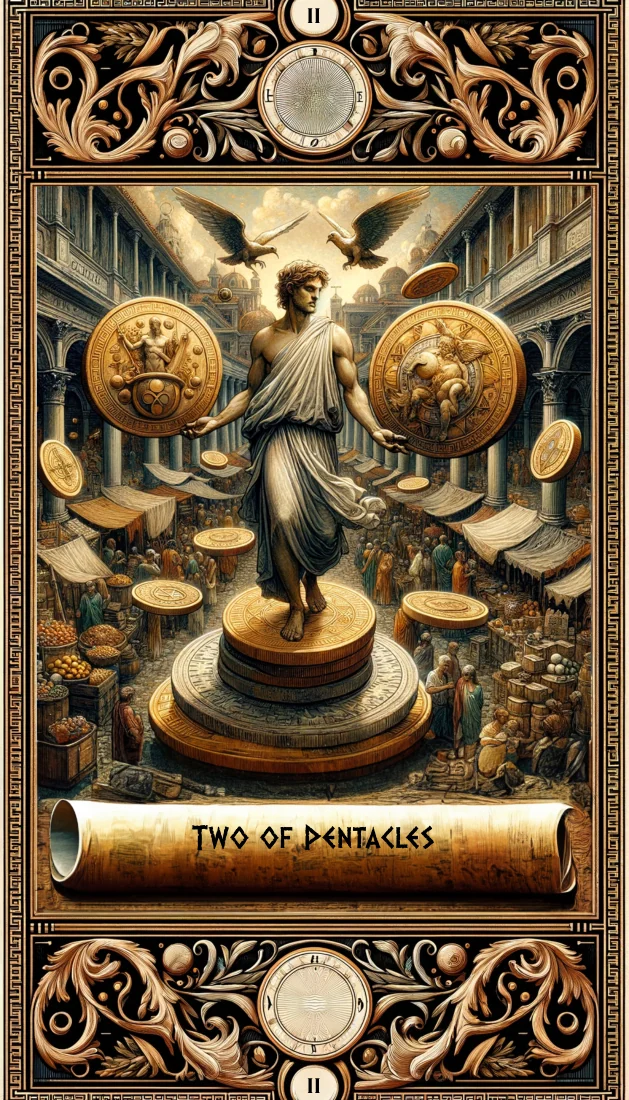
ახალგაზრდა ჰერმესი ბაზრის შუაგულში დგას, ორ დიდ პენტაკლს შორის. ის აგორაიოსია — „ბაზრის“ ჰერმესი, ვაჭრების მფარველი. ეზოპეს ერთ იგავში ეს ღმერთი თავად მიდის ბაზარზე, რომ საკუთარი ფასი გაიგოს — და პასუხი მისთვის მოულოდნელი აღმოჩნდება.[1]
რა ჩანს ნახატზე
ახალგაზრდა ფიგურა ბაზრის შუაგულში, უზარმაზარი მონეტების დასტაზე დგას. მის ორივე მხარეს რელიეფური გამოსახულებებით მორთული ორი დიდი პენტაკლია, ზემოთ არწივები დაფრინავენ, გარშემო პატარა მონეტები და სავაჭრო დახლები ჩანს. რესურსების მოძრაობა ფიგურის ირგვლივ წრიულ რიტმს ქმნის.
ეპიზოდი: ჰერმესი მოქანდაკესთან
ეზოპეს იგავის მიხედვით, ჰერმესს უნდოდა გაეგო, რამდენად აფასებდნენ მას ადამიანები. ადამიანის სახით მოქანდაკის სახელოსნოში შევიდა და ზევსის ქანდაკებაზე იკითხა: რა ღირს? — ერთი დრაქმა. გაეცინა და ჰერას ქანდაკებაზე იკითხა. — უფრო ძვირი. ბოლოს საკუთარი ქანდაკება დაინახა და იფიქრა: მე ხომ ღმერთების მაცნე ვარ და ვაჭრობის მფარველი, ჩემზე ბევრს მომთხოვენ. — ეს რა ღირს? მოქანდაკემ უპასუხა: თუ იმ ორს იყიდი, ამას ზედ დაგიმატებ. იგავს ძველი რედაქტორები დასკვნას უმატებდნენ: ის, ვინც საკუთარ თავს დიდებას ეძებს, ხშირად აღმოაჩენს, რომ სხვებისთვის არაფერს ნიშნავს. ბაზარი, ასე, ღმერთსაც ასწავლის, რომ ფასი საკუთარ წარმოდგენაში არ დგინდება.[1]
სიმბოლოები
ორი დიდი პენტაკლი შეიძლება ორ ფასს — საკუთარ შეფასებასა და ბაზრისას — ნიშნავდეს, რომელთა შორისაც წონასწორობაა საჭირო; ეს ინტერპრეტაციაა. სავაჭრო მაგიდები ბერძნული აგორაა: ათენში, აგორაზე, ჰერმეს აგორაიოსის ქანდაკება იდგა. ახალგაზრდა სახე ჰერმესის გვიანდელ, უწვერო გამოსახულებას შეესაბამება. არწივები ილუსტრაციისაა.
არისტოტელეს „ათენელთა პოლიტიის“ მიხედვით, ათენის ბაზარს წილისყრით არჩეული თანამდებობის პირები აკონტროლებდნენ: აგორანომები ამოწმებდნენ, რომ საქონელი სუფთა და უყალბო ყოფილიყო; მეტრონომები — წონებსა და საზომებს; სიტოფილაკები — ხორბლის, ფქვილისა და პურის სამართლიან ფასს. ჰერმესის ბაზარს, ასე, საკუთარი სამართალიც ჰქონდა.[2]
კარტი ტაროს ისტორიაში
მარსელის ტაროში ორ პენტაკლზე ორ მონეტას გრძელი, მოხრილი ლენტი აკავშირებს. რაიდერ–უეიტ–სმითის დასტაში (1909) ახალგაზრდა ცეკვავს და ორ პენტაკლს ჟონგლიორივით ატრიალებს უსასრულობის ნიშნის მსგავს ლენტში, უკან კი ხომალდები მაღალ ტალღებზე ირწევა; „ოქროს განთიადის“ სისტემაში კარტს „ჰარმონიული ცვლილების მბრძანებელი“ ჰქვია. ILLUMINISMO ამ ჟონგლიორს ბაზრის ღმერთით ცვლის.[4]
A young Hermes stands at the heart of a market between two large pentacles. He is Agoraios — Hermes “of the market”, protector of merchants. In one of Aesop’s fables this god goes to the market himself to learn his own price — and the answer surprises him.[1]
What the image shows
A young figure stands at the heart of a market on a pedestal of stacked giant coins. On both sides are two large pentacles decorated with relief figures, eagles fly above, and small coins and market stalls appear around him. The movement of goods creates a circular rhythm around the figure.
The episode: Hermes at the sculptor’s
According to Aesop’s fable, Hermes wanted to know how highly people valued him. In human form he went into a sculptor’s workshop and asked about a statue of Zeus: what does it cost? — One drachma. He laughed and asked about a statue of Hera. — More. At last he saw a statue of himself and thought: I am the messenger of the gods and the patron of trade, they will ask a lot for me. — And what does this one cost? The sculptor answered: if you buy the other two, I will throw this one in for free. Ancient editors added a moral: whoever seeks glory for himself often finds that he means nothing to others. The market thus teaches even a god that a price is not set in one’s own imagination.[1]
Symbols
The two large pentacles may stand for two prices — one’s own estimate and the market’s — between which a balance must be kept; this is an interpretation. The trading tables are the Greek agora: in Athens a statue of Hermes Agoraios stood in the agora. The young face matches the later, beardless image of Hermes. The eagles belong to the illustration.
According to Aristotle’s Constitution of the Athenians, the Athenian market was overseen by officials chosen by lot: the agoranomoi checked that goods were pure and unadulterated; the metronomoi checked weights and measures; the sitophylakes watched over a fair price for grain, flour and bread. Hermes’ market thus had its own justice too.[2]
The card in tarot history
In the Tarot de Marseille the Two of Pentacles shows two coins linked by a long, curving ribbon. In the Rider–Waite–Smith deck (1909) a young man dances, juggling two pentacles in a ribbon shaped like the sign of infinity, while ships ride high waves behind him; in the Golden Dawn system the card is the “Lord of Harmonious Change”. ILLUMINISMO replaces the juggler with the god of the market.[4]
წყაროებიSources
- Aesop, Fables 88 Perry (“Hermes and the Sculptor”).
- Aristotle, Constitution of the Athenians 51.1–3.
- Pausanias, Description of Greece 1.15.1 (Hermes Agoraios).
- A. E. Waite, The Pictorial Key to the Tarot (1910).
თემა, წყაროების შერჩევა და დასკვნები — ნიკა ხუცურაული. კვლევასა და თარგმანში დახმარებისთვის გამოყენებულია AI; ყოველი ფაქტი წყაროსთან შემოწმდა.Topic, choice of sources and conclusions — Nika Khutsurauli. AI was used to help with research and translation; every fact was checked against its source.