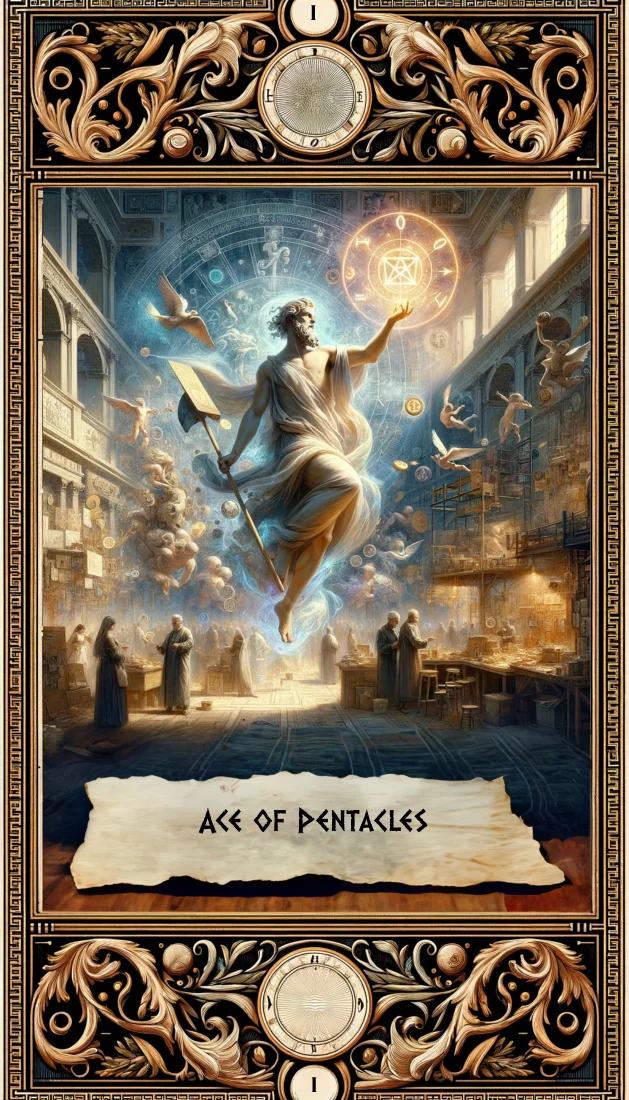
წვეროსანი ფიგურა ჰაერში ეკიდება და ხელს ნათელი პენტაკლისკენ — მონეტისკენ — იწვდის. ეს ჰერმესია, ვაჭრობისა და მოგების ღმერთი, თავისი ძველი, წვეროსანი სახით. ოვიდიუსი ჰყვება, როგორ აქცია მან ერთი მოლაყბე მოხუცი ქვად — და ეს ქვა ბერძნებისთვის ნამდვილი, ყოველდღიური ნივთი იყო: მისით ოქროს სიწმინდეს ამოწმებდნენ.[1]
რა ჩანს ნახატზე
გრძელ დარბაზში, თაროებსა და მაგიდებს შორის, სადაც სამოსიანი ადამიანები მუშაობენ, თეთრსამოსიანი წვეროსანი ფიგურა ჰაერში ეკიდება. ერთ ხელში კვერთხი უჭირავს, მეორეს ნათელი პენტაკლის წრისკენ იწვდის; გარშემო მონეტები, ფრინველები და პატარა ფრთიანი ფიგურები დაფრინავენ.
ეპიზოდი: ბატოსი
ოვიდიუსის „მეტამორფოზების“ II წიგნში ჰერმესი აპოლონის ძროხებს იპარავს. ამას ბატოსი დაინახავს — მოხუცი, რომელიც მდიდარი ნელევსის ფაშატებს მწყემსავდა. ჰერმესი მას ხელს მოჰკიდებს: უცხოო, თუ ვინმემ გკითხოს, არაფერი გინახავს — და საზღაურად მშვენიერ ძროხას აძლევს. ბატოსი ქვას აჩვენებს: წადი მშვიდად, უფრო ეს ქვა გაგცემს, ვიდრე მე. ჰერმესი მიდის, მერე კი სხვა სახითა და ხმით ბრუნდება და ეკითხება: ძროხები ხომ არ გინახავს? თუ მეტყვი, ძროხასაც მოგცემ და ხარსაც. მოხუცი ორმაგ საზღაურს ვერ უძლებს და ყველაფერს ამბობს. ჰერმესს გაეცინება: ჩემივე თავს მე მცემ, მოღალატევ? — და ბატოსს მყარ კაჟად აქცევს, რომელსაც დღემდე „ინდექსი“ — „მიმთითებელი“ — ჰქვია.[1]
სიმბოლოები
პენტაკლი აქ მონეტაა — ის, რასაც ჰერმესი, მოგების ღმერთი, მფარველობს. ჰეროდოტეს მიხედვით, ოქროსა და ვერცხლის მონეტა პირველად ლიდიელებმა მოჭრეს მცირე აზიაში; თანამედროვე არქეოლოგია უძველეს მონეტებს ძვ. წ. VII საუკუნის ბოლოთი ათარიღებს. წვერი ჰერმესის არქაულ სახეს შეესაბამება: ძვ. წ. VI–V საუკუნეების ვაზებზე ის ხშირად წვეროსანი კაცია, უწვერო ჭაბუკად კი მოგვიანებით იქცა (იხ. „კვერთხების პაჟი“). თაროები და მაგიდები, სადაც ადამიანები მუშაობენ, ანგარიშისა და ვაჭრობის სამყაროდ შეიძლება წავიკითხოთ — ეს ინტერპრეტაციაა.[3]
ოვიდიუსის „ინდექსი“ ძველი ბერძნების basanos-ია — საცდელი ქვა. თეოფრასტე ქვებზე თავის ტრაქტატში აღწერს: ოქროს ქვაზე უსვამენ, და ხაზის ფერით ოსტატი ამბობს, რამდენი შენადნობია მასში — ერთ ქერის მარცვლამდე სიზუსტით. სიტყვა basanos ბერძნულში შემდეგ „გამოცდასაც“ ნიშნავდა — და, სამწუხაროდ, წამებითაც გამოკითხვას. ერთი ქვა, რომელიც ჭეშმარიტებას ამოწმებს.[1][2]
კარტი ტაროს ისტორიაში
იტალიურ დასტებში ამ წყობას „დენარი“ (denari) — მონეტები — ჰქვია, მამლუქური კარტების მონეტების წყობიდან; მარსელის ტაროში — deniers. XIX საუკუნეში ელიფას ლევიმ მონეტები მაგიურ პენტაკლებს დაუკავშირა; „ოქროს განთიადმა“ და უეიტმა ისინი დისკოზე ამოკვეთილ ხუთქიმიან ვარსკვლავად დახატეს და დედამიწის სტიქიას მიაკუთვნეს. რაიდერ–უეიტ–სმითის ტუზზე ღრუბლიდან გამოსულ ხელს პენტაკლი უჭირავს ბაღის თავზე, რომელშიც თაღიანი ღობე მთებისკენ მიდის. ILLUMINISMO პენტაკლს მონეტას უბრუნებს.[4]
A bearded figure floats in the air and reaches towards a bright pentacle — a coin. This is Hermes, god of trade and gain, in his old, bearded form. Ovid tells how he turned a talkative old man into stone — and for the Greeks that stone was a real, everyday object: they used it to test the purity of gold.[1]
What the image shows
In a long hall of shelves and desks, where robed people are at work, a bearded figure in white floats in the air. In one hand he holds a staff; the other reaches towards the bright circle of a pentacle. Coins, birds and small winged figures fly around him.
The episode: Battus
In book 2 of Ovid’s Metamorphoses Hermes steals Apollo’s cattle. Battus sees him — an old man who herded the mares of rich Neleus. Hermes takes him by the hand: stranger, if anyone asks, you have seen nothing — and gives him a fine cow as a reward. Battus points to a stone: go in peace, that stone will betray you sooner than I. Hermes leaves, then returns in another shape and voice and asks: have you seen any cattle? Tell me, and I will give you a cow and a bull. The old man cannot resist the double reward and tells everything. Hermes laughs: you betray me to myself, traitor? — and turns Battus into hard flint, which to this day is called the index — “the informer”.[1]
Symbols
The pentacle here is a coin — what Hermes, god of gain, protects. According to Herodotus, gold and silver coins were first struck by the Lydians in Asia Minor; modern archaeology dates the oldest coins to the late 7th century BC. The beard matches the archaic Hermes: on vases of the 6th–5th centuries BC he is often a bearded man, and only later became a beardless youth (see Page of Wands). The shelves and desks where people work can be read as the world of accounts and trade — this is an interpretation.[3]
Ovid’s index is the ancient Greek basanos — the touchstone. Theophrastus describes it in his treatise on stones: gold is rubbed on the stone, and from the colour of the streak an expert can tell how much alloy it contains — to the accuracy of a grain of barley. The word basanos later came to mean “test” in Greek — and, grimly, questioning under torture too. One stone that tests the truth.[1][2]
The card in tarot history
In Italian decks this suit is called denari — coins — from the suit of coins in the Mamluk cards; in the Tarot de Marseille, deniers. In the 19th century Éliphas Lévi linked the coins to magical pentacles; the Golden Dawn and Waite drew them as a five-pointed star on a disk and assigned them to the element of earth. On the Rider–Waite–Smith ace a hand from a cloud holds a pentacle over a garden where an arched hedge leads towards mountains. ILLUMINISMO turns the pentacle back into a coin.[4]
წყაროებიSources
- Ovid, Metamorphoses 2.676–707.
- Theophrastus, On Stones 45–47.
- Herodotus, Histories 1.94.
- A. E. Waite, The Pictorial Key to the Tarot (1910).
თემა, წყაროების შერჩევა და დასკვნები — ნიკა ხუცურაული. კვლევასა და თარგმანში დახმარებისთვის გამოყენებულია AI; ყოველი ფაქტი წყაროსთან შემოწმდა.Topic, choice of sources and conclusions — Nika Khutsurauli. AI was used to help with research and translation; every fact was checked against its source.