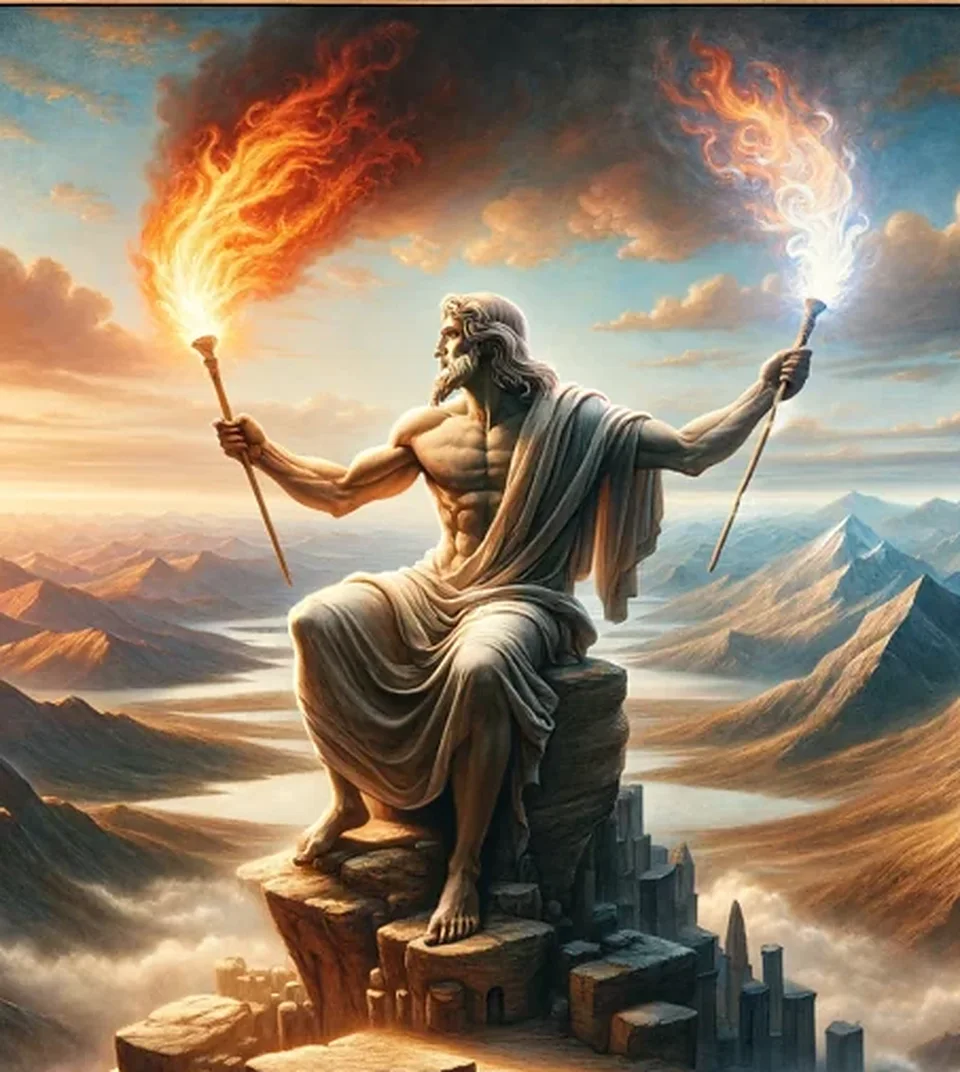
პრომეთეს ამბავი ცეცხლით არ იწყება — ის ხარის ხორცის გაყოფით იწყება. ჰესიოდესთან ტიტანი ჯერ ზევსს ატყუებს მსხვერპლშეწირვისას, ცეცხლს მხოლოდ მერე იპარავს, და ორივე ხრიკის ფასს ადამიანები იხდიან.[1][2][3]
გაყოფა მეკონეში
პრომეთე ტიტან იაპეტოსისა და ოკეანიდა კლიმენეს ვაჟია; მისი ძმები არიან ატლასი, მენოიტიოსი და ეპიმეთე. „თეოგონიის“ მიხედვით, როცა ღმერთები და ადამიანები მეკონეში გაიყარნენ, პრომეთემ ხარი ორად დაყო: ხორცი და ქონიანი შიგნეული კუჭში გაახვია, ძვლები კი ბრწყინავ ქონში შეფუთა. ჰესიოდეს თქმით, ზევსი ხრიკს მიხვდა, მაგრამ მაინც ქონი აირჩია — და ძვლები დახვდა.[1][2][3]
ჰესიოდე ამით ხსნის, რატომ წვავენ ადამიანები ღმერთებისთვის ძვლებს, ხორცს კი თავად ჭამენ. ზევსი რისხვით პასუხობს: ადამიანებს ცეცხლს უმალავს.[1][2]
ცეცხლი ლერწამში
პრომეთემ ცეცხლი მოიპარა და ადამიანებს ღრუ ნართექსის ღეროთი ჩამოუტანა. სასჯელი ორმაგი იყო. ადამიანებს ზევსმა „ბოროტება ცეცხლის სანაცვლოდ“ გამოუგზავნა — პირველი ქალი, რომელსაც „შრომასა და დღეებში“ პანდორა ჰქვია. პრომეთე კი სვეტზე მიაჯაჭვა; არწივი ყოველდღე მის ღვიძლს ჭამდა, ღამით კი ღვიძლი ისევ იზრდებოდა. მოგვიანებით ჰერაკლემ არწივი ზევსის თანხმობით მოკლა.[2][3]
ჰესიოდე არ ამბობს, სად იყო პრომეთე მიჯაჭვული. კავკასიას გვიანდელი ავტორები ასახელებენ: აპოლონიოს როდოსელთან არგონავტები კოლხეთისკენ მიმავალ გზაზე პრომეთეს კვნესას ისმენენ, აპოლოდოროსი კი წერს, რომ ზევსმა ის კავკასიის მთაზე მიალურსმნა.[1][2][3][5]
ტრაგედიაში და ფილოსოფიაში
ტრაგედია „მიჯაჭვული პრომეთე“, რომელიც ესქილეს მიეწერება, ამბავს სხვაგვარად ჰყვება. აქ პრომეთე ადამიანებს მხოლოდ ცეცხლს კი არა, რიცხვებს, ასოებს, მედიცინასა და ხელობებს აძლევს და ზევსის წინაშე ქედს არ იხრის, რადგან იცის საიდუმლო, რომელიც ზევსის ძალაუფლებას ემუქრება. პლატონის „პროტაგორასში“ ეპიმეთე ყველა თვისებას ცხოველებს ურიგებს, ადამიანი კი შიშველი რჩება; პრომეთე ჰეფესტოსა და ათენას ცეცხლსა და ხელობის ცოდნას პარავს.[3][4]
ათენში პრომეთეს ალტარი აკადემიაში იდგა და იქიდან ჩირაღდნების რბოლა იწყებოდა.[3]
რომანტიზმმა პრომეთე ამბოხის სიმბოლოდ აქცია: გოეთეს ლექსი „პრომეთე“ (დაწერილია დაახლ. 1774 წელს), პერსი შელის „განთავისუფლებული პრომეთე“ (1820). მერი შელიმ თავის რომანს „ფრანკენშტაინი, ანუ თანამედროვე პრომეთე“ (1818) დაარქვა — შემოქმედი, რომლის ქმნილება მის კონტროლს სცდება. ესენი ახალი წაკითხვებია და არა ძველი მითი.[3]
რა არ ვიცით
„მიჯაჭვული პრომეთეს“ ავტორობა სადავოა — ბევრი მკვლევარი ფიქრობს, რომ ის ესქილეს არ ეკუთვნის. ტრილოგიის დანარჩენი ნაწილებიდან მხოლოდ ფრაგმენტებია შემორჩენილი, ამიტომ არ ვიცით, როგორ შერიგდნენ ბოლოს პრომეთე და ზევსი. რა კავშირი აქვს ამ მითს ქართულ ამირანთან — ეს ცალკე, შედარებით სტატიაში განვიხილავთ.[3]
ILLUMINISMO-ში: პრომეთე ბერძნული ტაროს „კვერთხების ორია“ — დასტის ნახვა → · კარტების სტატიები: კვერთხების ორი
The story of Prometheus does not begin with fire — it begins with the carving of an ox. In Hesiod the Titan first tricks Zeus at a sacrifice, steals fire only afterwards, and humans pay the price for both tricks.[1][2][3]
The division at Mecone
Prometheus is the son of the Titan Iapetus and the Oceanid Clymene; his brothers are Atlas, Menoetius and Epimetheus. According to the Theogony, when gods and humans parted ways at Mecone, Prometheus divided an ox in two: he wrapped the meat and the rich innards in the stomach, and the bones in glistening fat. Hesiod insists that Zeus saw through the trick, yet he still chose the fat — and found the bones.[1][2][3]
Hesiod uses this to explain why humans burn bones for the gods and eat the meat themselves. Zeus answers in anger: he hides fire from humankind.[1][2]
Fire in a reed
Prometheus stole fire and brought it to humans in a hollow fennel stalk. The punishment was double. To humans Zeus sent “an evil in exchange for fire” — the first woman, called Pandora in Works and Days. Prometheus he bound to a pillar; every day an eagle ate his liver, and every night the liver grew back. Later Heracles killed the eagle, with Zeus’s consent.[2][3]
Hesiod does not say where Prometheus was bound. The Caucasus comes from later authors: in Apollonius of Rhodes the Argonauts, on their way to Colchis, hear Prometheus groaning, and Apollodorus writes that Zeus nailed him to Mount Caucasus.[1][2][3][5]
In tragedy and philosophy
The tragedy Prometheus Bound, attributed to Aeschylus, tells the story differently. Here Prometheus gives humans not only fire but numbers, letters, medicine and the crafts, and he will not bow to Zeus because he knows a secret that threatens Zeus’s power. In Plato’s Protagoras, Epimetheus hands out every quality to the animals and leaves humans naked; Prometheus steals fire and craft-knowledge from Hephaestus and Athena.[3][4]
In Athens Prometheus had an altar in the Academy, and torch races started from it.[3]
Romanticism turned Prometheus into a symbol of revolt: Goethe’s poem “Prometheus” (written c. 1774), Percy Shelley’s Prometheus Unbound (1820). Mary Shelley called her novel Frankenstein; or, The Modern Prometheus (1818) — a maker whose creation escapes his control. These are new readings, not the ancient myth.[3]
What we don’t know
The authorship of Prometheus Bound is disputed — many scholars think it is not by Aeschylus. Only fragments survive of the rest of the trilogy, so we do not know how Prometheus and Zeus were finally reconciled. How this myth relates to the Georgian Amirani is a question for a separate, comparative article.[3]
In ILLUMINISMO: Prometheus is the 2 of Wands of the Greek Tarot — see the deck → · Card articles: Two of Wands
წყაროებიSources
- Hesiod, Theogony 507–616.
- Hesiod, Works and Days 42–105.
- [Aeschylus], Prometheus Bound 436–506.
- Plato, Protagoras 320c–322a.
- Apollonius of Rhodes, Argonautica 2.1246–1259; Apollodorus, Library 1.7.1.
- Pausanias, Description of Greece 1.30.2.
თემა, წყაროების შერჩევა და დასკვნები — ნიკა ხუცურაული. კვლევასა და თარგმანში დახმარებისთვის გამოყენებულია AI; ყოველი ფაქტი წყაროსთან შემოწმდა.Topic, choice of sources and conclusions — Nika Khutsurauli. AI was used to help with research and translation; every fact was checked against its source.