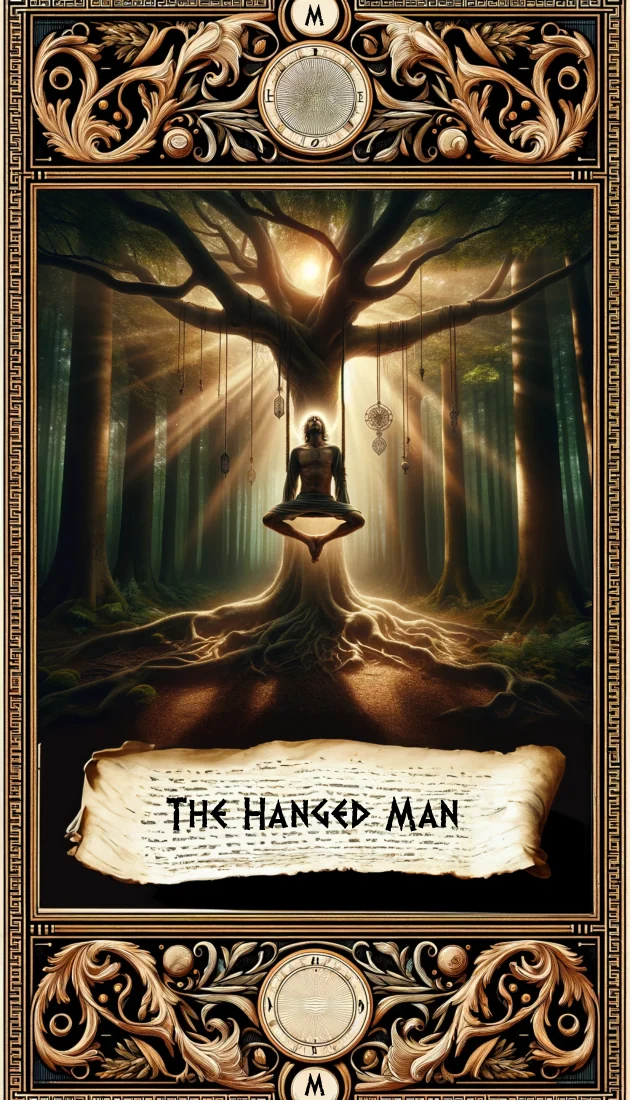
ამ კარტს საკუთარი ბერძნული მითი არ აქვს. ILLUMINISMO-ს ნახატზე კაცი თავდაყირა არ კიდია: ის ხეზე ორი თოკით დაკიდებულ საქანელაზე ზის, ტოტებიდან კი პატარა ამულეტები და მედალიონები ეკიდება. ათენს ზუსტად ასეთი ელემენტებით დღესასწაული ჰქონდა — აიორა, „საქანელა“. მის უკან კი მძიმე მითი იდგა.
რა ჩანს ნახატზე
მზით განათებულ ტყეში, დიდი ხის ქვეშ, კაცი ფეხმორთხმით ზის საქანელაზე, რომელიც ტოტიდან ორ თოკზე კიდია. სახე მაღლა აქვს აწეული, თავის გარშემო შუქი ანათებს. ტოტებს შორის სხივები იჭრება, ტოტებიდან კი ძაფებზე პატარა ამულეტები და მედალიონები ეკიდება.
ბერძნული ფონი: აიორა — „საქანელა“
გადმოცემის მიხედვით, ატიკელმა იკარიოსმა დიონისე სტუმრად მიიღო, და ღმერთმა მას ღვინის დაყენება ასწავლა. იკარიოსმა ღვინო მწყემსებს დაალევინა; მათ თავი მოწამლულებად ჩათვალეს, იკარიოსი მოკლეს და ცხედარი ხის ძირში დამალეს. მისმა ასულმა, ერიგონემ, ერთგული ძაღლის, მაირას, დახმარებით მამა იპოვა და მწუხარებისგან იმავე ხეზე ჩამოიხრჩო. ჰიგინუსის თქმით, ამის შემდეგ ათენელ ქალწულებს თითქოს უმიზეზოდ იგივე სიკვდილი დაემართათ, და ორაკულმა ბრძანა, იკარიოსი და ერიგონე დღესასწაულით დაემშვიდებინათ. ასე დაარსდა აიორა: გოგონები საქანელებზე ქანაობდნენ, ხეებზე კი პატარა ფიგურებს — ლათინურად oscilla — კიდებდნენ და აქანავებდნენ; ნაყოფსაც სწირავდნენ. ბევრი მკვლევარი დღესასწაულს ანთესტერიას, ათენის ღვინისა და მიცვალებულთა დღესასწაულს, უკავშირებს (იხ. „კვერთხების ოთხი“). ჩვენი ძირითადი წყაროები გვიანდელია — ჰიგინუსი და აპოლოდოროსი — და ზოგი ავტორი ერიგონედ სხვა ქალს, აიგისთოსის ასულს, ასახელებს.[1][2]
სიმბოლოები
საქანელა აიორაა: რიტუალი, რომელმაც სიკვდილის ამბავი თამაშად და დღესასწაულად აქცია — ეს ინტერპრეტაციაა, თუმცა ბევრი მკვლევარი მას სწორედ ასე კითხულობს. ტოტებზე დაკიდებული ამულეტები oscilla-ს, ხეებზე დაკიდებულ ფიგურებს, ეხმიანება. ბერძნულ-რომაულ სამყაროში წმინდა ხეებზე სხვა შესაწირსაც კიდებდნენ — ამაზე ცალკე სტატიაშია: „დოდონა — მუხა, რომელიც პასუხობდა“. ფესვებსა და ვარჯს შორის ქანაობა ამ გამოცემის ინტერპრეტაციაა: ფიგურა არც ვარდება და არც მაღლა მიიწევს. თავდაყირა ჩამოკიდებული კაცი, რომელსაც ტარო იცნობს, აქ შეგნებულად შეცვლილია.
ჰიგინუსის „ასტრონომიის“ მიხედვით, სამივე ცაზე აიყვანეს: იკარიოსი — ბოოტესის თანავარსკვლავედად, მისი კაშკაშა ვარსკვლავით, არქტურით; ერიგონე — ქალწულად; ძაღლი მაირა კი — პროკიონად, „პატარა ძაღლად“. ერიგონეზე ელინისტურმა მეცნიერმა ერატოსთენემაც დაწერა პოემა, რომელიც დაკარგულია; ანტიკური ტრაქტატი „ამაღლებულის შესახებ“ მას „უნაკლო პატარა პოემას“ უწოდებს. ქალწულის თანავარსკვლავედი ჩვენს დასტაში სხვა სახელით — ასტრეად — „ვარსკვლავზე“ გვხვდება.[1][2]
კარტი ტაროს ისტორიაში
XV საუკუნის იტალიაში ამ კარტს ხშირად „მოღალატე“ (il Traditore) ერქვა. ცალი ფეხით ჩამოკიდებული კაცი ეხმიანება pittura infamante-ს — „სამარცხვინო ნახატებს“, რომლებზეც იტალიური ქალაქები მოღალატეებსა და გაქცეულ მევალეებს საჯაროდ, ცალი ფეხით ჩამოკიდებულებს ხატავდნენ. ვისკონტი–სფორცას დასტაშიც კაცი ცალი ფეხით ჰკიდია; მარსელის ტაროში მას Le Pendu ჰქვია. 1781 წელს ანტუან კურ დე ჟებელენმა ივარაუდა, რომ ეს სინამდვილეში „სიბრძნე“ (Prudence) იყო, შეცდომით თავდაყირა დახატული — ასე ცდილობდა დაკარგული მეოთხე სათნოების პოვნას. რაიდერ–უეიტ–სმითის დასტაში (1909) კაცს თავის ირგვლივ შარავანდედი აქვს. ILLUMINISMO სამარცხვინო სასჯელს საქანელით ცვლის — და ასე, შეგნებულად თუ შემთხვევით, ათენის ძველ რიტუალს უახლოვდება. ეს ინტერპრეტაციაა.[4]
This card has no Greek myth of its own. In the ILLUMINISMO image the man does not hang upside down: he sits on a swing tied by two ropes to a tree, and small amulets and medallions hang from the branches. Athens had a festival made of exactly these elements — the Aiora, “the Swing”. Behind it stood a dark myth.
What the image shows
In a sunlit forest, beneath a great tree, a man sits cross-legged on a swing hung by two ropes from a branch. His face is lifted, and light shines around his head. Rays break through the branches, and small amulets and medallions hang from them on threads.
The Greek background: the Aiora — “the Swing”
According to tradition, Icarius of Attica received Dionysus as a guest, and the god taught him to make wine. Icarius gave the wine to shepherds; thinking they had been poisoned, they killed him and hid his body at the foot of a tree. His daughter Erigone, helped by the faithful dog Maera, found her father and in her grief hanged herself from the same tree. After this, Hyginus says, the maidens of Athens began to die the same death as if for no reason, and an oracle ordered that Icarius and Erigone be appeased with a festival. So the Aiora was founded: girls swung on swings, and small figures — in Latin oscilla — were hung from trees and set swinging; fruit was offered too. Many scholars link the festival to the Anthesteria, the Athenian feast of wine and of the dead (see Four of Wands). Our main sources are late — Hyginus and Apollodorus — and some authors name a different Erigone, the daughter of Aegisthus.[1][2]
Symbols
The swing is the Aiora: a rite that turned a story of death into play and festival — this is an interpretation, though many scholars read it this way. The amulets hanging from the branches echo the oscilla, the figures hung on trees. In the Greco-Roman world other offerings too were hung on sacred trees — a separate article tells of this: Dodona: the Oak That Answered. The swaying between roots and crown is this edition’s interpretation: the figure neither falls nor rises. The upside-down hanging man known to tarot has been deliberately replaced here.
According to Hyginus’ Astronomy, all three were set among the stars: Icarius as the constellation Boötes, with its bright star Arcturus; Erigone as the Virgin; and the dog Maera as Procyon, the “Little Dog”. The Hellenistic scholar Eratosthenes also wrote a poem about Erigone, now lost; the ancient treatise On the Sublime calls it a “faultless little poem”. In our deck the constellation of the Virgin appears under another name — Astraea — on The Star.[1][2]
The card in tarot history
In 15th-century Italy this card was often called “the Traitor” (il Traditore). The man hanging by one foot echoes the pittura infamante — the “defaming paintings” in which Italian cities publicly showed traitors and absconding debtors hanging by one foot. In the Visconti-Sforza deck, too, the man hangs by one foot; in the Tarot de Marseille he is Le Pendu. In 1781 Antoine Court de Gébelin suggested that the card was really Prudence, mistakenly drawn upside down — an attempt to find the missing fourth virtue. In the Rider–Waite–Smith deck (1909) the man has a halo around his head. ILLUMINISMO replaces the shameful punishment with a swing — and so, by design or by chance, comes close to an old Athenian rite. This is an interpretation.[4]
წყაროებიSources
- Hyginus, Fabulae 130; Astronomica 2.4.
- Apollodorus, Library 3.14.7; [Longinus], On the Sublime 33.5.
- W. Burkert, Homo Necans (1972; Eng. 1983), on the Aiora and the Anthesteria.
- A. Court de Gébelin, Le Monde primitif, vol. 8 (1781); G. Ortalli, La pittura infamante nei secoli XIII–XVI (1979).
თემა, წყაროების შერჩევა და დასკვნები — ნიკა ხუცურაული. კვლევასა და თარგმანში დახმარებისთვის გამოყენებულია AI; ყოველი ფაქტი წყაროსთან შემოწმდა.Topic, choice of sources and conclusions — Nika Khutsurauli. AI was used to help with research and translation; every fact was checked against its source.